80%
Faster cost allocation process
"Farseer has significantly enhanced the speed, quality and reliability of our insights."

Enterprise companies choose Farseer because it delivers the planning power of legacy EPMs without the consultants, complexity, or multi-year rollouts.
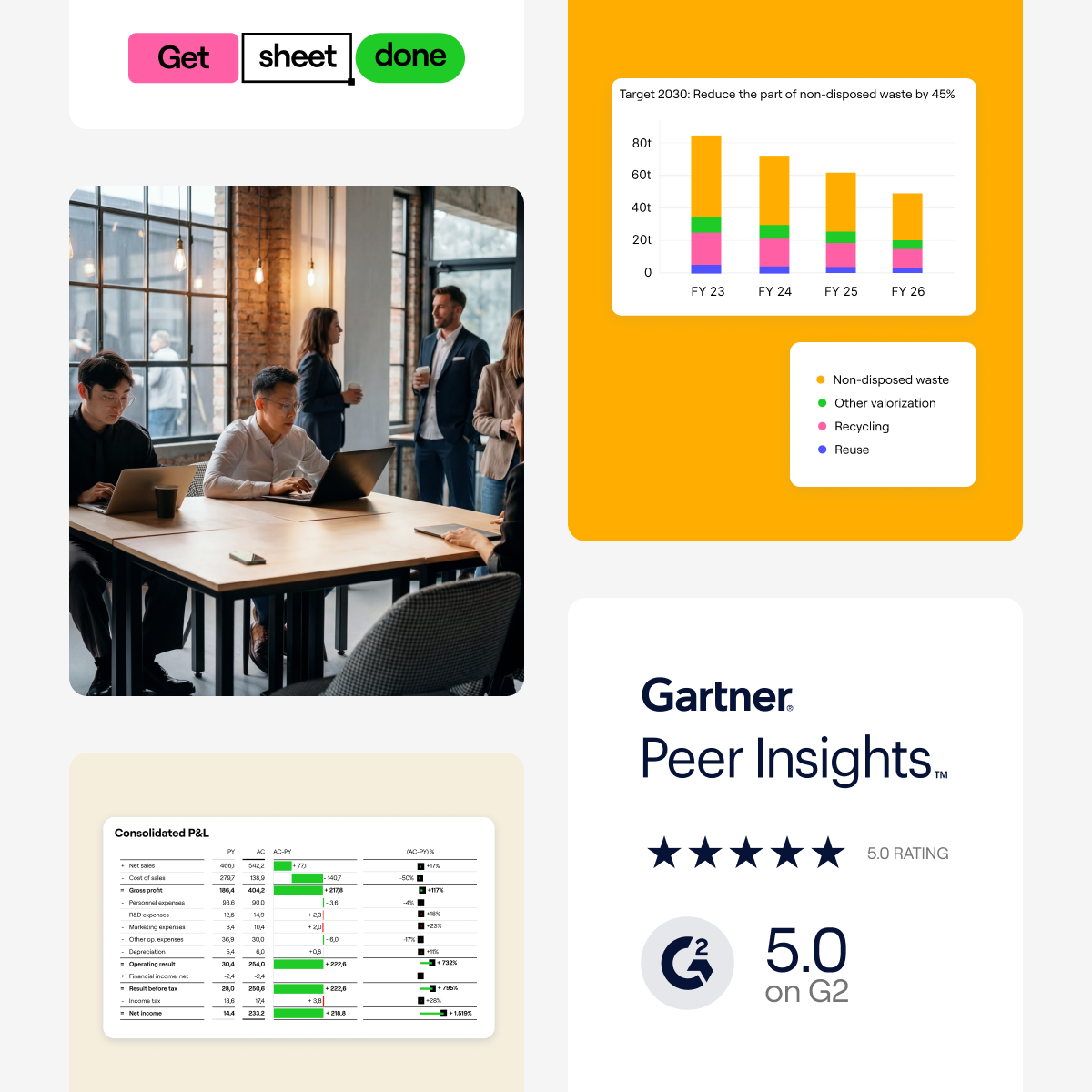
Trusted by enterprise finance teams











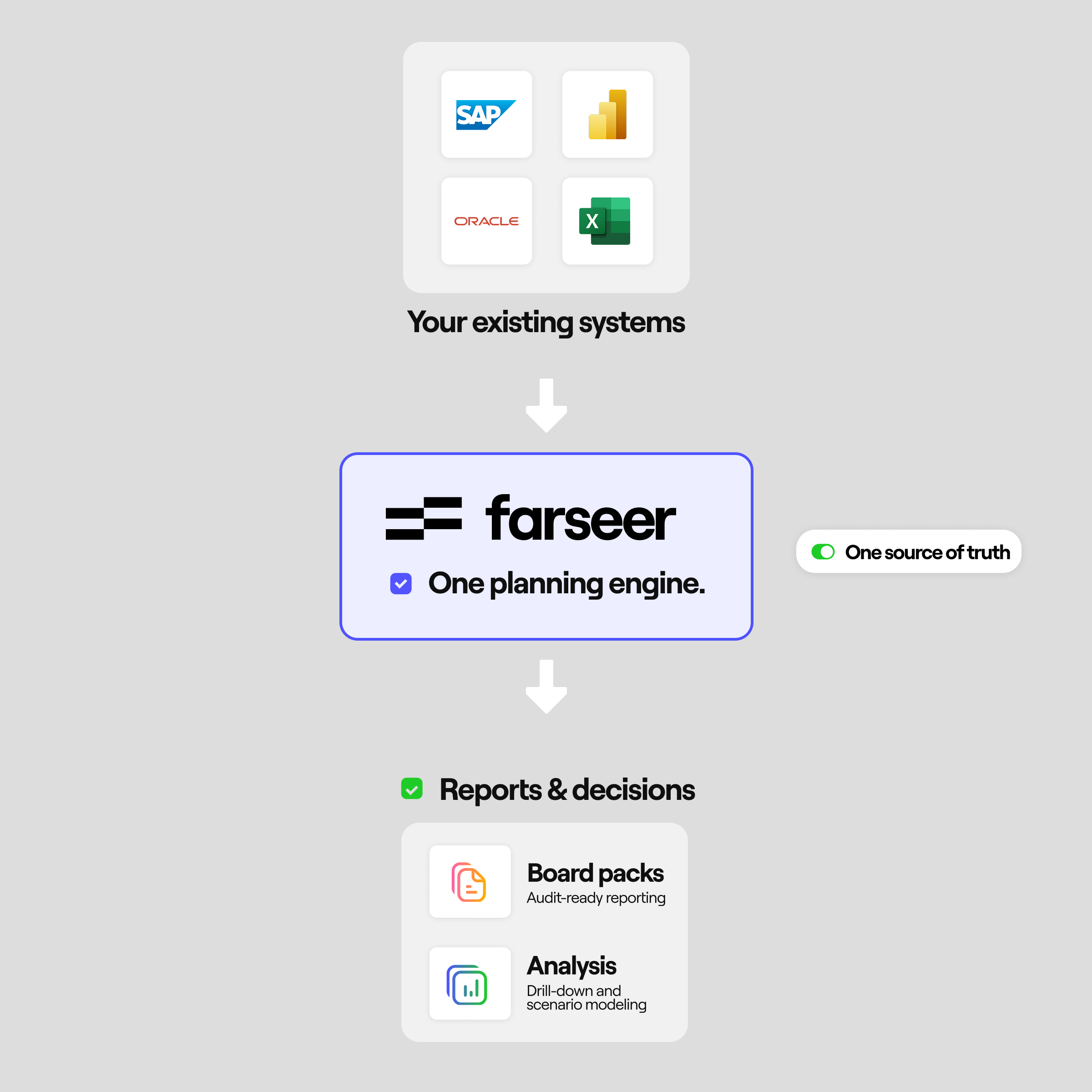
Live in weeks, not quarters.
Our solutions team handles your data migration, model setup, and training directly, so you’re not paying a consultancy for the next six months to keep the lights on.
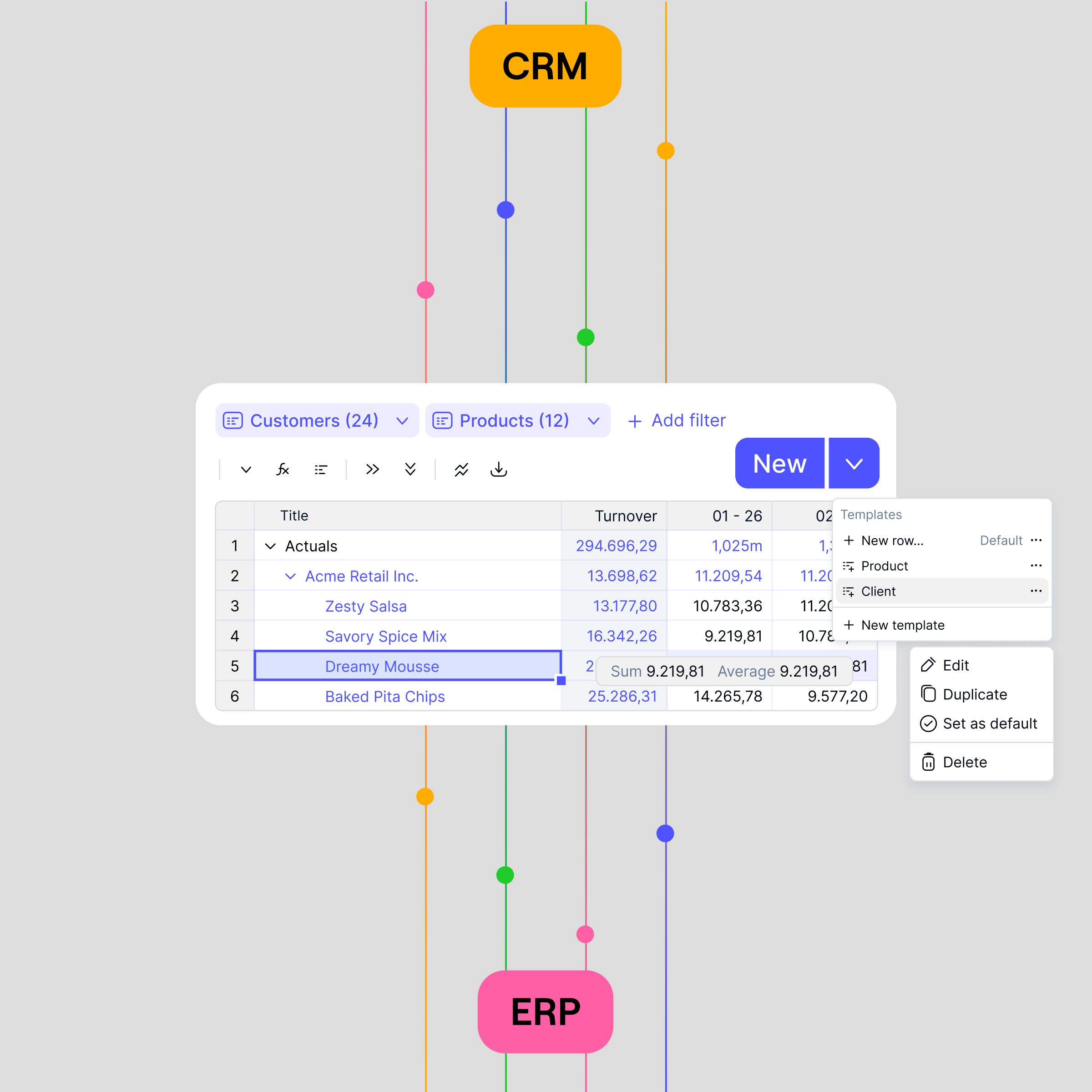
Built on a spreadsheet-native interface your team already knows.
No proprietary syntax, nor week-long training before anyone can contribute. Your team doesn’t need to open IT tickets to change a formula – if they can use Excel, they can also use Farseer on day one.
Every AI answer traces to a real formula.
Farseer’s AI translates your question into a command for the calculation engine, and the engine does the math. So every number on the board deck has a formula behind it you can point to.
80%
Faster cost allocation process
"Farseer has significantly enhanced the speed, quality and reliability of our insights."
50%+
Reduction in manual work
"Farseer is so intuitively easy to use that whoever logged in continued to use it."

30%
Faster financial forecasting
"Farseer’s automation frees us from the grind of manual tasks so we can focus on deeper, more impactful analyses. It’s a game changer."

Both are enterprise FP&A platforms, but they’re built for different buyers. Pigment is a broad, flexible planning platform that scales across finance, sales, HR, and supply chain — with strong agentic AI features and a large customer base in tech and SaaS. Farseer is purpose-built for finance teams in complex industries like pharma, FMCG, retail, manufacturing, and telco. The biggest practical differences come down to three things: Farseer’s implementation runs in weeks rather than months, doesn’t require external partners, and uses an AI architecture where the calculation engine computes the numbers – not the AI itself.
Most Farseer customers are live in under three months, with our solutions team handling data migration, model setup, and training directly. Pigment implementations typically run three to four months at minimum, and most mid-market and enterprise rollouts require a certified implementation partner – which extends timelines and adds cost. Farseer is designed so your finance team owns the platform from day one, rather than depending on a consultancy to maintain it.
Yes. Multi-entity consolidation is core to the Farseer platform, including intercompany eliminations, multi-currency handling, and full audit trails. Customers like Hrvatski Telekom — a €1B+ telecom — use Farseer to consolidate across multiple entities, cutting their quarterly forecasting cycle from 10 days to under 2. Both platforms support multi-entity work; the practical difference is implementation speed and how quickly your team can adjust the consolidation logic without vendor or partner involvement.
Yes, but the architecture is fundamentally different. Pigment’s agentic AI reasons over your data and generates answers – which is powerful, but carries the inherent hallucination risk of any LLM-driven system. Farseer’s AI translates natural-language questions into deterministic commands that the calculation engine executes, so every AI-generated number can be traced back to a real formula. For finance teams who need to defend numbers to a board or an auditor, that architectural distinction matters more than the breadth of AI features.
Farseer is built for industries where planning involves high data volume, multi-entity complexity, and transaction-level detail – particularly pharma, FMCG, retail, manufacturing, and telco. These are sectors where Pigment’s customers most often run into scale and consolidation limitations. Pigment’s reference customer base skews toward technology and SaaS companies (Figma, Carta, Gong, Anthropic), where modeling is complex but data volumes are typically smaller. If your business runs on SKU-level, batch-level, route-level, or subscriber-level data, Farseer’s calculation engine and industry-specific templates are built for that profile.