80%
Faster cost allocation process
"Farseer has significantly enhanced the speed, quality and reliability of our insights."

Abacum is excellent at collaborative FP&A; Farseer covers the same planning ground and adds operational drivers and statutory consolidation to the same model.

Trusted by enterprise finance teams












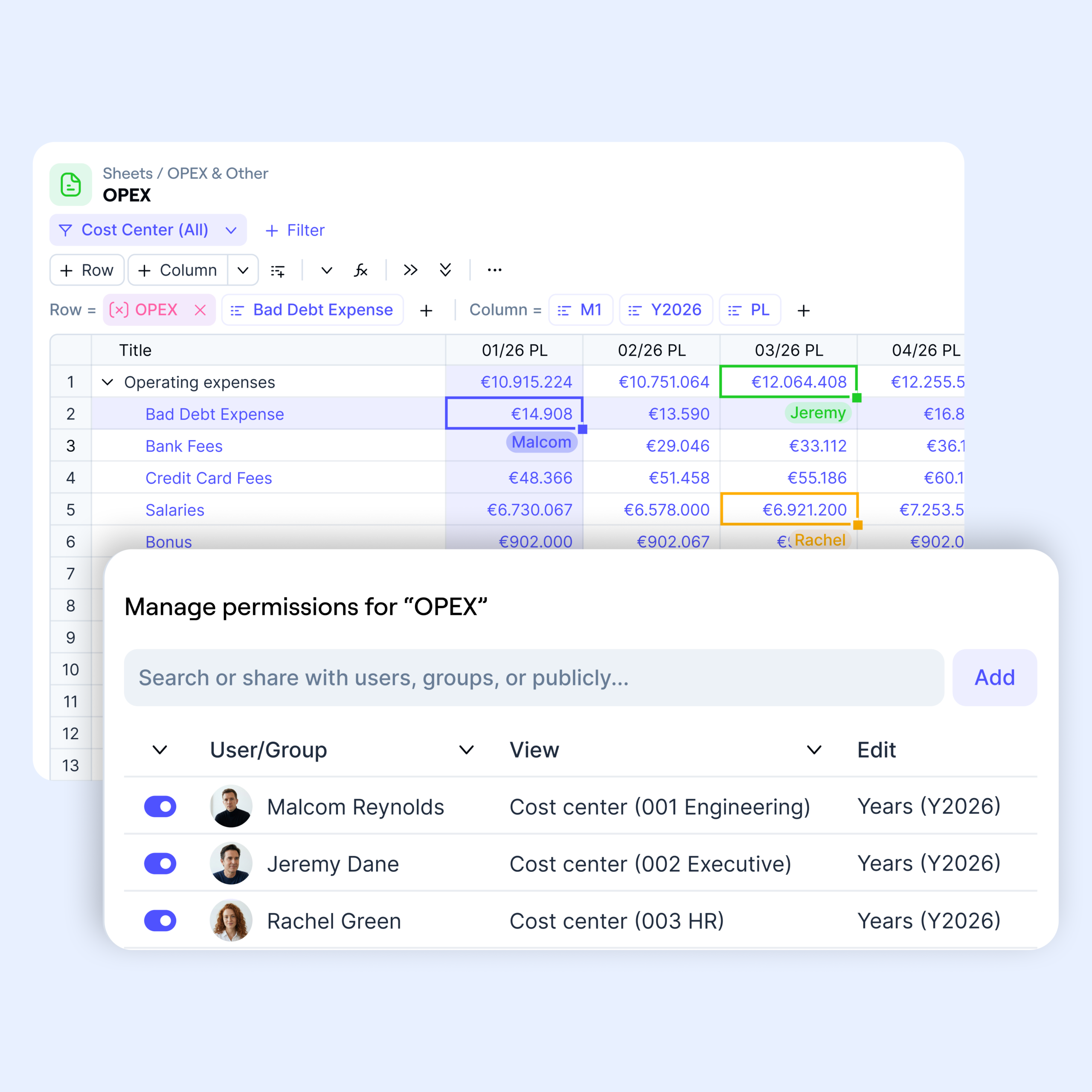
Abacum’s modelling is genuinely multi-dimensional, and you can add as many dimensions as you like. But what it models is finance: revenue, headcount, OPEX, cohorts, ARR. Everything operational arrives as data from your warehouse or ERP.
That’s fine if your operations are simple, and expensive if they aren’t. In Farseer, the operational side isn’t a feed into the model – it is the model.
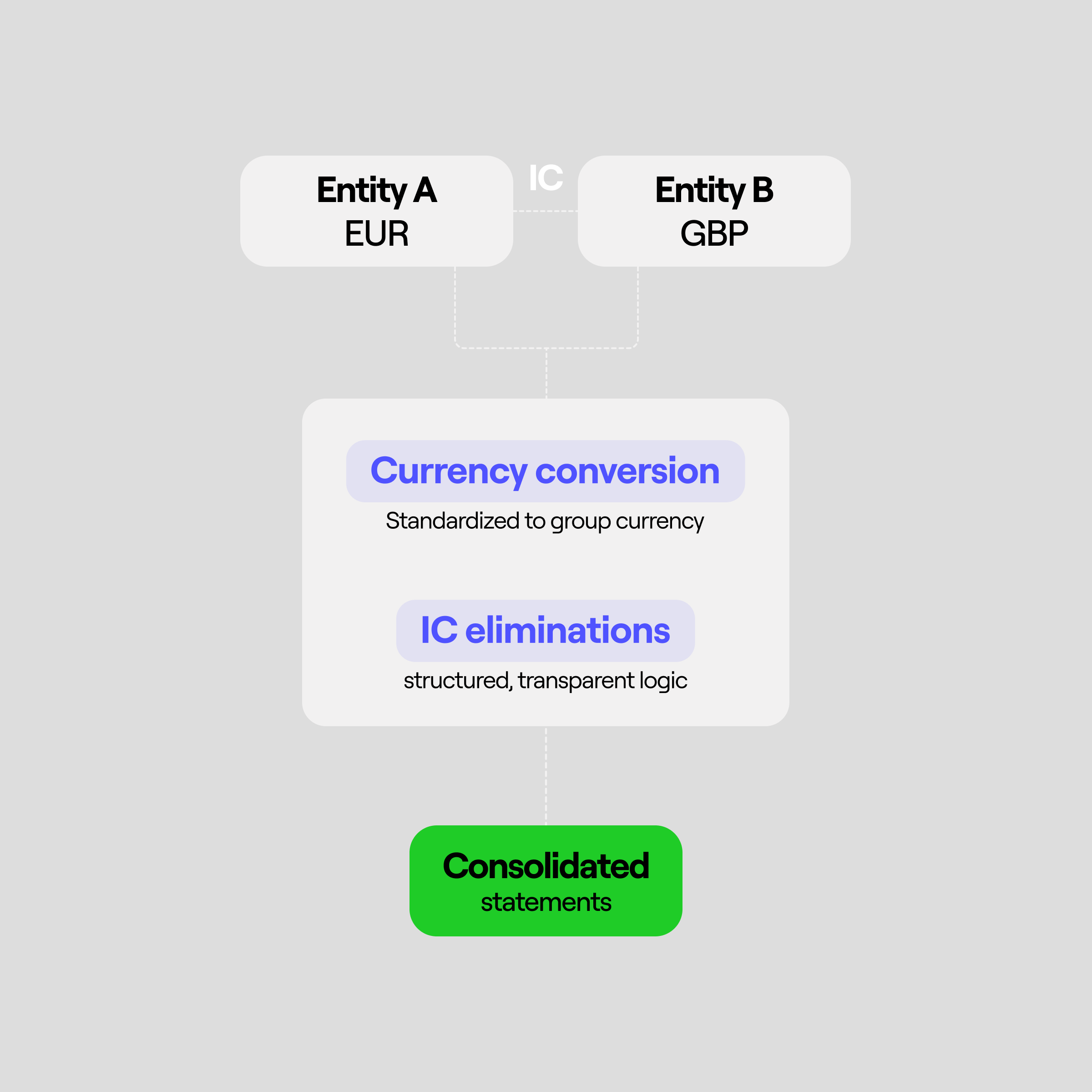
Abacum’s consolidation is built for management reporting, not for the statutory close.
It rolls numbers up across entities, converts currencies automatically, and reports month-end results across all three statements. What it doesn’t offer is the legal side: reporting under more than one accounting standard, and statements an auditor will sign. Teams that need those buy a second tool and reconcile between the two.
Farseer does the management view and the statutory close in the same model.
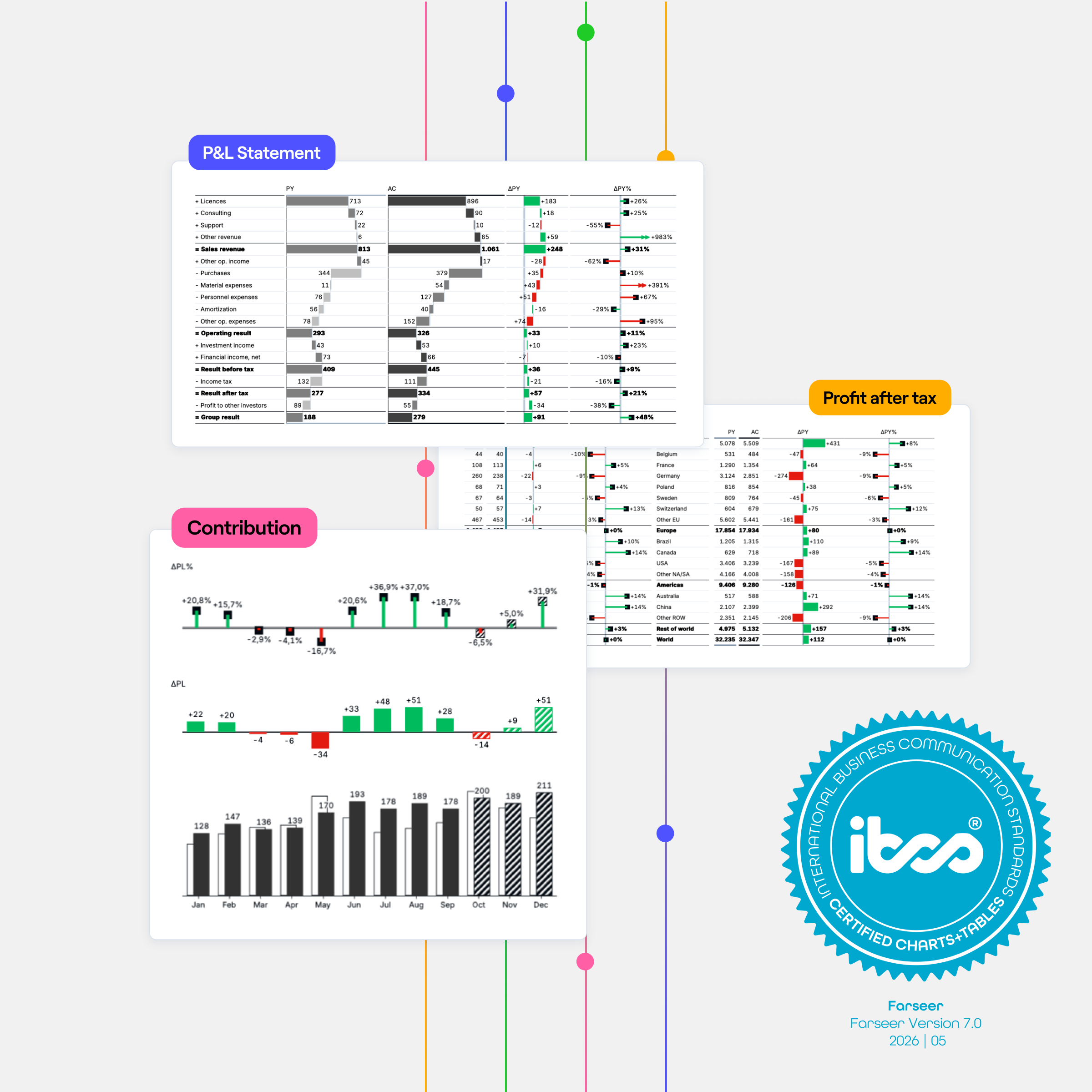
You shouldn’t have to shrink your model to keep it fast.
Big models get hard to navigate, and the workaround is fewer dimensions. If you genuinely plan across thousands of SKUs, dozens of markets and hundreds of cost centres, that means planning at a coarser level than you run the business. Reviewers flag the reporting side too: chart options that lag Excel, and table views only admins can change.
Farseer is built the other way round: plan at the level you actually manage, and the model keeps up.
80%
Faster cost allocation process
"Farseer has significantly enhanced the speed, quality and reliability of our insights."
50%+
Reduction in manual work
"Farseer is so intuitively easy to use that whoever logged in continued to use it."

70%
Fewer planning cycle steps
"Farseer's driver-based planning gave us a reliable structure and streamlined our entire process."

Yes — and it’s worth saying plainly. Abacum holds the highest G2 rating in the mid-market FP&A category, implements in four to eight weeks without a systems integrator, and has the best-in-class collaborative workflow experience for non-finance budget owners. For subscription businesses that need budgeting, forecasting and board reporting without enterprise overhead, it’s a strong shortlist entry. The comparison only turns in Farseer’s favour when operational planning depth, statutory consolidation or model granularity enter the requirements.
It handles multi-entity roll-ups and automated currency adjustments for management reporting, and markets month-end consolidation across the three statements. Independent buyer analysis reports that it does not provide an intercompany eliminations engine, multi-GAAP treatment or statutory reporting — so groups with statutory close obligations generally pair it with a dedicated consolidation tool. Farseer covers both in one model: intercompany matching, currency translation and elimination logic run together, producing consolidated statements from the same data the plans are built on.
Abacum, for foundational FP&A — four to eight weeks, extending to twelve to sixteen for a full rollout. Farseer’s enterprise implementations typically run up to three months, but the scope is broader: operational plus financial planning, group consolidation and IBCS reporting in one deployment rather than a planning tool with a consolidation project behind it. Compare the timelines against equivalent scope, not against each other in the abstract.
Abacum Intelligence covers ML forecasting, anomaly detection, data classification and natural-language querying, and is included in its platform tiers. Farseer offers three named agents — Analyst for querying and forecast automation, Strategist, and Modeler for building logic with natural-language formulas — available as a paid add-on. Treat AI as parity and evaluate it on your own data. The durable difference is the model underneath the AI, not the AI itself.
Farseer, and the reasons are structural rather than promotional. Manufacturing plans run on volumes, capacity, SKUs and cost centres that Abacum treats as imported context rather than planning objects; multi-entity groups in that space usually carry statutory close obligations that Abacum leaves to a second system; and the model granularity involved is the exact scenario where Abacum reviewers report performance friction. Abacum’s integration depth also concentrates on the modern SaaS stack, while SAP S/4HANA and Oracle Fusion need custom API work.