Your reports are fragmented, and no one trusts the numbers
Data silos
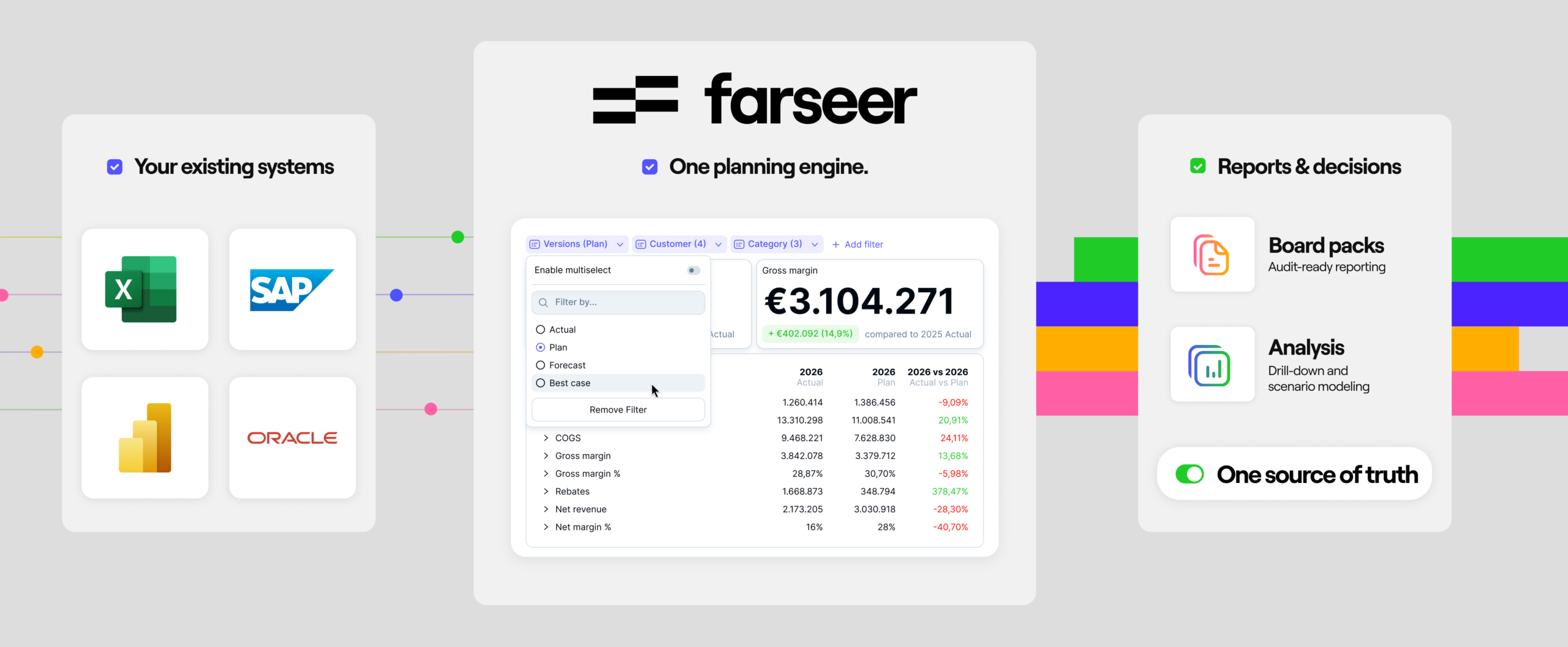
Connected
ERP, BI, and spreadsheets operate separately.
ERP, BI, and spreadsheets on the same engine.
Every department builds its own view of performance. Reconciliation replaces analysis.
Every team reads the same performance view in Farseer. Analysis replaces reconciliation.
Inconsistency
Consistency
Logic and calculations are rebuilt across tools.
One model. One definition. Same numbers everywhere.
KPIs are calculated differently across dashboards. The same metric tells different stories.
In Farseer, KPIs are defined once and used everywhere. Every dashboard tells the same story.
Manual
Automated
Numbers must be validated before they’re used.
Numbers arrive validated, ready to use, always.
Reporting relies on exports, manual fixes, and key individuals. “Real-time” still requires intervention.
Reporting runs on the Rama engine. No exports, no manual fixes, no key individuals. Real-time is real.
Farseer doesn't replace your ERP. It fixes what happens after.
Close the gap between your source systems and your final board pack. Replace the chaotic Excel middle-layer with a single, governed planning engine, complete with IBCS-certified reporting.
The main difference is that real-time financial reporting, as in Farseer, updates dashboards instantly as underlying data changes, whereas traditional BI relies on static, scheduled exports that reflect past performance.
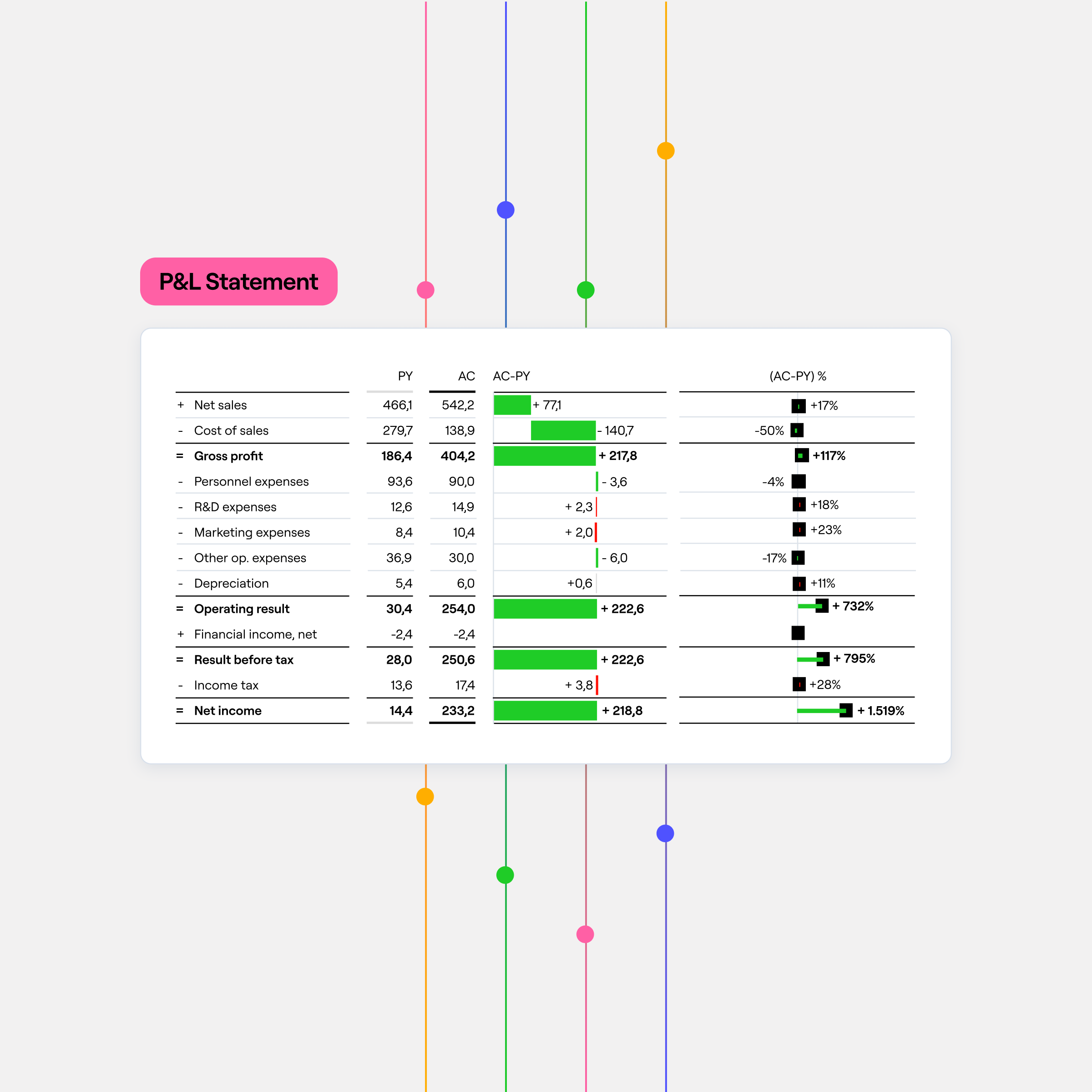
Farseer connects ERP, planning, and operational data sources into a single unified model. All dashboards and reports draw from the same financial logic, so P&L, balance sheet, cash flow, and KPIs always reconcile, removing the need for manual exports, version management, or cross-tool validation.
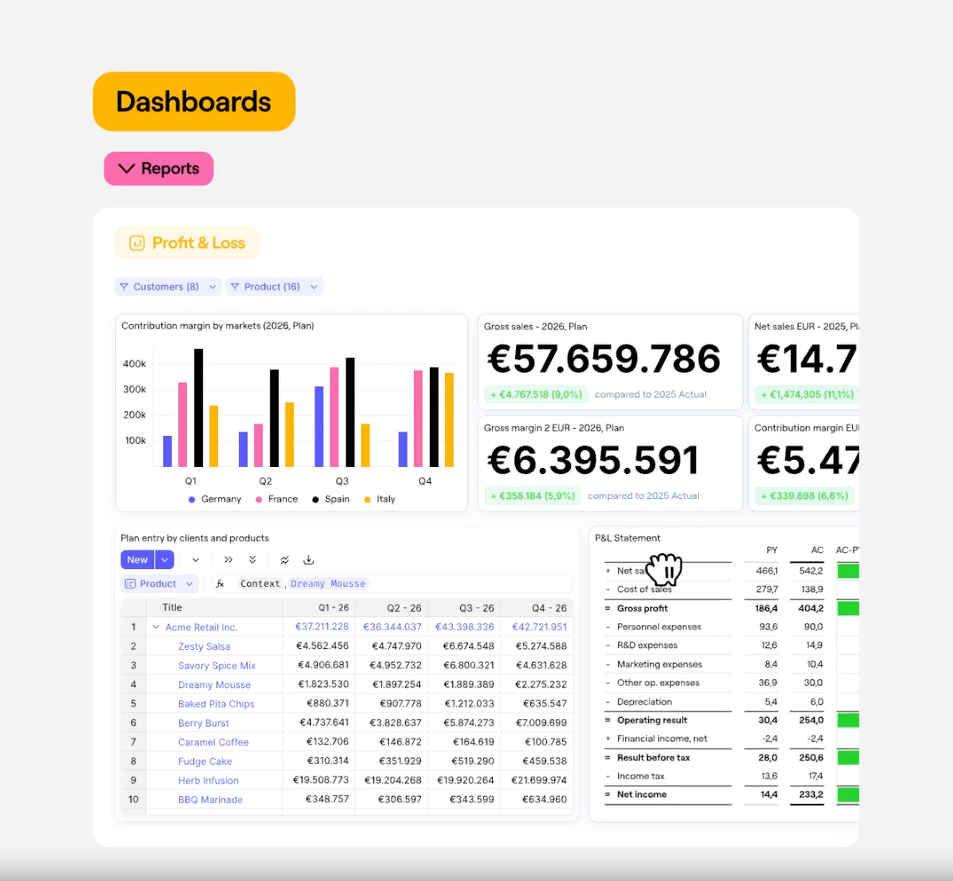
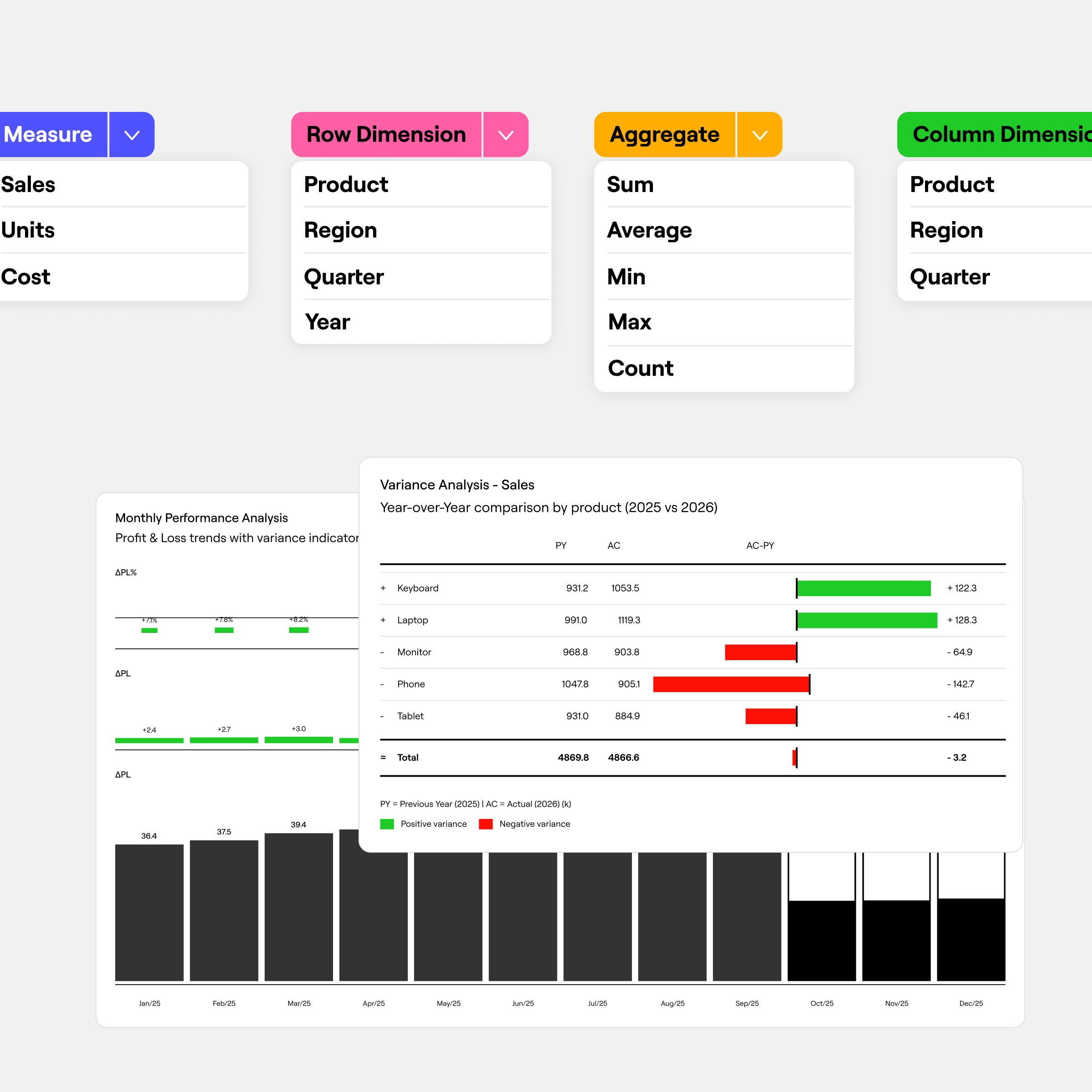
Farseer supports interactive dashboards, structured variance analysis, and board-ready reports — all driven by a single financial model. Users can drill from high-level KPIs down to entity, account, or transaction level. Dashboards share the same logic as P&L, balance sheet, and cash flow statements.
Farseer embeds variance analysis directly into the reporting layer. Finance teams can compare actuals against budget, forecast, and prior periods, slice results by product, region, cost center, or entity, and trace performance directly to operational drivers — without exporting data or rebuilding reports in separate tools.
All reports and dashboards in Farseer inherit their structure and logic from a single financial model. KPIs are defined once and reused across every reporting layer. Role-based access controls and full audit trails ensure Finance retains governance while business users can explore data independently.
IBCS (International Business Communication Standards) is the framework that standardizes how financial data is visually communicated across charts, tables, and dashboards, the same notation the upcoming ISO 24896 standard is built on. Farseer is among the first FP&A platforms certified to IBCS. That means every chart follows a consistent visual language: actuals, budget, and forecast are distinguishable at a glance, and scaling is uniform, so the visual difference between two bars matches the actual variance. Board packs and executive dashboards read cleanly on the first pass, without a decoder key.
Get a live reporting walkthrough
Find a time to meet with Farseer
✓
What Happens Next
Three steps from booking to your first live dashboard.
1. ASSESS
Map your workflows
On the call, we review your reporting stack, KPI definitions, and BI dependencies to design the right Farseer setup.
2. CONNECT
Secure your foundation
We integrate your systems and structure your data in an isolated, ISO-certified environment.
3. ACTIVATE
Steer your organization
Your team builds dashboards, drills to invoice, and reports live in one connected platform. First live dashboard in 8-12 weeks.