80%
Faster cost allocation process
"Farseer has significantly enhanced the speed, quality and reliability of our insights."

TM1 has earned its place in enterprise planning, but its classic tools are being retired. Farseer gives you the same power without the feeders, the scripts or the consultant queue.

Trusted by enterprise finance teams


"From our SAP ERP, Farseer pulls all the historical data, prices, and rebates automatically. We can now create a preliminary sales plan in about ten minutes, apply growth targets, and get margin-level results immediately, something that used to take days."Read case study

"Farseer turned our dreams into reality. The tool is so intuitively easy to use that whoever logged in continued to use it. Farseer is a refreshment in terms of the ease of planning and reporting."Read case study

“We tested other solutions, but in the end we chose Farseer because it was very similar to Excel; intuitive, you can copy and paste, and it’s visually familiar. That made it easy for planners to transition. But underneath, it’s a properly structured model with fact tables, dimension tables, and variables everything we couldn’t have in Excel.”Read case study


"Feature-wise, Farseer was on par with the big players, but the difference was in the approach. The Farseer team was honest, hands-on, and they truly understood our needs. That's what sealed the deal for us."Read case study





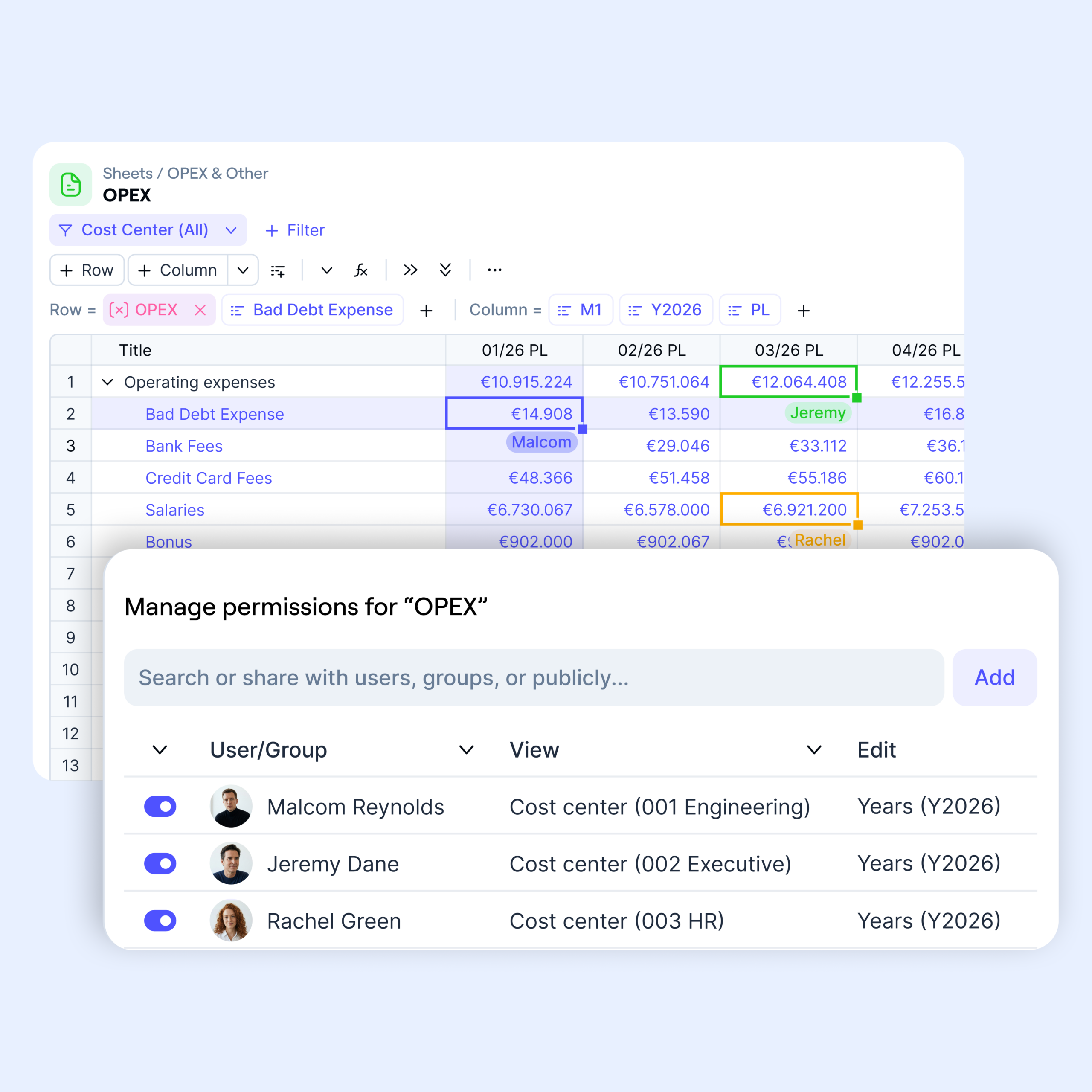
Hand-written feeders are the single biggest source of TM1 errors.
For TM1 to run fast, someone has to tell it which cells to calculate. Miss one and the cell shows a value, but its parent total doesn’t – with no error, no alert and no report. Over-feed, and memory use climbs until the server struggles.
Farseer doesn’t work that way. Each variable carries only the dimensions it needs, so whatever exists gets calculated, every time.
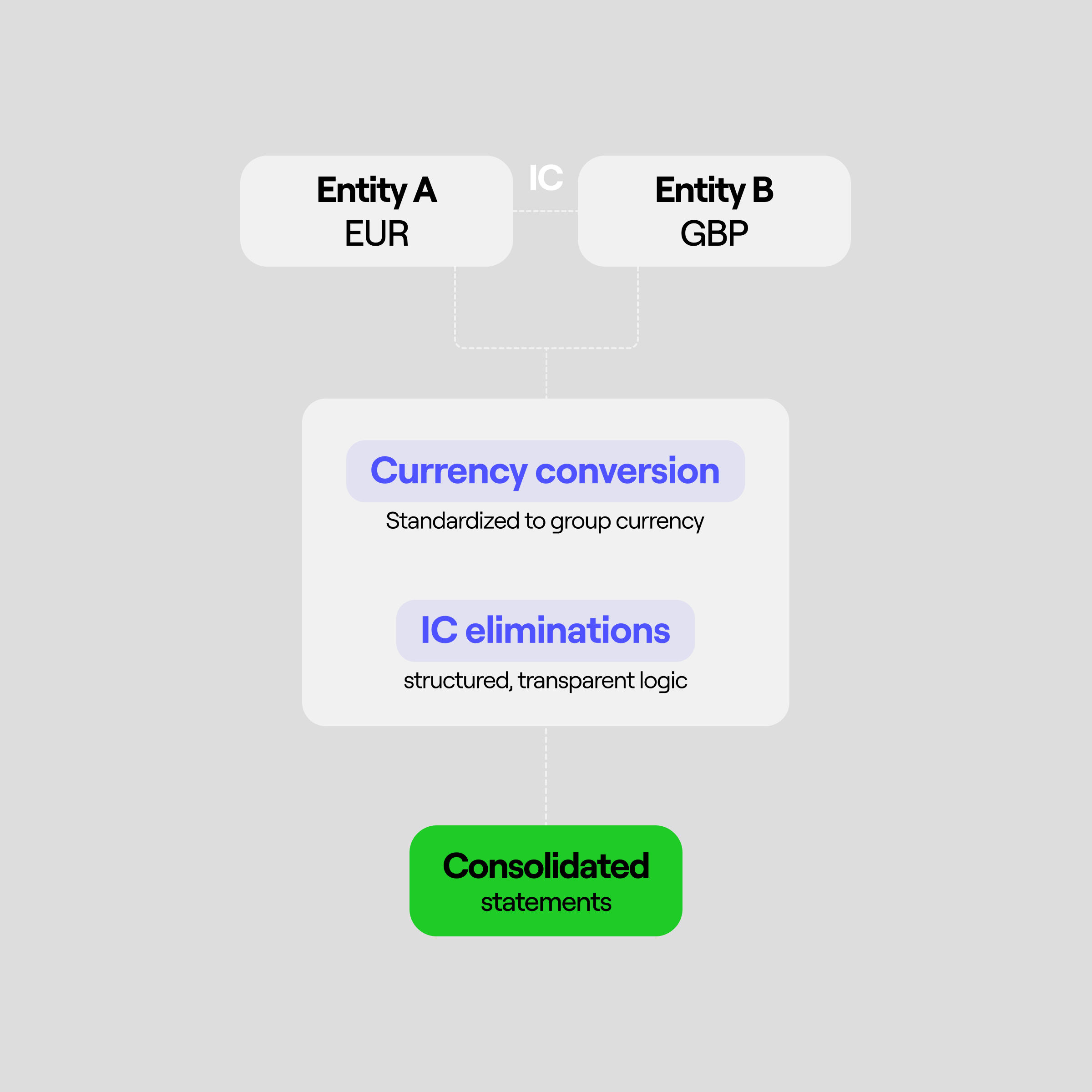
In most TM1 estates, anything beyond adding an element is developer work.
New logic means rules, feeders and TurboIntegrator scripts, so it joins the queue for IT or a consultant. Many teams send simple changes offshore to cut costs, and the handovers often eat the savings.
In Farseer, time logic and scenarios are built in rather than coded, and formulas read like plain English. Finance makes the change and sees the result the same day.
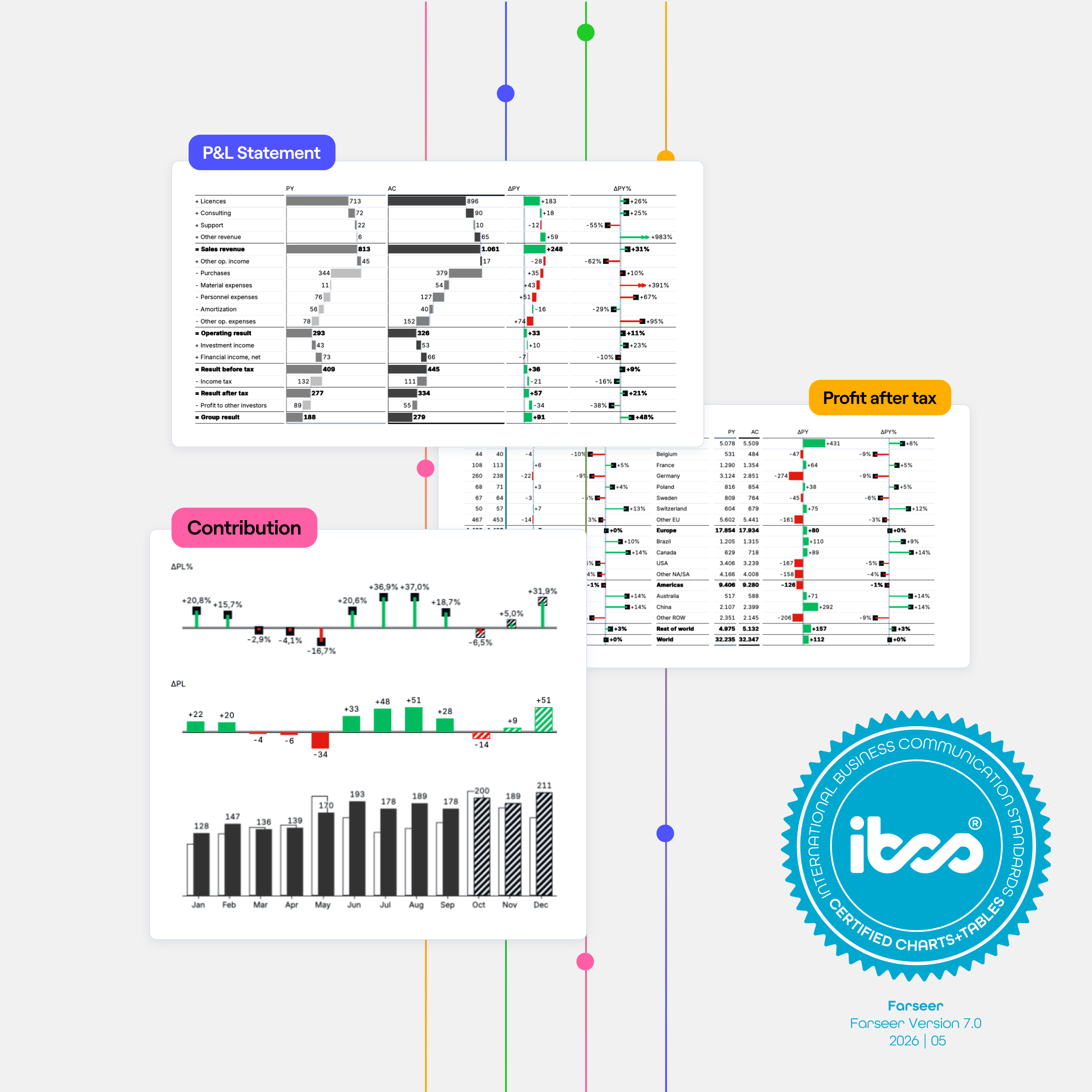
Many TM1 estates now run two sets of tools and pay two vendors.
IBM’s newer tools, Workspace and Planning Analytics for Excel, are rolled out on paper. In practice, much of the work still happens in the classic clients or in third-party front-ends added to fill the gaps, each with its own licence, support and consulting costs.
The cloud question doesn’t simplify things. IBM’s hosted option runs the same 2.x stack on IBM’s servers, and the containerised TM1 v12 is a migration of its own. If the budget is already on the table, see what else it could buy.
80%
Faster cost allocation process
"Farseer has significantly enhanced the speed, quality and reliability of our insights."
50%+
Reduction in manual work
"Farseer is so intuitively easy to use that whoever logged in continued to use it."

70%
Fewer planning cycle steps
"Farseer's driver-based planning gave us a reliable structure and streamlined our entire process."

Most customers are live within three months, delivered by Farseer’s own team rather than a systems integrator, with implementation included in the price. TM1 projects typically depend on specialist consultants, and the rules and feeders they build need the same expertise to maintain.
There’s no one-click migration, because the platforms model differently. Most concepts carry over: cubes become variables, versions become scenarios, and hand-coded time logic is replaced by built-in offsets. Deep or ragged hierarchies, weighted rollups and cell-level security need design decisions upfront, so we work through those with you during onboarding.
No. There are no rules files, feeders or TurboIntegrator scripts to maintain. Formulas read like plain English, and finance teams own the platform after onboarding – building models, changing logic and creating reports themselves.
Offshore teams can lower the day rate, but every change still needs a specialist, plus a handover in each direction. Many teams find the price-to-quality ratio hasn’t improved. In Farseer, most changes don’t need a specialist at all.
General support for 2.0.9 ended on 31 October 2025. IBM sells extended support beyond that, but coverage narrows over time. Moving to 2.1 means losing Architect, Perspectives, TM1 Applications and Performance Modeler, so most teams face report conversion and retraining either way.
TM1 v12 adds high availability by running multiple replicas of the same database. That helps with load and uptime, but it doesn’t split one model across more compute. It’s also available only on IBM’s cloud platforms, so getting there is a migration in itself.