Balance Sheet Reconciliation: 8 Best Practices

If you are trying to confirm whether reported balances match the actual records without balance sheet reconciliation, you are working in the dark. A good reconciliation process turns the lights on by giving your team more accurate reports, quicker reviews, and greater confidence in financial data.
To keep that light on, teams need clear ownership, consistent review rules, defined materiality thresholds, timely follow-up, and automation where it adds value. Together, these practices make it easier to spot material differences, resolve them on time, and keep the month-end close under control.
Read more: Strategic Financial Planning That Actually Drives Results
This guide covers eight balance sheet reconciliation best practices that help improve accuracy, strengthen financial controls, and make the month-end close more efficient.
8 Balance Sheet Reconciliation Best Practices
A good balance sheet reconciliation process is about more than just matching balances. Teams also need clear ways to review records, resolve important differences, and keep the process consistent across all accounts and entities.
The next eight practices highlight the parts of reconciliation that most affect accuracy, control, and how quickly you can close.
Balance Sheet vs Income Statement: Key Differences and Why You Need Both for Financial Planning
Read1. Assign an owner and reviewer to every account
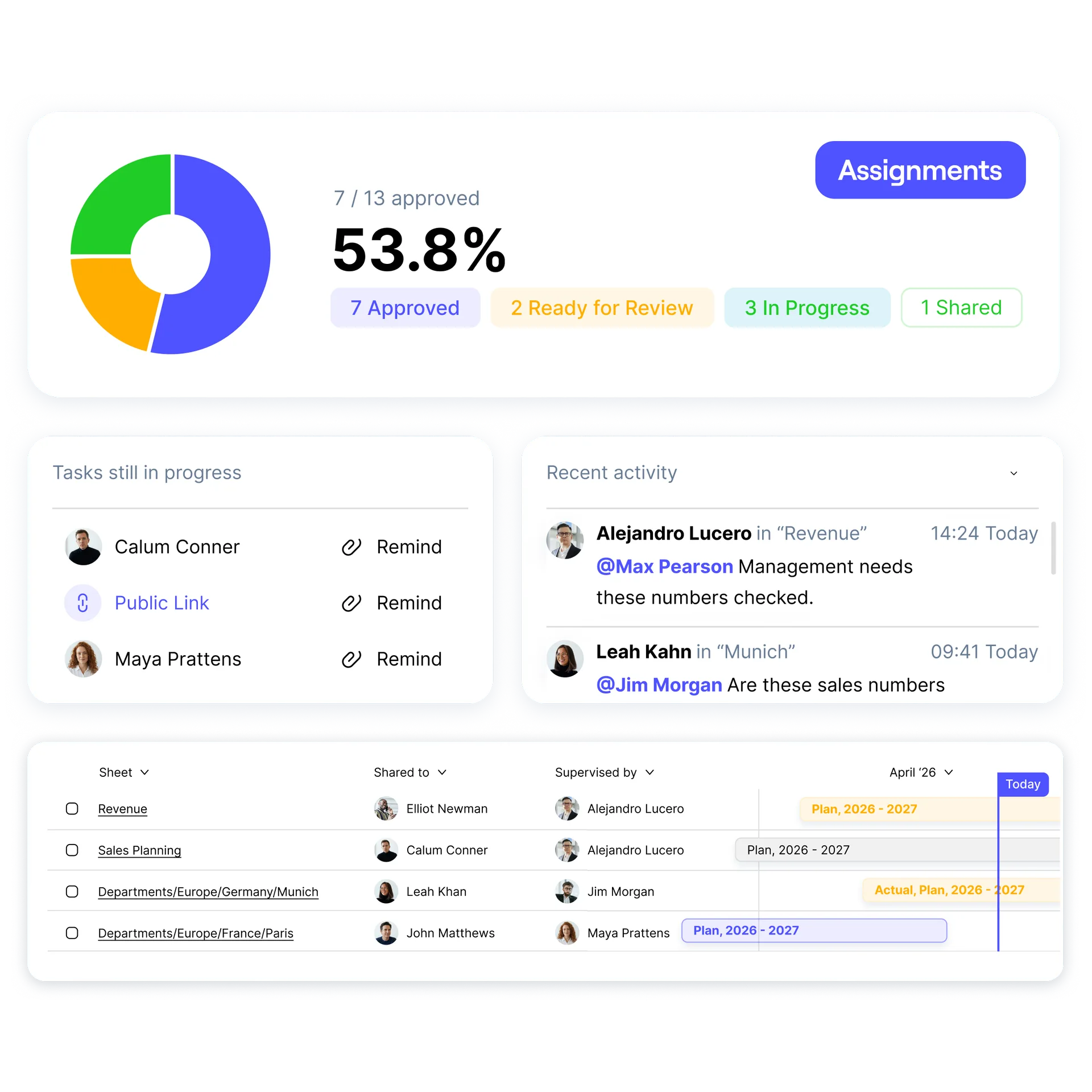
Accountability is key. Assign one person to prepare each balance sheet account reconciliation and another to review it.
In larger organizations, set ownership by both account and legal entity. The same account might need different supporting records in different subsidiaries.
An account ownership matrix can include:
- Account or account group
- Legal entity
- Preparer
- Reviewer
- Reconciliation frequency
- Due date
- Materiality threshold
- Current status
Include this matrix as part of the close process, not as a separate reference file.
For example, a manufacturing group might assign each entity’s accounting team to handle local inventory accounts. Group finance can then review balances above a set threshold and track completion across all entities.
Clear ownership also helps separate duties and gives each reconciliation a clear approval path.
What good looks like: At any point during the close, the team can see who owns each account, who reviews it, and whether it is ready for approval.
2. Set reconciliation frequency based on account risk
Not all balance sheet accounts need to be reviewed at the same frequency.
Classify accounts based on:
- Materiality
- Transaction volume
- Volatility
- Complexity
- Level of judgment
- Regulatory importance
- History of reconciling items
Next, set how often each group of accounts should be reviewed.
Cash, receivables, payables, inventory, payroll clearing, and intercompany accounts usually need frequent reviews because they have ongoing transactions. Accounts with less activity can be reviewed less often.
Review frequency can change during busy times. For example, a retail company might check inventory accounts more often during peak seasons, while a manufacturer might do extra checks after a big stock count.
The goal is simple: spend more time reviewing accounts where big differences could most affect your reports.
3. Standardize what a completed reconciliation must contain
A reconciliation should give the reviewer all the information needed to understand the balance, without having to search through emails, folders, or multiple spreadsheets.
Use the same structure for all accounts and entities. At a minimum, each reconciliation should include:
- General ledger balance
- Supporting balance
- Reconciliation date
- Difference
- Explanation of reconciling items
- Required adjustment, if applicable
- Supporting documentation
- Preparer
- Reviewer
- Sign-off date
Also, decide what counts as acceptable supporting evidence for each account type.
For example:
- Cash: bank statement
- Accounts receivable: customer subledger or aging report
- Accounts payable: supplier subledger
- Inventory: stock ledger or inventory report
- Fixed assets: asset register
- Intercompany: corresponding balance from the other entity
Standardization is more than just using a template. Set clear rules for what documents are needed, how to handle differences, and which approval steps apply to each account.
For companies with multiple entities, this gives group finance a consistent way to review balances across all subsidiaries.
4. Define materiality thresholds and escalation rules
Materiality helps teams decide which differences need action.
Set clear thresholds for when a difference needs:
- An explanation
- Further investigation
- An adjustment
- Additional approval
- Escalation before close
Do not use the same amount for every account. Set thresholds based on the type and size of each balance.
For example, a €5,000 difference might need quick review in a payroll clearing account, but the same amount could mean something different in an inventory account with an €80 million balance.
You can also combine an absolute threshold with a percentage threshold.
Most importantly, set clear steps for when a difference goes over the limit. First, identify the difference and check it against the threshold. The account owner investigates the cause and prepares an adjustment or explanation. After review and approval, the item can be closed.
What good looks like: Reviewers use the same rules to decide which differences need action, no matter who prepared the reconciliation.
5. Keep a separate register of open reconciling items
A reconciliation can show why two balances are different, but the underlying issue might still need action. So, track open reconciling items separately until they are resolved.
For each item, record:
- Account
- Legal entity
- Amount
- Date identified
- Root cause
- Owner
- Required action
- Target resolution date
- Age
- Status
Next, group open items by age, such as 0–30, 31–60, 61–90, and over 90 days. This helps teams spot differences that need escalation and issues that last across reporting periods.
For example, if a pharmaceutical distributor has a €120,000 goods-received-not-invoiced balance open for three months, the monthly reconciliation might explain the amount, but the open-item register keeps it visible until it is resolved by procurement, accounting, or the supplier.
What good looks like: Teams can see both whether reconciliations are complete and how much value is still unresolved.

6. Track recurring differences and fix their root cause
Reconciliation can also reveal where accounting processes need improvement.
If the same type of difference keeps showing up over several periods, mark it as recurring and look into the root cause.
Common causes include:
- Different cut-off rules
- Posting timing
- Account mapping
- Exchange-rate treatment
- Master data
- Manual journal entries
- Interface timing
- Missing source documents
Then, assign a corrective action to the process that causes the difference.
Consider intercompany reconciliation. One entity may book an invoice on the final day of March, while the receiving entity records it in April. Teams can explain the difference every month, but a better solution is to agree on a group-wide cut-off rule.
KPMG applied a similar approach in a system-to-system reconciliation case, where reconciliation issues were tracked by financial impact, severity, affected area, and root cause.
This approach makes reconciliation a way to improve processes, not just a monthly matching task.
What good looks like: The value and number of recurring reconciling items go down over time.
7. Build reconciliation deadlines into the month-end close
Balance sheet reconciliation should be built into the month-end close process, with clear deadlines for preparation, review, adjustments, and approval.
Begin by mapping out when source data is available and build the reconciliation schedule around those dependencies.
| Close day | Reconciliation activity |
| Day 0 | Transaction cut-off |
| Day 1 | Bank and subledger data available |
| Day 2 | Key reconciliations prepared |
| Day 3 | Material differences reviewed and adjustments posted |
| Day 4 | Final approval |
| Day 5 | Management reporting |
The exact schedule will depend on your business, but the order is important. Reporting should only use balances that have already been reconciled and reviewed.
PwC recommends setting close schedules and cut-off dates in advance, creating standard procedures for key close tasks, and streamlining preparation, review, and approval activities.
High-value or complex accounts can have earlier deadlines, so teams have more time to look into important items.
8. Automate preparation so people can focus on exceptions
Automation should make preparing a reconciliation less work.
Start with repeatable tasks such as:
- Importing general ledger balances
- Loading subledger and supporting data
- Matching transactions based on defined rules
- Calculating differences
- Applying materiality thresholds
- Flagging exceptions
- Tracking status and approvals
- Storing supporting documents
Use professional judgment where it matters most: reviewing unusual balances, assessing important items, understanding variances, and deciding on the right action.
Matching two identical records does not need as much attention as explaining a €2 million inventory movement or solving a big intercompany difference across several entities.
Automation can help with rules-based matching, tracking exceptions, managing approvals, and keeping supporting documents in one place. PwC also recommends automating accounts receivable and accounts payable reconciliation to improve the close process.
For companies with several subsidiaries, this might mean pulling trial balances from the ERP into one central model, applying the same rules across all entities, and showing reviewers only the accounts that need attention.
What good looks like: Automation handles repeatable data tasks, so the team can focus on important exceptions, review, and analysis.
These eight practices help create a more consistent reconciliation process across accounts, entities, and reporting periods. They also make it easier to spot important differences early, assign clear responsibility, and report with more confidence in your data.
When Balance Sheet Reconciliation Needs Better Technology
As the number of accounts, entities, and data sources grows, spreadsheets can end up needing more manual work than the reconciliation itself.
Typical signs include:
- Reconciliations are spread across multiple Excel files
- Teams export balances manually from the ERP
- Reviewers track progress through email or shared folders
- Supporting documents sit in different locations
- The same reconciling items appear month after month
- Group finance has limited visibility across entities
- Teams spend more time preparing files than reviewing material differences
If you notice several of these issues, consider a finance platform that connects reconciliation with the broader reporting process.
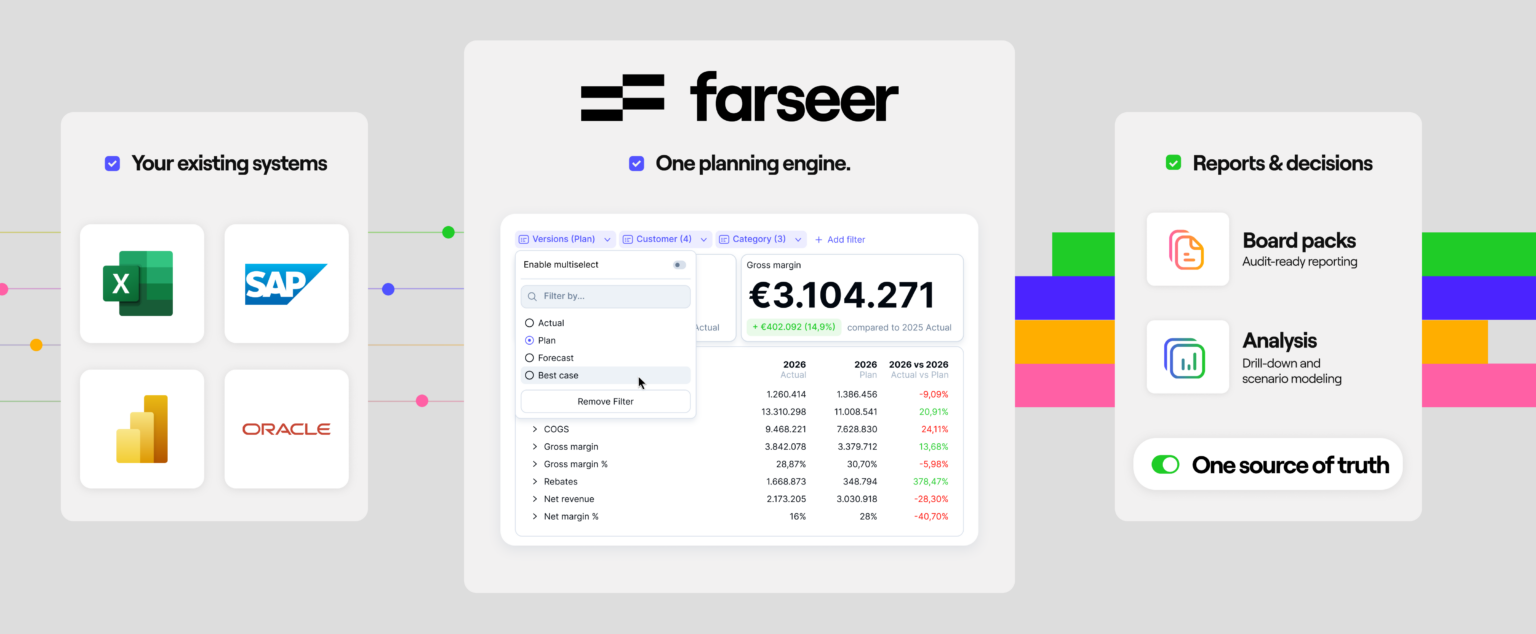
Integration is the first priority. The platform should work with your existing ERP and source systems, so teams use the same financial data throughout the process. Farseer, for example, connects with ERP, CRM, HR, accounting platforms, and data warehouses, reducing the need to move data manually between systems and spreadsheets.
Centralized data is just as important. Instead of making separate files for reconciliation, reporting, and analysis, teams should work from one consistent financial model. This is especially helpful for multi-entity companies, where group finance needs a clear view across all subsidiaries, accounts, and reporting periods.
Once balances are checked, the same data can support reporting, variance analysis, forecasting, and planning. Bringing these activities together in Farseer helps teams work from the same financial data throughout the finance cycle.
The goal is not to add more software, but to cut down on manual work between systems, improve visibility across entities, and make it easier to move from reconciled balances to reporting and analysis.
Make Balance Sheet Reconciliation Part of a Stronger Finance Process
Balance sheet reconciliation should do more than just confirm that two balances match. It should give teams confidence in the numbers before using them for reporting, analysis, forecasting, and planning.
Clear ownership, risk-based reviews, materiality rules, open-item tracking, and automation all help build the structure needed to achieve this.
As the process grows across more entities and systems, the right technology can cut down on manual work and keep financial data consistent. The stronger your reconciliation process, the easier it is to move from closing the books to explaining the numbers and planning next steps.
FAQ
What is balance sheet reconciliation?
Balance sheet reconciliation is the process of comparing general ledger balances with supporting records — such as bank statements, subledgers, or inventory reports — to confirm reported balances are accurate. It helps teams identify differences, resolve them before the close, and gain confidence in the financial data used for reporting and analysis.
How often should balance sheet accounts be reconciled?
It depends on account risk. High-activity accounts like cash, receivables, payables, inventory, and intercompany balances usually need monthly or more frequent reviews. Lower-activity accounts can be reconciled quarterly or less often. Classify accounts by materiality, transaction volume, volatility, and complexity, then set frequency so effort goes where errors matter most.
What should a completed balance sheet reconciliation include?
At a minimum: the general ledger balance, supporting balance, reconciliation date, difference, explanation of reconciling items, any required adjustment, supporting documentation, preparer, reviewer, and sign-off date. Using the same structure across all accounts and entities lets reviewers approve reconciliations without searching through emails, folders, or multiple spreadsheets.
What are materiality thresholds in reconciliation?
Materiality thresholds define which differences require an explanation, investigation, adjustment, or escalation. They shouldn’t be identical for every account — a €5,000 difference matters more in a payroll clearing account than in an €80 million inventory balance. Many teams combine absolute amounts with percentage thresholds for consistent review decisions.
Can balance sheet reconciliation be automated?
Yes — automation works best for repeatable tasks like importing GL balances, loading subledger data, rules-based matching, calculating differences, flagging exceptions, and tracking approvals. Human judgment remains essential for reviewing unusual balances, investigating material differences, and deciding on adjustments. The goal is freeing teams to focus on exceptions, not eliminating review.


Financial Statement Analysis: The Complete Guide (With Step-by-Step Process)
Read more
Best Financial Analysis Tools in 2026: Compare Features & Pricing
Read more