AI In Finance Is Only As Good As The Planning Model Underneath It
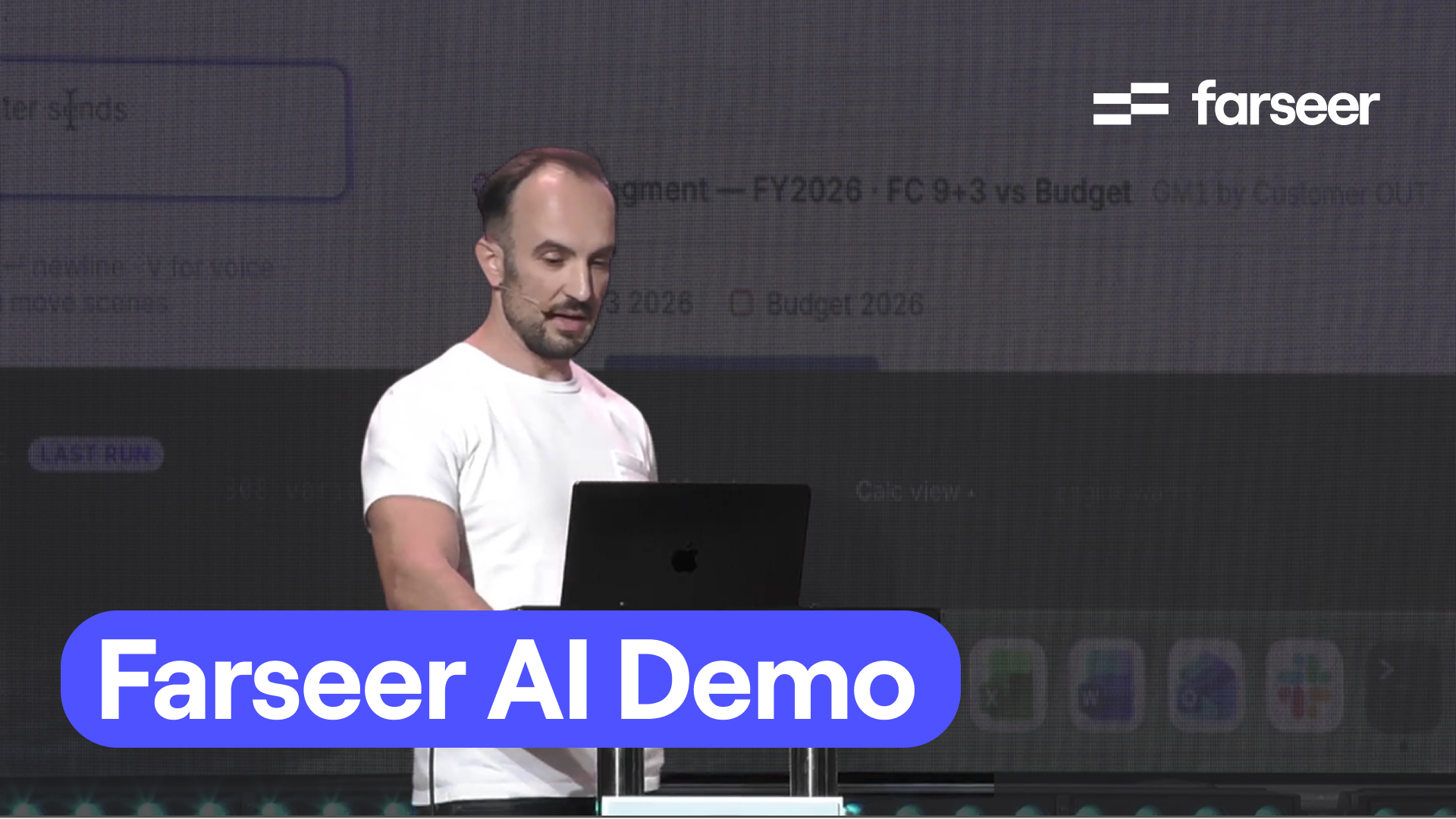
At Finance.Weekend I opened my talk with a scene every finance team knows. Two colleagues walk into a meeting with different numbers for the same thing, and the next twenty minutes go to arguing about where the numbers came from instead of what the business should do about them. Then I replaced both colleagues with AI, and nothing got better. One assistant put next year’s EBITDA at 18.4% and the other at 15.1%, and both were right, because one was reading the ERP while the other was reading the BI layer.
Most of the conversation about AI in finance skips over this. A smarter chat window sitting on top of disconnected systems and a few hundred spreadsheets will have the same argument about whose numbers are right, only faster. What decides whether AI is useful to a finance team is the thing it reads from, and in planning that thing is the model.
What Headless FP&A Means
Headless FP&A is the idea that the model is the product and every screen is one way of looking at it. In most finance teams it works the other way around: the report is what people build and maintain, while the logic behind it is spread across the files that feed it. When the model holds the data, the definitions and the logic in one place, a variance report, a price scenario, a board pack and a chat answer all become views of the same thing, so they have no way to disagree with each other.
Streams is how this works in Farseer. You ask Farseer AI a question in plain language, it works on the live model, and the answer comes back in whatever form suits the question, whether that is a table, a chart, a proposed change or a finished board pack. Once a view has done its job you can let it go, because the model it came from is still there, along with every change anyone has made to it.
Answers You Can Trace
The first thing finance people ask about AI is whether they can trust the number, and it is the right thing to ask. In Farseer you check an AI answer the same way you would check a colleague’s work, by following it back to where it came from. During the demo I asked what drives gross margin in our model, and Farseer AI walked the line from the board report through the forecast logic down to the source system, showing along the way which parts were locked actuals and which were plan.
That trail matters well beyond a demo. Auditors want to know how you calculate EBITDA, a new CFO has to understand a model somebody else built, and nobody on the team can hold the definitions of a few hundred KPIs in their head. When every answer comes from the model, the trail is there whenever someone needs to follow it.
Decisions While The Question Is still On The Table
A lot of finance work happens in the gap between a question and its answer. When a regional sales manager asks for a 2% discount on all his contracts, someone usually has to export the data, rebuild the calculation and come back days later with a single number, and by then the conversation has moved on without it.
In the demo the same request took a few seconds. Farseer AI showed that the discount would cost about 350 thousand in gross margin across 168 contracts, and because the model held the sales history, it could also run price elasticity scenarios showing how much extra volume the discount would have to bring in to pay for itself. That changed the conversation with the sales manager from a flat yes or no into a choice between real options: keep the discount, tie it to a volume commitment, or offer it only on the products where volume responds to price.
The speed comes from Rama, Farseer’s calculation engine, which recalculated more than 50 million cells in under three seconds once I approved the change. That is what lets you work through a scenario in the same meeting where the question came up.
Work That Comes To You
The part of the demo I find most useful had nothing to do with a question I asked. While I was talking, August actuals landed in the system, and an Automated Action that watches for that event picked them up, flagged a segment that had fallen well short of plan and broke the gap down into volume and price before anyone requested it. At the end of the session I turned the whole month into a standing instruction, so that every time actuals load, Farseer AI runs the variance analysis, rebuilds the board pack and sends it to management.
A person still makes every decision that matters. Farseer AI proposes changes and waits for approval before anything in the model moves, actuals stay locked, and every change is logged with who made it and when. The sheets your team already works in stay where they are as well, so anyone who wants to check a number by hand or make a change the familiar way can do that alongside Farseer AI.
What It Takes
Everything above depends on what sits underneath the chat. In the talk I described it as a layered cake with AI as the cherry on top: your systems of record loaded once into one place, then one set of definitions for how forecasts and budgets are built, then your planning processes running on those definitions, and only after all that the reporting and the AI. If you skip the layers, you are serving the cherry and calling it dessert.
Those layers are where Farseer has always done its work. The data platform connects ERP, CRM, HR and every other system of record before anything reaches the model, which is also what helps when an acquisition brings in data in different formats or when master data needs cleaning before it lands. Streams is available in Farseer today, so if you have a workflow you think AI cannot handle, bring it to us and we will run it on your model with you.


Digital Transformation in Finance: How Finance Teams Break Out Of Digital Planning Purgatory With AI
Read more
Farseer raises $7.2M Series A to build the Enterprise Operating System for Finance
Read more