80%
Faster cost allocation process
"Farseer has significantly enhanced the speed, quality and reliability of our insights."

Board’s performance can slow on large datasets. Compare Farseer as a Board alternative built to stay fast as your data and your planning grow.
Trusted by enterprise finance teams










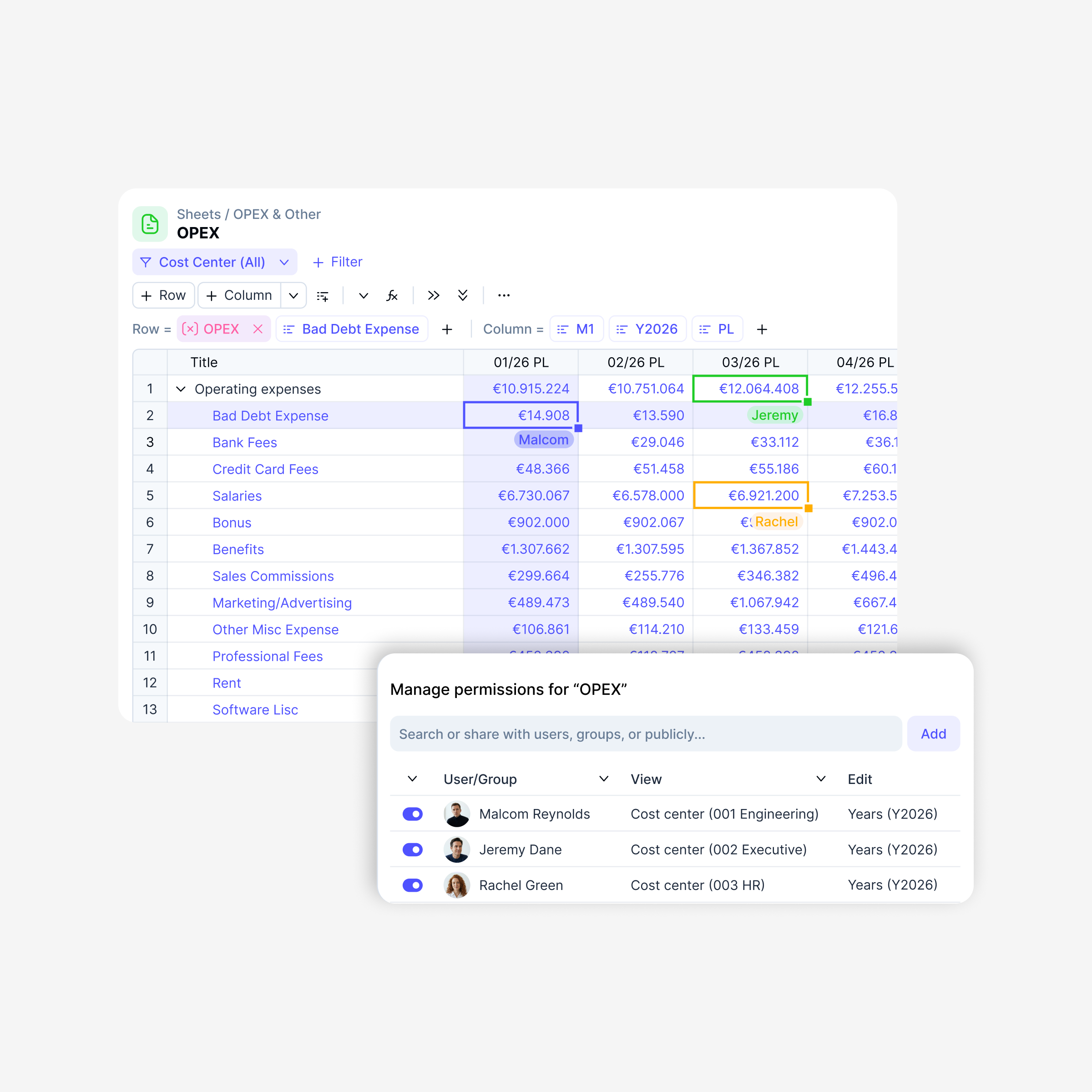
Board’s power is real – but unlocking it usually means a specialist.
Board reviews keep telling the same story – a tale of two products. The dashboards are easy to read; building anything past the basics means a steep learning curve and usually a developer or partner.
Farseer closes that gap: the team that owns the plan builds it themselves, without code or opening tickets.
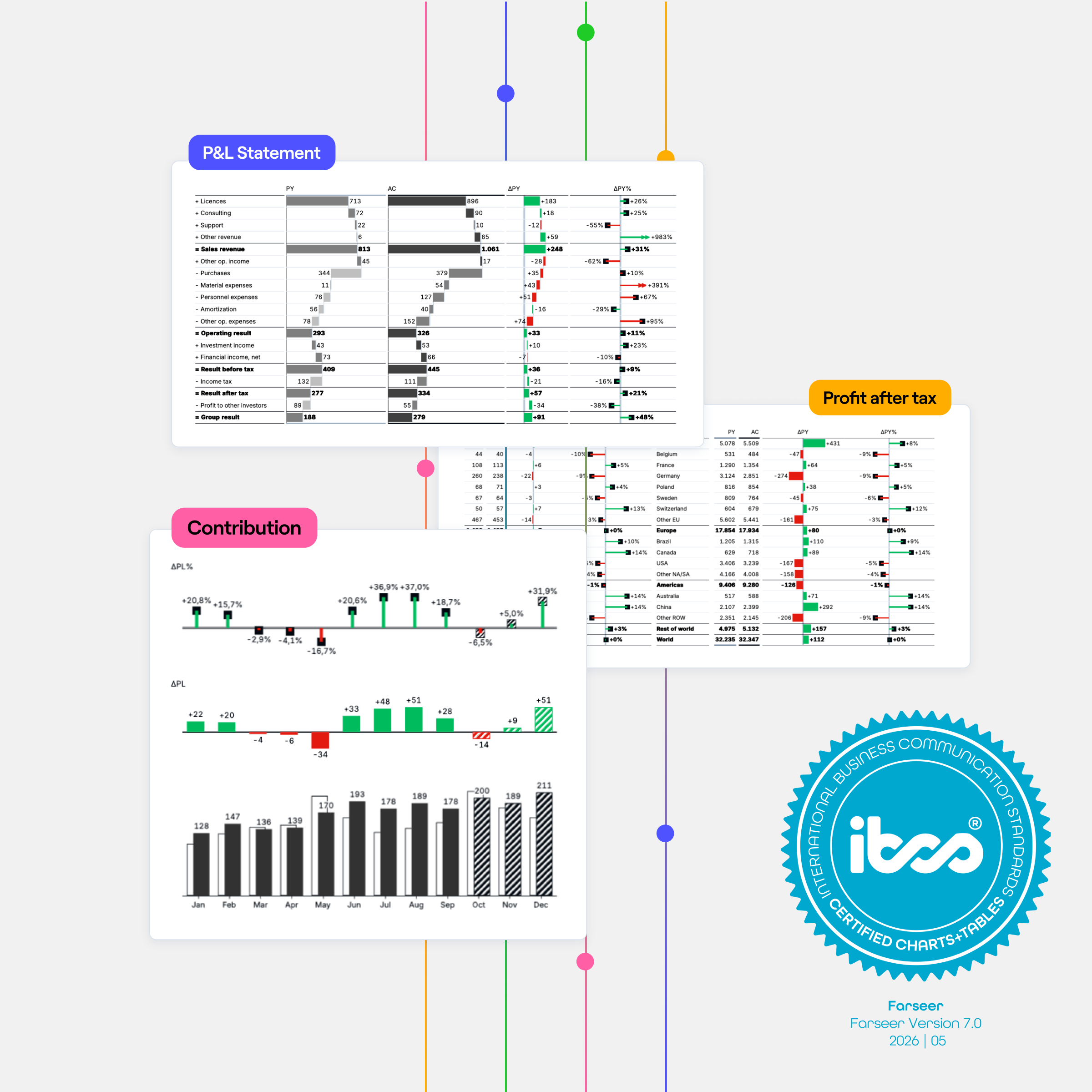
Every analyst builds a dashboard their own way. That’s the problem.
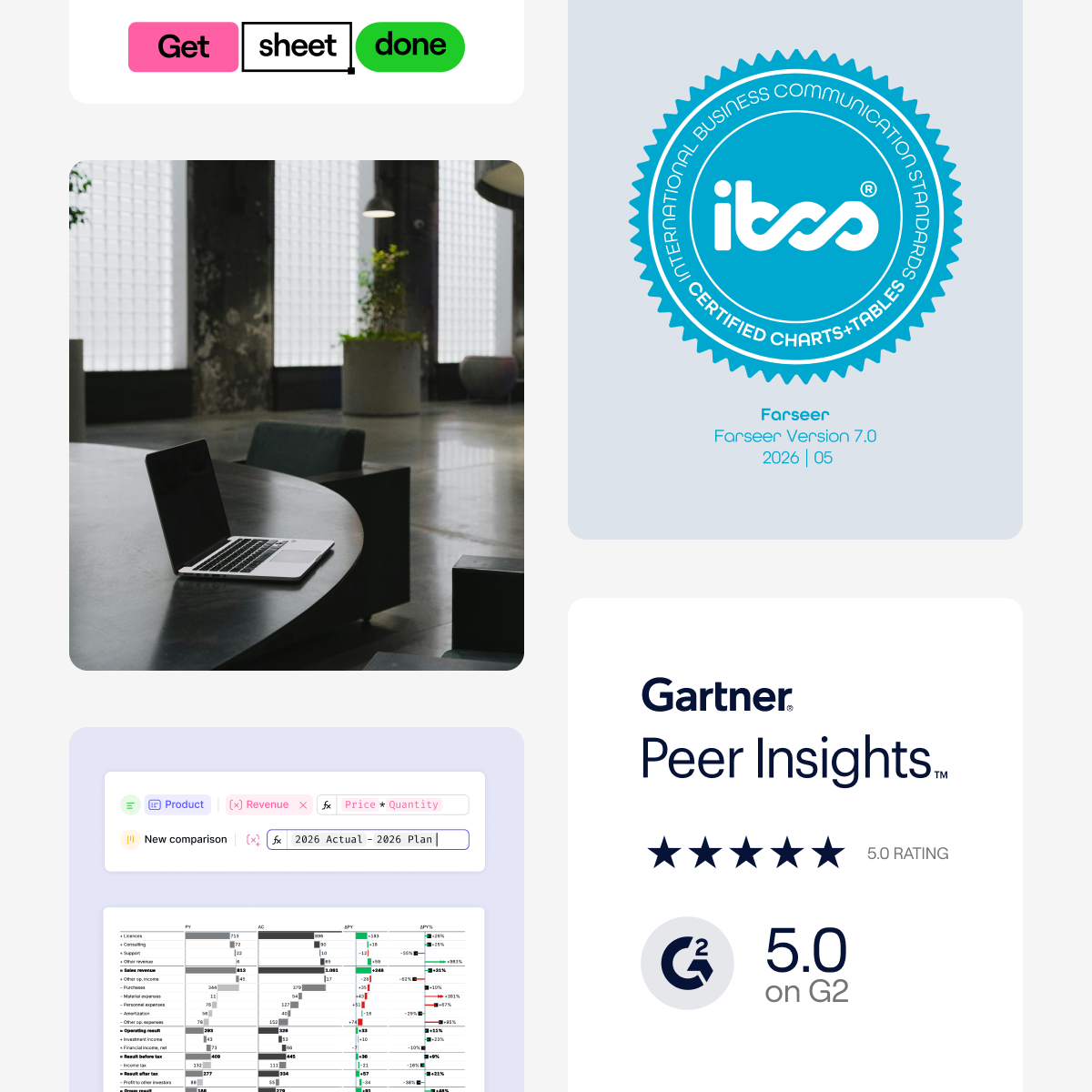
Most dashboards look however whoever built them felt like that day – one analyst’s red is another’s green, and the person reading it has to relearn the layout every time. IBCS is the standard that fixes that: consistent notation, so every report reads the same way and the variances that matter jump straight off the page.
Farseer’s dashboards are IBCS-certified out of the box. Board’s aren’t. If your numbers end up in front of a board or a group CFO, that consistency is the line between “nice chart” and “I trust this.”
Ask most planning AI a question and you get an answer you can’t check.
Here’s what most planning AI actually does: it takes a summary of your data and writes a nice-sounding answer on top of it. Sounds great until someone asks how it got there, and you can’t say.
Farseer works differently. Its three agents (Analyst, Strategist, and Modeler) run every answer as a real calculation on your governed model. So when it tells you what’s behind a margin miss, you can follow it right back to the formula and the assumptions under it.
80%
Faster cost allocation process
"Farseer has significantly enhanced the speed, quality and reliability of our insights."
50%+
Reduction in manual work
"Farseer is so intuitively easy to use that whoever logged in continued to use it."

70%
Fewer planning cycle steps
"Farseer's driver-based planning gave us a reliable structure and streamlined our entire process."

For finance-led planning, forecasting, and reporting, yes, and that’s exactly who Farseer is built for. Your team builds and owns the models, the dashboards meet a real reporting standard, and the AI traces every answer back to your numbers.
IBCS is a standard for how reports and charts get laid out: same notation, same colors, same way of showing actuals vs. budget vs. forecast, every time. The point is that nobody reading the report has to relearn it – a variance looks like a variance whether it’s in this month’s pack or last quarter’s, whoever built it. It’s big in European finance especially, and it’s the difference between a board reading your numbers in ten seconds and squinting at them for two minutes. Farseer’s dashboards are IBCS-certified out of the box; Board’s aren’t. If your reports go in front of a board or a group CFO, that’s worth caring about.
Yes, and it’s one of the places Farseer is built to pull ahead. The engine is designed to stay responsive on large datasets — millions of rows, multi-entity models — without the slowdown that some Board reviewers report once their data grows. If performance at scale is a worry (and if you’ve outgrown a tool before, you know it’s a real one), it’s worth testing both on your actual data rather than a demo dataset. We’re happy to run that test with your numbers.
Typically a single budget cycle, maintained by your own team afterward. Board implementations are capable but heavier — configuration depth and partner-led rollouts are part of what stretches timelines. If speed-to-value is the priority, that’s the clearest practical difference.
The question isn’t whether Board is powerful — it is — but whether you’re paying for enterprise depth and partner dependency you don’t need. If your team waits on a specialist for routine model changes, or your bill scales faster than your usage, the switching cost may pay back inside the first cycle. If you’re using Board’s retail or supply-chain verticals heavily, it may not — and we’ll tell you that up front.