
80%
Faster cost allocation process
"Farseer has significantly enhanced the speed, quality and reliability of our insights."

LucaNet is built to close the books. Farseer is built to close and plan, in one model, not two engines synced together. Same consolidation depth, without the seam between your plan and your actuals.

Trusted by enterprise finance teams


"From our SAP ERP, Farseer pulls all the historical data, prices, and rebates automatically. We can now create a preliminary sales plan in about ten minutes, apply growth targets, and get margin-level results immediately, something that used to take days."Read case study

"Farseer turned our dreams into reality. The tool is so intuitively easy to use that whoever logged in continued to use it. Farseer is a refreshment in terms of the ease of planning and reporting."Read case study

“We tested other solutions, but in the end we chose Farseer because it was very similar to Excel; intuitive, you can copy and paste, and it’s visually familiar. That made it easy for planners to transition. But underneath, it’s a properly structured model with fact tables, dimension tables, and variables everything we couldn’t have in Excel.”Read case study

"Feature-wise, Farseer was on par with the big players, but the difference was in the approach. The Farseer team was honest, hands-on, and they truly understood our needs. That's what sealed the deal for us."Read case study





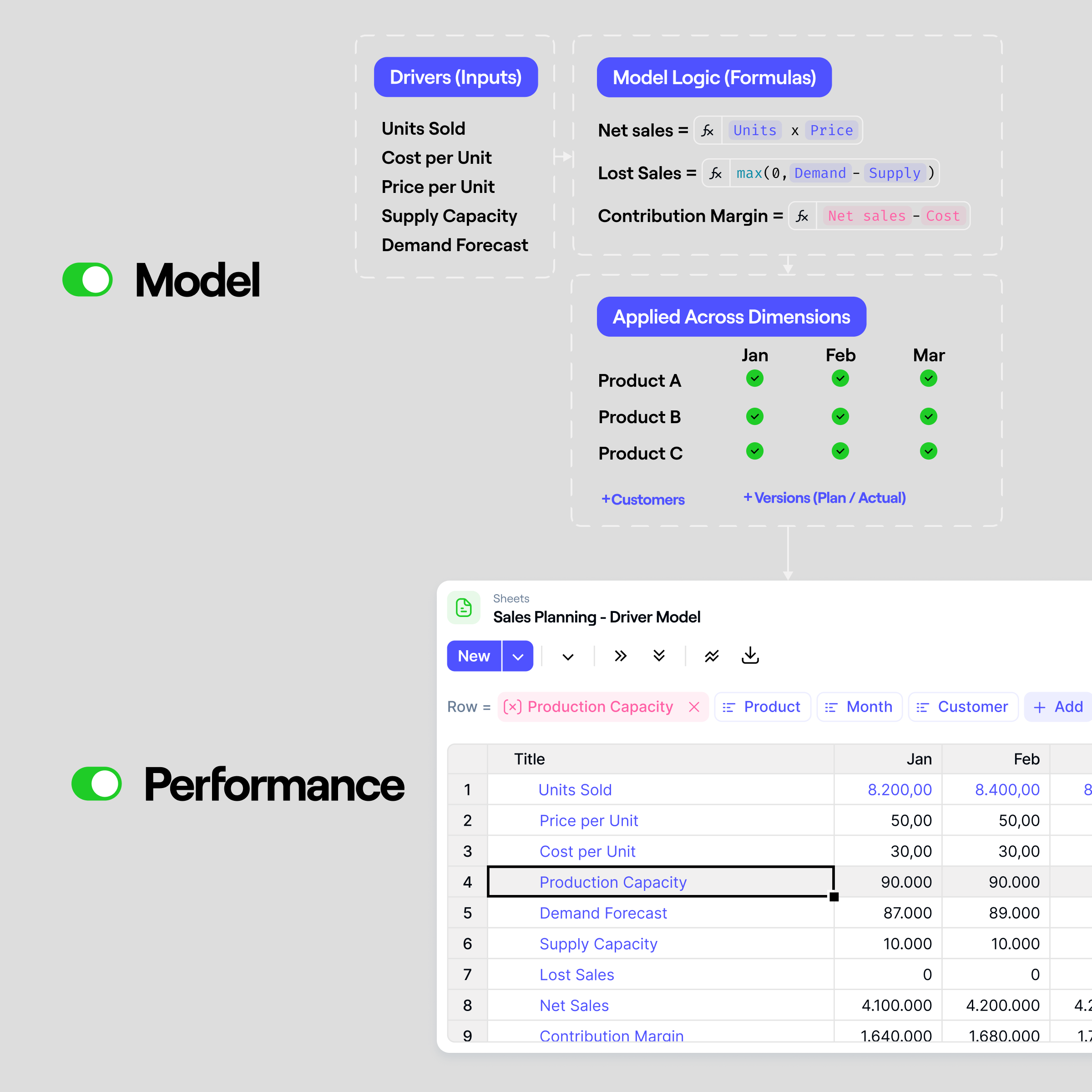
The biggest difference between Farseer and LucaNet is the architecture underneath.
Your plan and your consolidated actuals end up in different places, in different modeling paradigms, reconciled through a sync rather than one source of truth.
Farseer keeps both in a single governed model, so a change in an assumption flows straight through to the consolidated view, without handoff. Close and forecast stop being two separate fire drills.
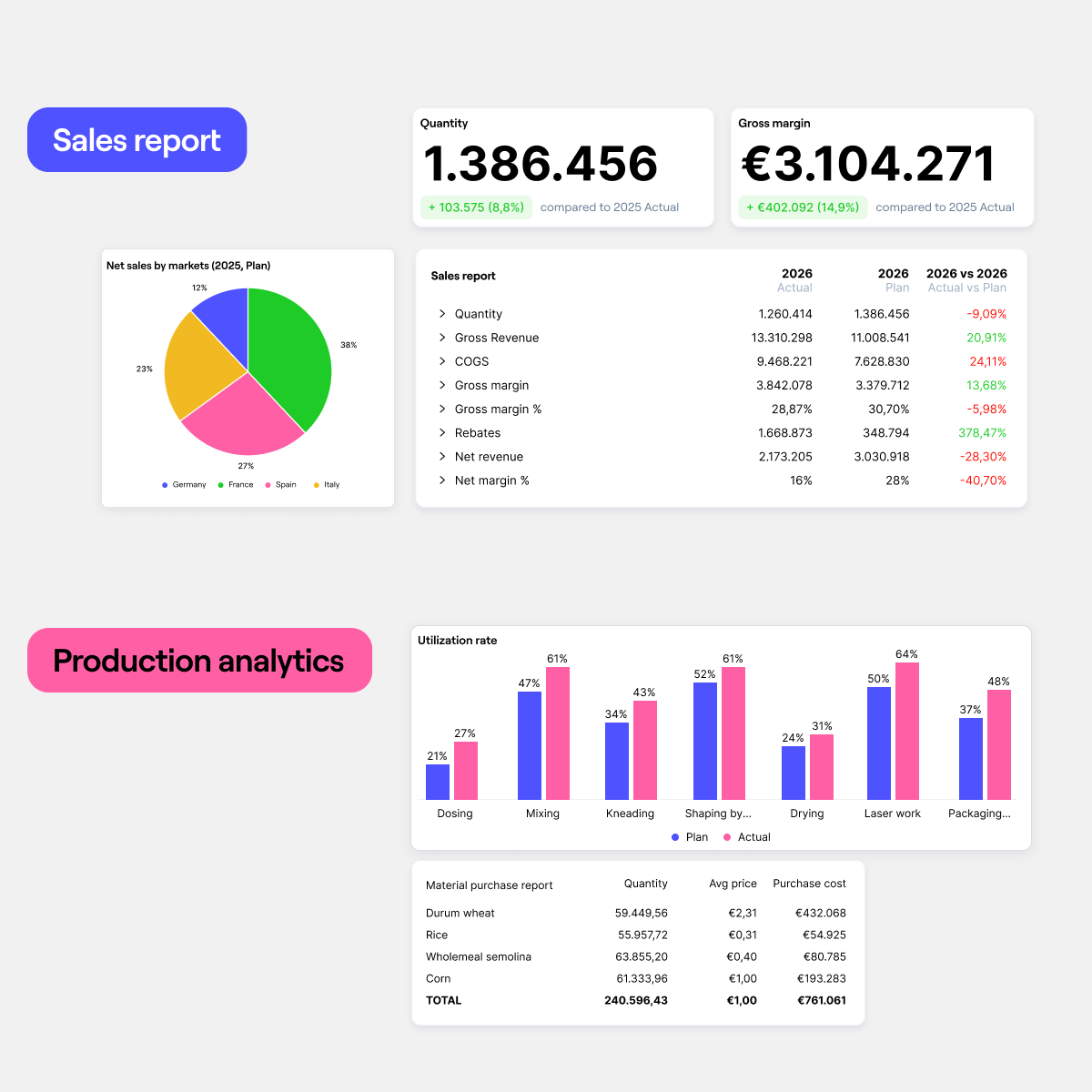
LucaNet’s own reviewers admit planning isn’t its strong suit.
One called the budgeting “not market leading”, fine, but not why you buy LucaNet. Others say it’s still being built out, which makes sense: LucaNet started on the consolidation side.
Farseer started on the other end: driver-based planning and rolling forecasts live in the same model your consolidation runs in. If you plan and re-forecast all year, that matters.
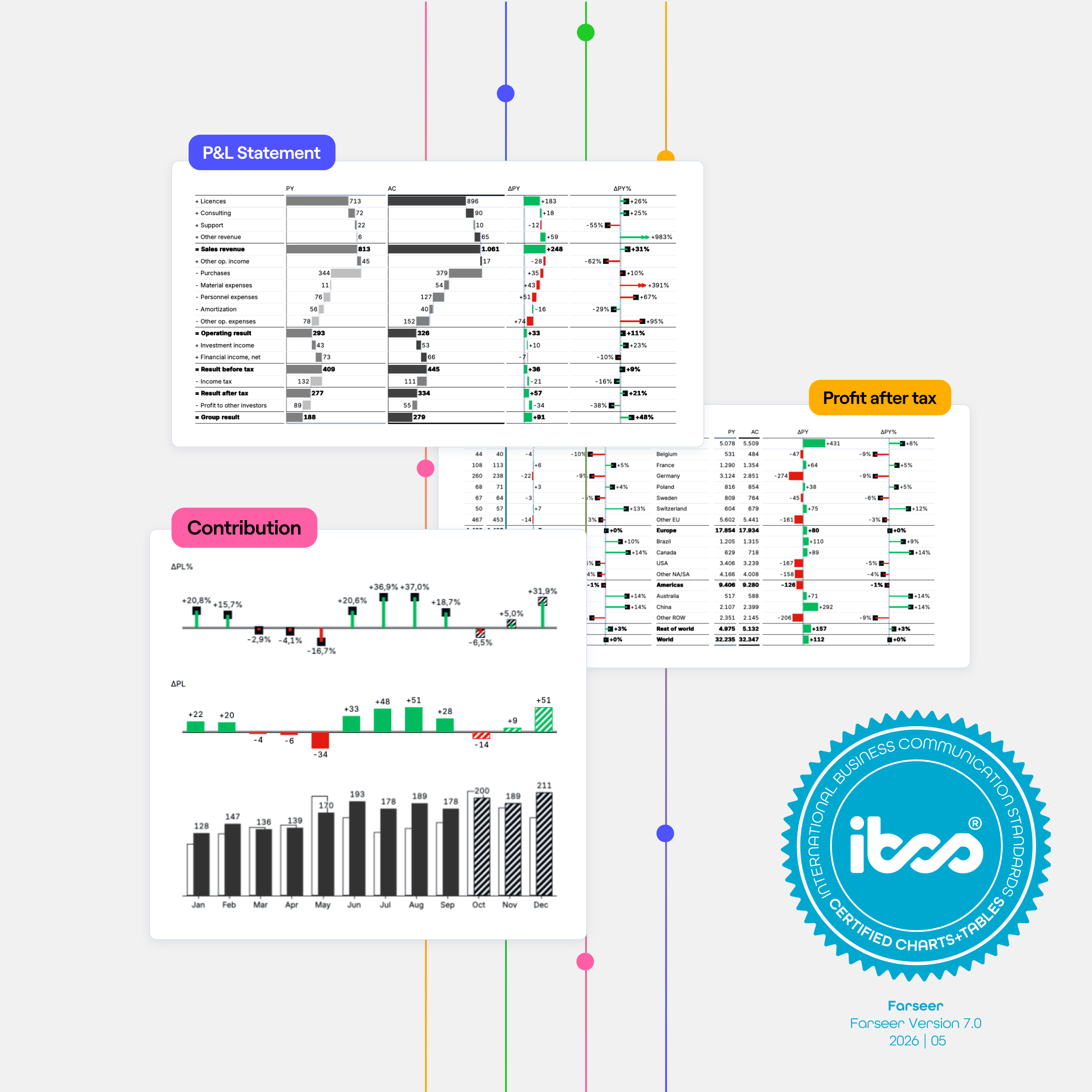
Farseer’s dashboards are IBCS-certified out of the box; LucaNet’s aren’t.
IBCS is the notation standard that makes every report read the same way: consistent formatting, so variances and outliers surface instead of hiding in whatever style the last analyst happened to use.
When your numbers land in front of a group CFO or a board, that consistency is the difference between a chart people squint at and a number people trust.
80%
Faster cost allocation process
"Farseer has significantly enhanced the speed, quality and reliability of our insights."
50%+
Reduction in manual work
"Farseer is so intuitively easy to use that whoever logged in continued to use it."

70%
Fewer planning cycle steps
"Farseer's driver-based planning gave us a reliable structure and streamlined our entire process."

Yes. Farseer has full consolidation parity on the capabilities most groups actually run: multi-entity, multi-currency translation, intercompany eliminations, and multi-GAAP statutory reporting across IFRS, US GAAP, and local standards.
The migration effort is real for any consolidation platform — it’s mostly re-mapping your chart of accounts, entity structure, and elimination rules. The upside is that once you’re in a single model, you’re not maintaining two systems and a sync between them. Most teams weigh the one-time migration against years of running plan and close as separate processes.
Not much on the headline. LucaNet launched its agent family (Analyst, Close, Modeler, Tagger, Report) in mid-2026, and like Farseer it separates deterministic calculation from AI reasoning so answers stay auditor-defensible. Farseer ships its own agents — Analyst, Strategist, Modeler — on the same principle. The real differentiator isn’t the agents; it’s what they reason over. Farseer’s agents work across one unified plan-and-consolidation model; LucaNet’s reason across two engines joined by a sync.
It depends on how many entities and how complex your elimination rules are, but most consolidation migrations run a few months — the bulk of the work is re-mapping your chart of accounts, entity structure, and intercompany logic. The advantage on the Farseer side is that you’re standing up one model instead of a consolidation engine plus a separate planning tool, so there’s less to configure and less to keep in sync afterward. Ask for a scoped timeline against your actual entity count rather than a generic estimate.
Yes — that’s part of the point of a single model. Finance users build and adjust plans, drivers, and reports without needing a consultant or a separate technical team for every change, which is a common friction point reviewers raise about heavier consolidation tools. There’s still a learning curve on any platform of this depth, but the day-to-day changes stay in finance’s hands rather than going through IT or an implementation partner.