8 Common Planning Dysfunctions That Undermine Pharma Performance

Planning in pharma often feels harder than it should be. It requires constant coordination across business units, time zones, and functions, all while responding to industry-specific challenges like:
- Multiple markets
- Regulatory changes
- Long production lead times
- Revenue and margin complexity
These factors make planning slow, disconnected, and often reactive.
Many companies still plan in spreadsheets or legacy tools that don’t reflect how the business actually works. KPMG adds that most planning processes are still manual, disconnected, and hard to adapt when the market shifts. As a result:
- Sales, Ops, and Finance work in silos
- Each department uses different data and assumptions
- Decision-making slows down
- Mistakes get expensive
Here are the eight most common challenges we see inside pharma manufacturing and distribution, all based on real operations, not theory.
Still Planning Complex Demand in Excel
Excel is familiar and flexible, but in pharma, that flexibility turns into fragility. Demand planning in this industry is rarely simple. It involves:
- Dozens of SKUs across multiple regions
- Seasonal shifts and localized demand patterns
- Regulatory timelines that vary by market
- Pricing and reimbursement logic that changes constantly
Managing all this in spreadsheets leads to version chaos, formula errors, and oversimplified assumptions. Collaboration turns into “version control warfare” when no one knows which Excel is the real final_final_v7.
KPMG’s 2024 Gross-to-Net report stresses that accurate pharma forecasting requires the ability to model multiple revenue drivers and assumptions. That’s nearly impossible with static spreadsheets.
The fix:
Move to a centralized planning platform where multiple contributors can work in real time, with shared assumptions and clear version control. Demand logic, pricing rules, and margin assumptions should live in one place, not ten Excel tabs.
Fragmented Planning Between Regulatory, Ops, and Sales
One of the biggest issues we see is a lack of coordination across departments. Each team works with its own priorities and timelines:
- Regulatory is focused on approvals
- Operations is managing production capacity
- Sales is reacting to market demand
- Finance is trying to build forecasts and budgets, often with outdated or incomplete inputs
Imagine a product launch gets delayed; regulatory and sales adjust their plans, but finance is still forecasting Q2 revenue, and operations has already scheduled production. The result is misalignment, lost time, and avoidable cost.
The fix:
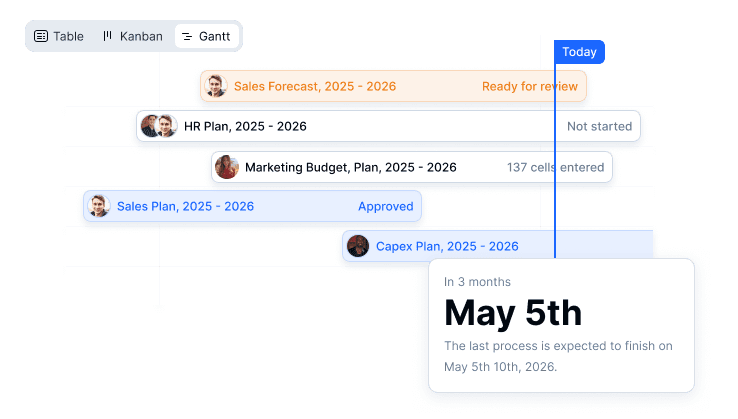
Integrated Financial Planning (IFP) solves this by connecting regulatory, operational, and financial inputs in one place. When something changes, like a launch delay, everyone sees the impact instantly. KPMG research confirms that siloed planning slows down response time. IFP reduces that friction.
Read more: Financial Consolidation: Definition, Challenges & Solutions
Forecasting Doesn’t Reflect Channel-Specific Realities
Revenue forecasting often relies on averages, average margins, average payment terms, average volume. But pharma revenue isn’t average.
You’re dealing with:
- Public tenders, which often involve heavy discounts
- Wholesalers, who pay slower
- Hospitals, with contract-specific terms and returns
If your model assumes a flat 45% margin, but most revenue comes from tenders and wholesalers with heavy discounts and long payment terms, you’re planning without real visibility.
KPMG’s Gross-to-Net report makes it clear: accurate forecasting requires modeling rebates, discounts, returns, and price protections by channel, not just by product or region.
The fix:
Forecast by channel. Layer in volume terms, payment profiles, rebates, and pricing protections. It takes more effort upfront, but produces forecasts you can actually rely on.
No Link Between Production Planning and Financial Forecasts
Pharma production is tightly tied to batch processes and long lead times. Yet in many companies, ops and finance still plan separately.
One team assumes stock readiness in 12 weeks. Another forecasts revenue in six. No one syncs timelines, and cash flow projections miss the mark.
This issue becomes more critical in complex or highly regulated environments. According to Gartner, many pharma supply chains are still reactive, not designed to link supply planning with financial targets and risk scenarios. That creates disconnects when plans are static, and business conditions change.
The fix:
Make sure production timelines, batch constraints, and inventory targets are connected directly to your revenue forecasts. This isn’t just about syncing up Excel files. It’s about having a planning process where finance, ops, and regulatory teams work from the same base assumptions.
Too Many Stakeholders, Not Enough Control
Pharma companies are often decentralized, with teams in multiple countries or regions managing their own numbers. Collaboration is necessary, but without structure, it becomes unmanageable.
What we often see:
- Each country sends in their own spreadsheet
- Cost bases, exchange rates, and local assumptions vary
- There’s no standard format or logic
- Controlling spends weeks trying to consolidate and clean the data
KPMG’s Life Sciences Tech Report points to this: fragmented ownership and inconsistent processes are key blockers for planning maturity.
The fix:
Defining clear ownership for each part of the plan helps. Standardize inputs. And most importantly, bring all contributors into a single shared system, not ten disconnected Excel files. Structure makes collaboration possible at scale.
Version Chaos During Budget Season
Budgeting often spirals into a version-control nightmare. Everyone works in their own Excel file, edits are sent via email, and files are named things like “Q4_forecast_FINAL_v8.xlsx.”
Sales updates forecasts. Ops tweaks costs. But finance presents last week’s version to the CFO, and the numbers are off.
Gartner calls for tools that provide a live, shared plan across functions. No more file exchanges, no more reconciling edits across five documents.
The fix:
Centralizing your planning data in a live system where contributors make updates directly, with version control, audit trails, and defined responsibilities solves this issue. That way, the focus shifts from chasing files to making better decisions, faster.
Read more: Budget Management Software for Business: How to Finally Leave Excel Behind

Planning Doesn’t Adapt to Regulatory or Market Disruptions
Plans need to adapt, especially in pharma, where disruptions are frequent. But in many companies, planning is still done once a year, with little room for adjustment.
What happens:
- A launch is delayed
- An API supplier raises prices
- A key tender falls through
But the plan isn’t updated, and finance keeps reporting on revenue that isn’t going to materialize.
Gartner reports that only 19% of pharma CSCOs fully incorporate scenario planning into their operations. That’s a huge gap, and a missed opportunity.
The fix:
Embed scenario planning into your process. Build models that ask “What if the launch slips by 3 months?” or “What if raw material prices spike 15%?” If your model can answer those questions, you can adjust before the impact hits.
Read The Compliance Iceberg: Your Financial Models May Be Missing Billions in Risk
High-Effort Reporting, Low-Value Output
This one is familiar to every controlling team: you spend two weeks preparing a perfectly accurate report, but no one has time to explain why margins dropped or forecasts changed.
What that looks like:
- Data pulled from 5+ systems
- Manual formula checks
- Dozens of hours formatting presentations
By the time the pack is ready, it’s outdated. The board gets the “what,” but not the “why.”
KPMG’s research shows that despite investing in technology, many pharma companies still rely on disconnected tools, which block insight.
The fix:
Automating routine reports and consolidating data sources frees up time for analysis, not just data prep. That’s how controlling adds value: by explaining “why,” not just “what.”
Planning That Actually Works for Pharma
Every pharma company has the same challenge: the plan is there, but keeping it aligned is hard.
- Regulatory works on its own cycle
- Commercial moves fast
- Ops needs long production windows
- Finance tries to connect it all, usually through spreadsheets and email threads
Revenue assumptions sit in one file. Inventory volumes in another. Pricing logic is buried in someone’s inbox. By the time the board sees the report, the numbers are already outdated.
What solves this.
Integrated financial planning.
- One structure
- One version
- One platform for everyone
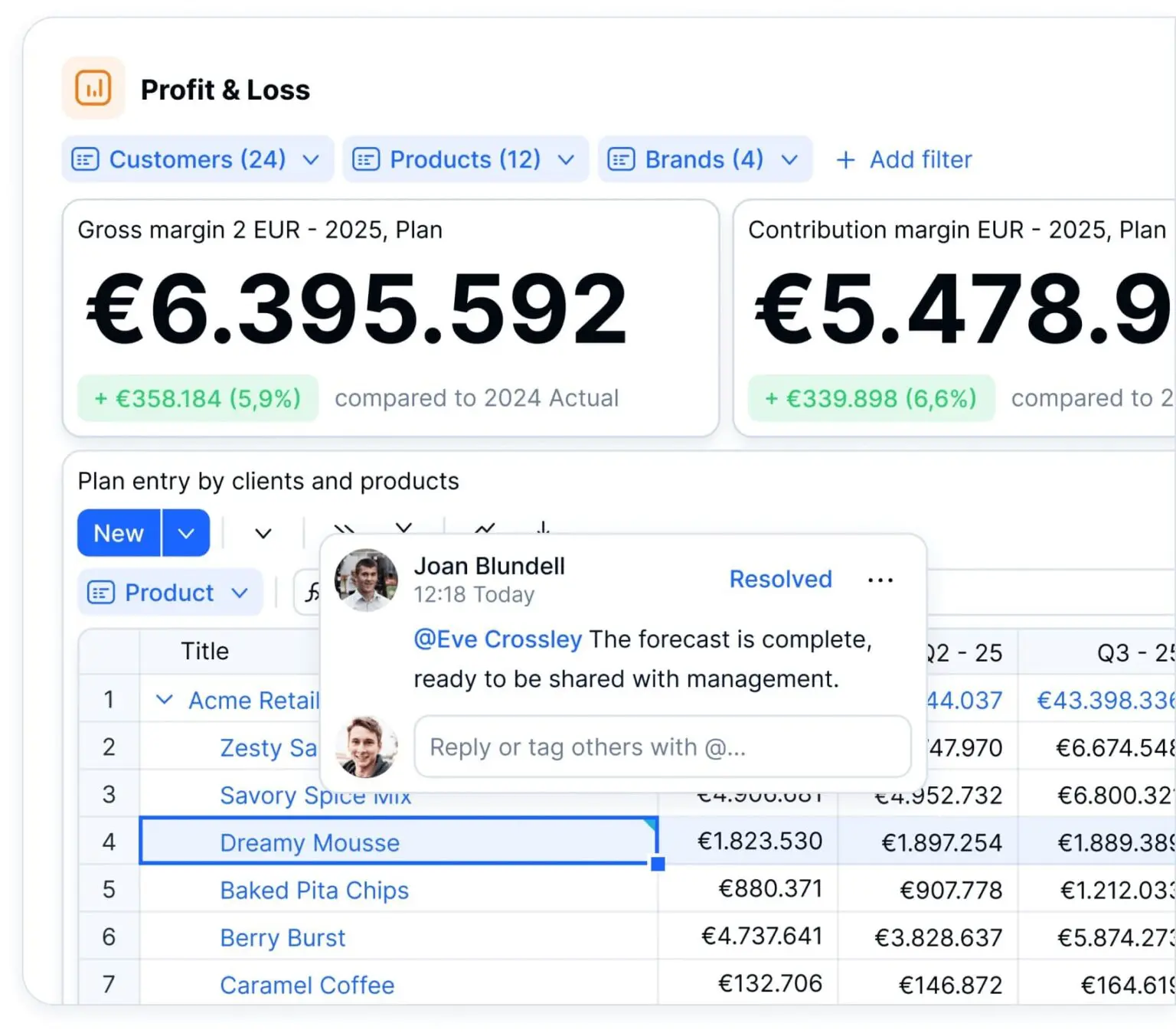
When everyone works from the same data, assumptions, and timelines, planning becomes strategic, not reactive. If your planning process feels more like version control than business control, it’s time to rethink the system, not just the spreadsheet.


Budget Forecasting Methods: 6 Approaches Every CFO Should Know (And How to Choose)
Read more
Strategic Financial Planning That Actually Drives Results
Read more