Integrity
Data lives in Excel files, ERP exports, BI tools, emails, and local versions.
Finance spends more time reconciling numbers than analyzing them.
Replace dozens of disconnected files with one powerful platform for budgeting, forecasting, and collaboration.
Less manual work. Fewer errors. More time for real analysis and decision-making.
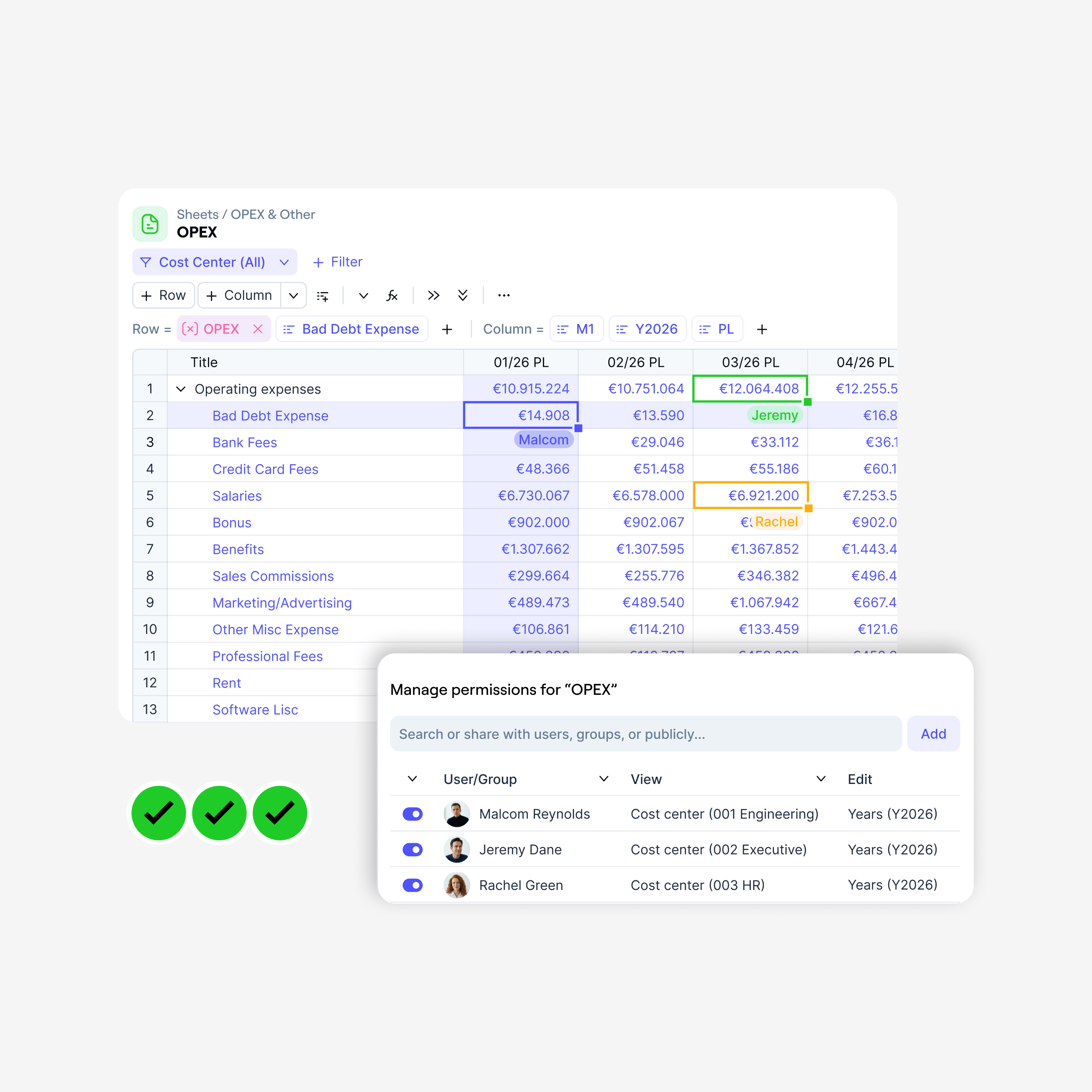
Trusted by enterprise finance teams








Data lives in Excel files, ERP exports, BI tools, emails, and local versions.
Finance spends more time reconciling numbers than analyzing them.
Every change triggers manual updates.
Consolidation takes weeks. Your budget is often outdated before it’s even approved.
Budgets are built once a year and then “protected.”
Reforecasting is painful. Scenario planning is avoided because it means rebuilding models.
Close the gap between your source systems and your final board pack. Replace the chaotic Excel middle-layer with a single, governed planning engine.
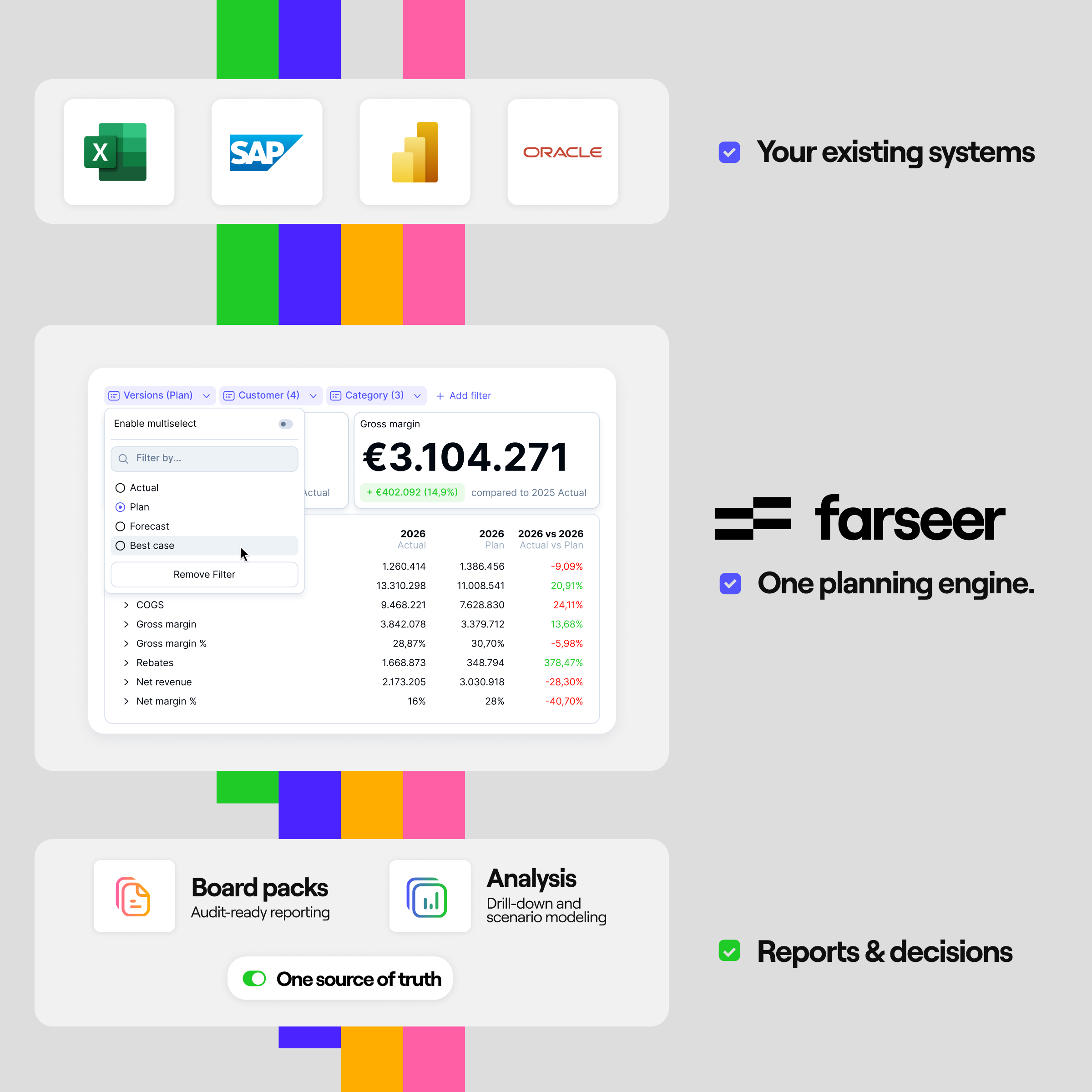
Faster Planning
Cut cycle steps in half. From manual consolidation and version chasing to one connected plan that updates as actuals land.
Infinite Scenarios
Build and compare scenarios side by side in the same model. Adjust drivers and see the impact across every entity instantly.
Driver-Based Logic
No broken Excel formulas to debug. Change an operational driver and watch revenue, costs, and headcount flow through automatically.
Farseer keeps your budget connected to live data, not trapped in static spreadsheets. Adjust assumptions, respond to market shifts, and keep leadership aligned with full visibility across the organization – no delays, broken formulas, or surprises.
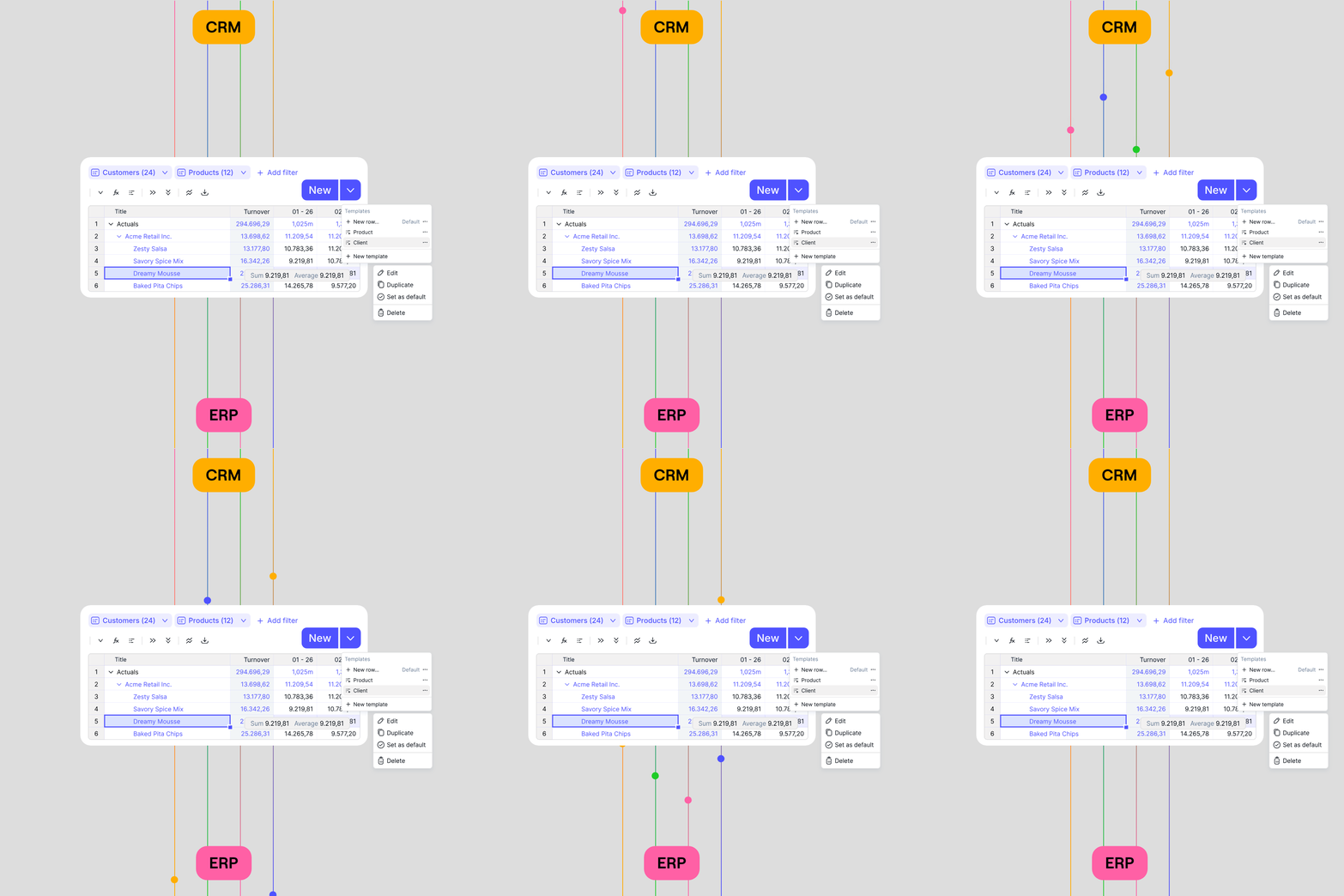
Farseer builds driver-based forecasts that match how your business runs, across teams, markets, and entities. Model revenue, costs, headcount, and investments the way your business actually operates, and every change updates your financials instantly.
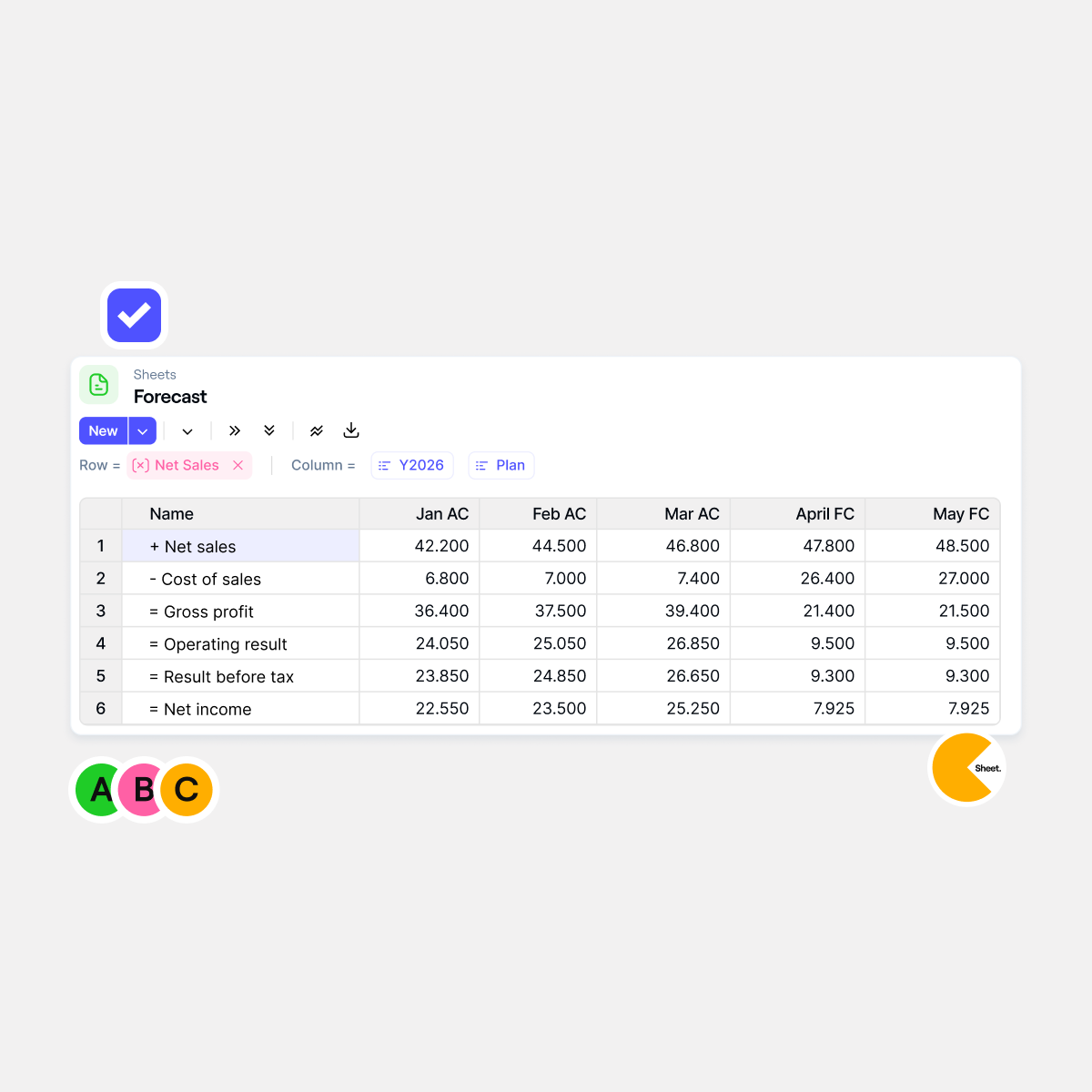
Build and compare multiple scenarios within one consistent model. Adjust key drivers and see the financial impact instantly across all entities and statements, so leadership can assess downside risk and act early instead of rebuilding models from scratch.
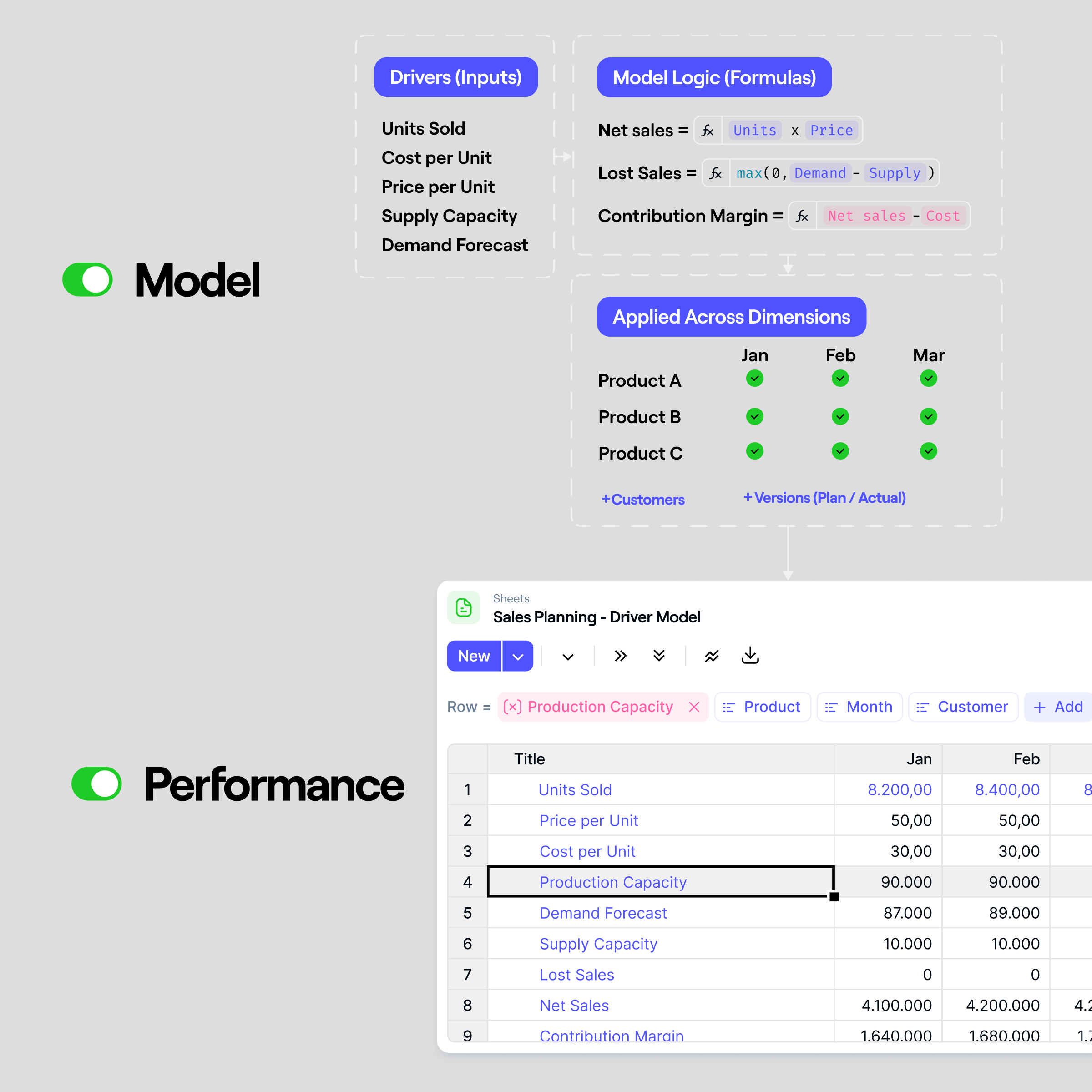
Replace manual consolidation and version chasing with one connected plan. When a driver moves, your P&L, balance sheet, and cash flow move with it, no waiting weeks for the budget to be approved before it’s already outdated.
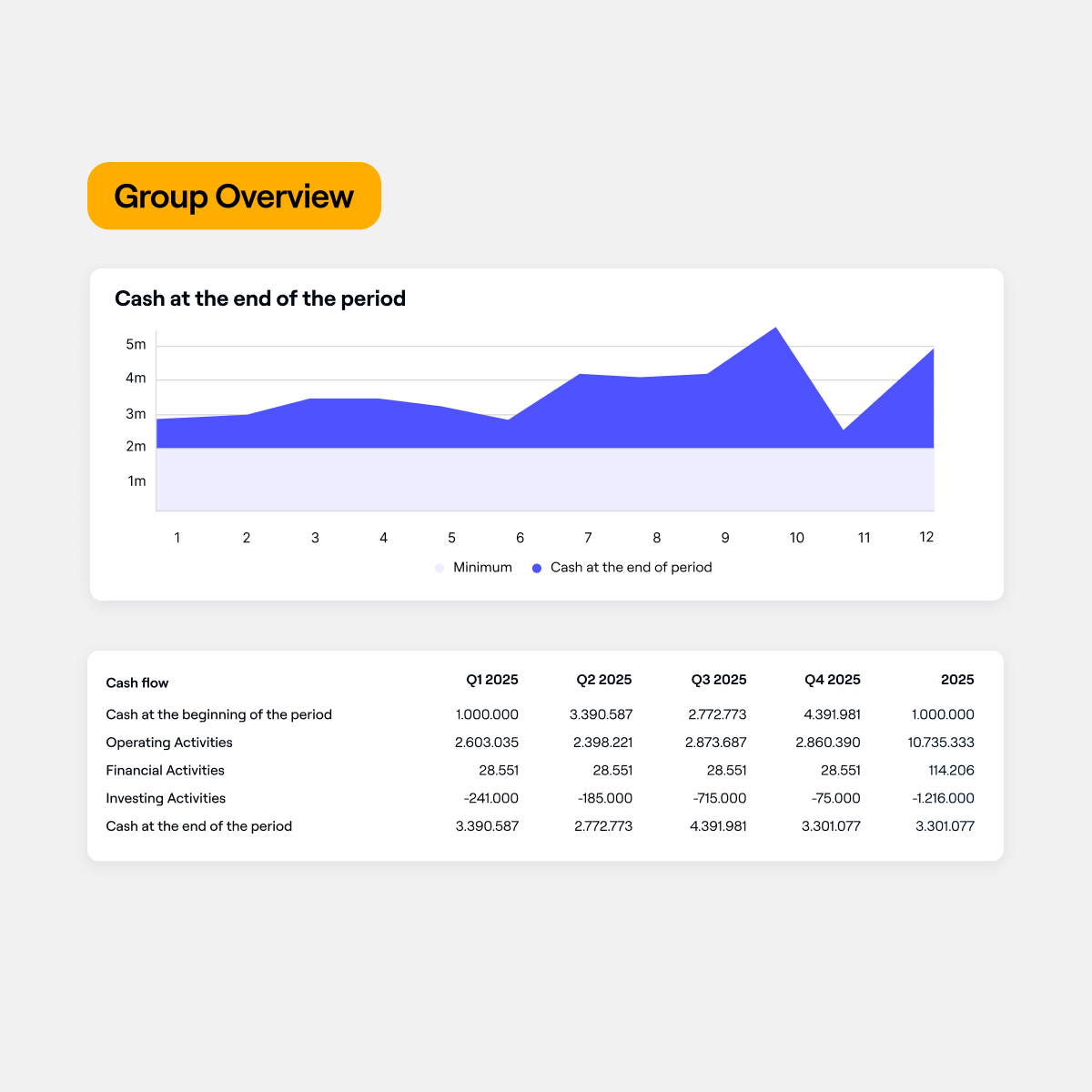
Plan across entities, markets, and currencies without rebuilding the model for each one. Farseer handles consolidation, intercompany matching, and currency conversion automatically, so your group-level forecast is as reliable as the local ones it’s built from.
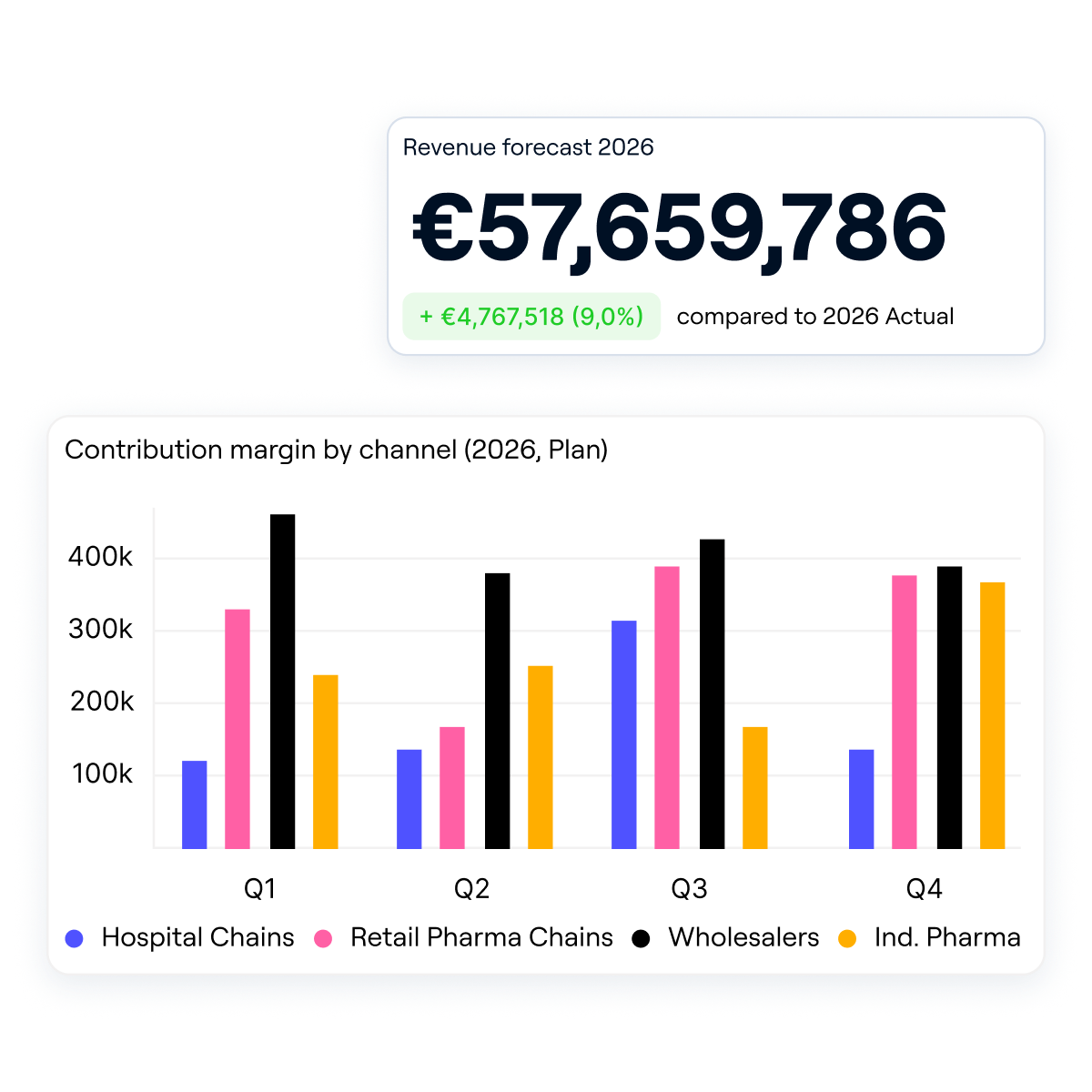
50%
Less time spent on processes
"Farseer has significantly enhanced the speed and reliability of our processes."

70%
Fewer planning cycle steps
"Farseer's driver-based planning gave us a reliable structure and streamlined our entire process."

30%
Faster reporting and analysis
"We now have a single source of truth — everyone looks at the same numbers, in the same version."

Take your forecasting beyond the annual budget.
We review your budgeting cycle, drivers, and reporting needs to design the right setup.
We integrate your ERP, CRM, and spreadsheets into one isolated, ISO-certified environment.
Your team can budget, forecast, and model scenarios in one connected platform.
Budgeting defines a fixed financial plan for a set period, while forecasting continuously updates projections based on actual performance and new assumptions. Modern finance teams rely on both; budgets for targets and forecasts for real-time decision-making.
Farseer replaces fragmented spreadsheets with one connected platform for planning, forecasting, and reporting. It automates calculations, keeps data in sync, and enables teams to collaborate in real time, reducing manual work and accelerating decision-making.
Farseer provides a single source of truth with a powerful calculation engine, controlled collaboration, and full transparency. This ensures consistent numbers, clear ownership, and complete confidence in your data.
Driver-based budgeting links financial outcomes to operational drivers like headcount (workforce planning), pricing, or volume. This makes plans more accurate, easier to maintain, and aligned with how the business actually operates.
Improving accuracy requires real-time data, driver-based models, and continuous updates. By linking assumptions to actual business drivers and updating forecasts regularly, teams can respond faster and make more reliable decisions.