The Margin Math CPG CFOs Can’t Do in Excel Anymore

Mondelez International is one of the largest snack and cookie companies in the world. A key ingredient to many of their iconic products, such as Oreo, Toblerone, and Chips Ahoy, is cocoa. In the final weeks of 2024, Mondelez International’s Finance team closed its 2025 Budget, locking in a gross margin assumption based on a cocoa price of $5,000 per ton. By January 2025, cocoa prices had hit a record high, double the assumption on which the financial performance for 2025 hinged. The result: gross profit margin dropped by more than 10 percentage points in a single fiscal year, earnings nearly halved, and the cost of producing snacks surged by roughly 25%.
Mondelez’s story is not unique. The top CPG company’s EBIT margin is shrinking and currently sits at a 10-year low. Leading CPG companies with strong brand loyalty have been able to raise prices, only to see that gain blunted by an almost identical rise in the cost of goods sold. The sector has been pulling the same lever harder with diminishing returns.
Companies that adopt flexible, iterative budgeting and forecasting, rather than the traditional annual budget cycle, will be at a significant advantage in adjusting their business models and taking advantage of different margin narratives rather than being victims of them.
Three Margin Stories, Three Different Sectors
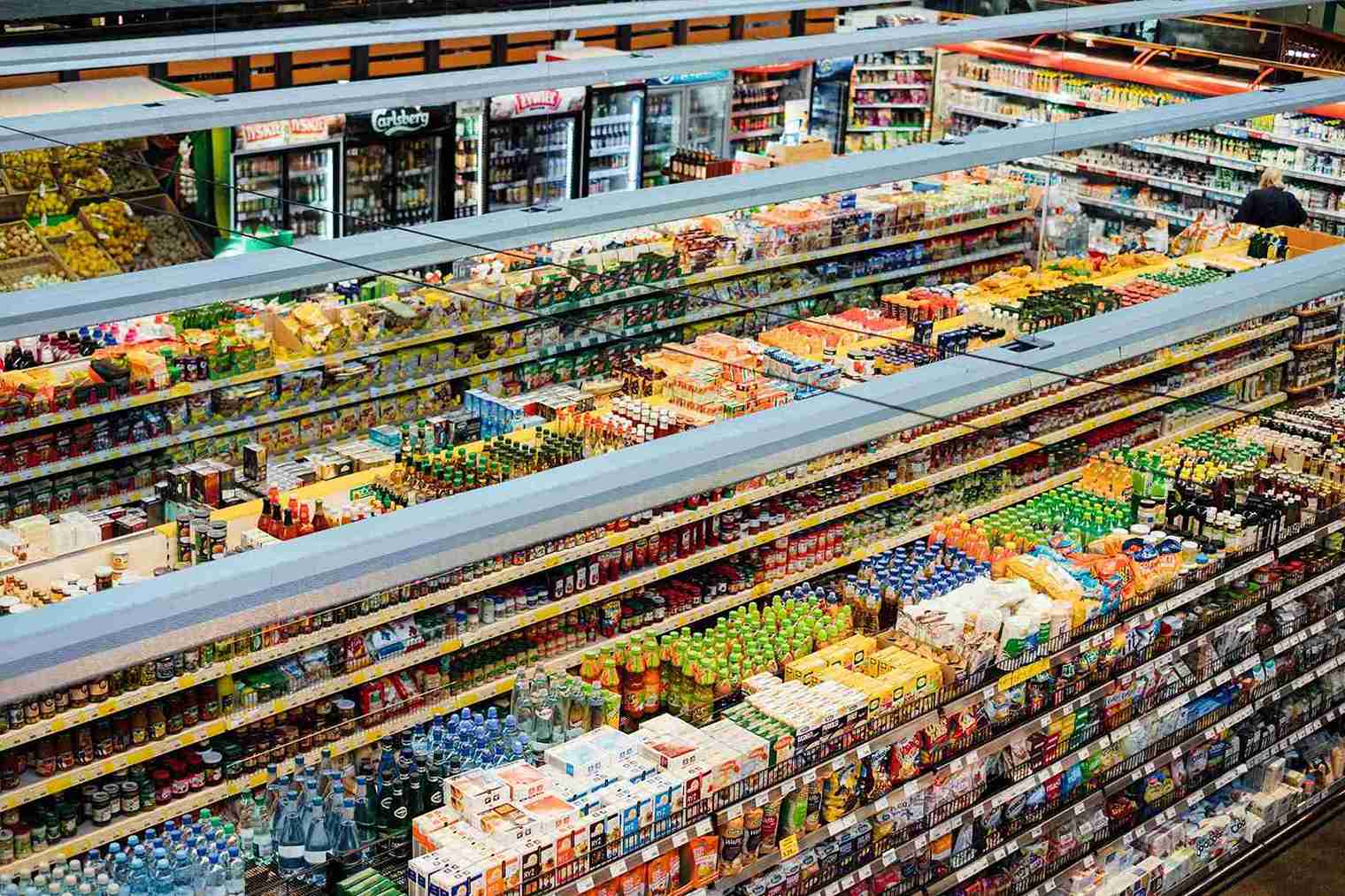
Average EBIT margins for the top CPG companies remain below pre-COVID levels even after a partial recovery in 2024, “aided by lower input costs,” but have yet to fully recover. Industry impacts are uneven and can be seen by looking at three CPG sub-sectors: personal care, beverage, and packaged food.
Personal Care Brands Got Pummeled, Then Rebuilt
Household and personal care companies have significant commodity exposure to fiber, resin, and energy, all of which have seen sharp increases in costs beginning in 2021 and 2022. To combat the increase in input costs, most major players executed productivity programs, such as:
- Procter & Gamble, which initiated “manufacturing productivity savings” or “manufacturing savings projects”, as they are referred to in its annual reports. P&G attributed a 220 basis-point margin increase from these initiatives as the primary driver of gross margin improvement in FY2024, alongside lower commodity costs and higher pricing.
- Kimberly-Clark drove cost optimization through its FORCE (Focused On Reducing Costs Everywhere) initiative, pursuing a “productivity-led” growth strategy to offset inflation and fund reinvestment in its brands. Since 2021, the initiative has yielded over $1 billion in cost savings.
- Colgate-Palmolive used a series of ongoing funding-the-growth cost-saving initiatives to reduce costs across direct materials, indirect expenses, distribution, logistics, advertising and promotional materials, among other areas.
Today, all three have rebuilt gross margins to levels at or above their pre-COVID baselines. This shows that companies that treat productivity as a permanent operating discipline, not a one-time fix, can pivot and thrive in a changing world.
Beverage Concentrates Barely Felt It
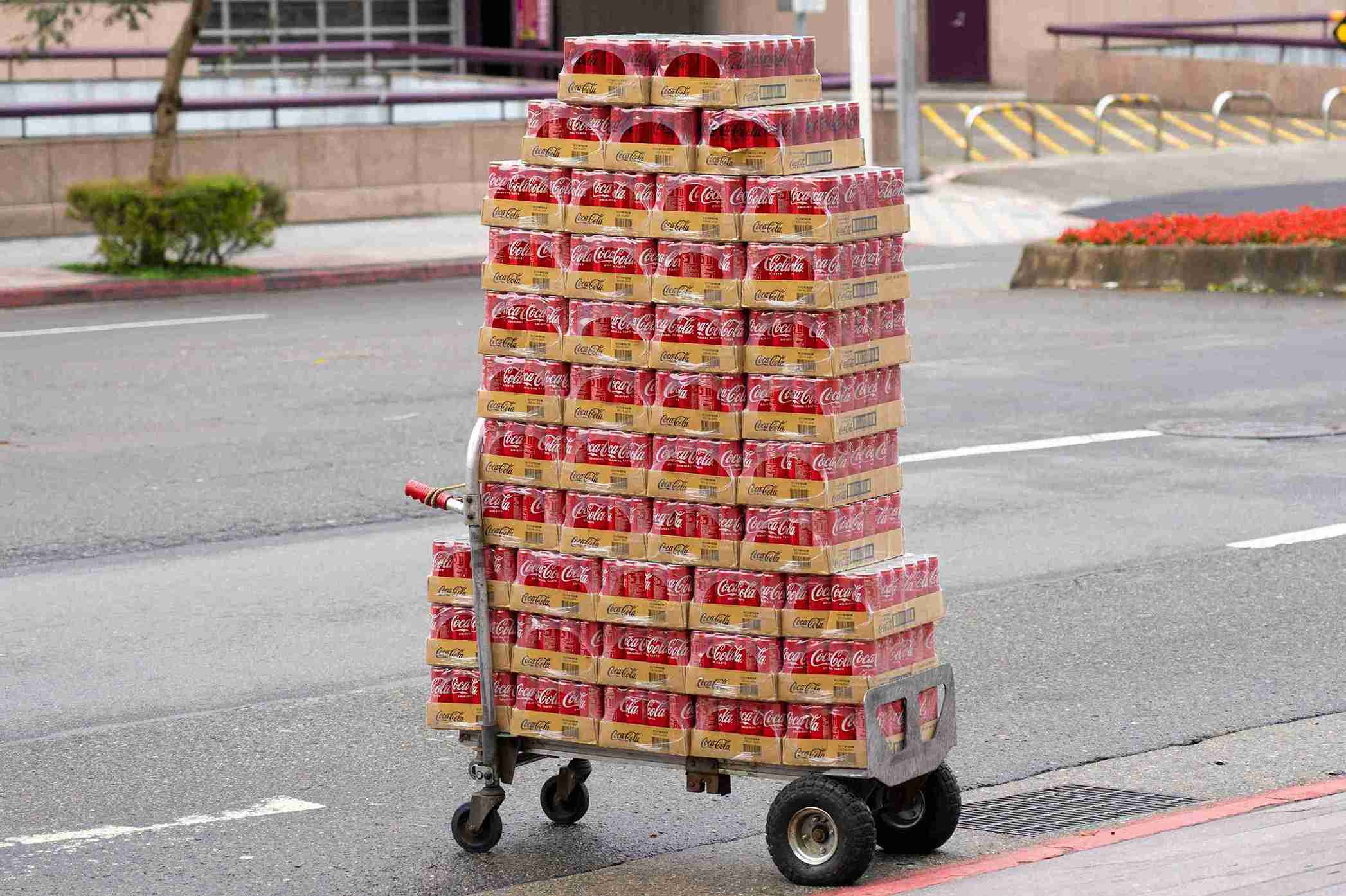
Coca-Cola and PepsiCo held gross margins well above 50%, with neither company experiencing the double-digit compression seen elsewhere across the entire 2020 to 2025 window. Why? Their business model is based on selling flavor and distribution rights with low-risk exposure to commodities and other inputs. The economics are simple; gross margins are driven by brand and infrastructure, both of which compress slowly and recover quickly when pricing holds.
Packaged Food Still Bruised
Nestle, Unilever, Mondelez, and Kraft Heinz absorbed multi-year margin compression that has yet to fully reverse.
- Nestle’s reported gross margin dropped sharply under the weight of what its 2023 full-year results release described as significant cost inflation, with a partial recovery through 2024 before another slip in 2025.
- Unilever rebuilt its operating margin through gross profit expansion in 2023 and 2024 but started from a lower base after a severe 2022.
- Mondelez faced “unprecedented cocoa cost inflation,” erasing roughly 10% of adjusted EPS in 2025.
- Kraft Heinz’s gross margin held in 2024, but, per the company’s press release, reported operating income fell sharply due to $3.7 billion in non-cash impairment charges.
Four Forces That Break Annual Budgeting
What makes the traditional annual budget process unreliable for CPG companies now?
Volatile Commodity Costs
Annualized commodity price volatility averages 10 to 20% in stable periods, with annual swings reaching 70% of a year’s average price in stressed ones. The structural problem is deeper than a single commodity. 85% of the 21 major food commodities are exposed to moderate to substantial drought, meaning yield wobbles and price volatility are baked into the input basket.
Fixing input costs via derivatives is not always the best solution and, in certain cases, can work against profitability. If competitors choose to pass commodity costs through to customers, a business will face fixed inputs against falling competitor prices, eroding margins to maintain market share.
Consumer Pricing Power
Since 2019, more than 90% of the CPG sector’s average 4% annual sales growth has come from pricing, offset by a 1.4% decline in volume. Inflation-adjusted packaged food growth has been running at just 0.3% between 2023 and 2025, below population growth. While volumes have stayed muted, gross margins remain under pressure. Pre-COVID growth assumptions may not be reliable predictors of future performance in the new era of slower price growth and lower volume.
Private Label Bargaining Leverage
Retail gross margins average 20%-25% in the private-label category. Retailers have an economic incentive to push their own brands above national competitors. In addition, those who offer private-label products can garner significant bargaining power, impacting national-brand wholesale prices, particularly in niche categories where a brand may lack pull.
CPG companies globally allocate approximately 20% of revenue to trade promotions each year, yet 72% of US promotions fail to break even. Assuming stable list price and trade terms is no longer a forgone conclusion, nor is investing a fifth of revenue in a money-losing investment.
The Weight-Loss Shift
Experts vary, but the increased use of GLP-1 obesity drugs could shave roughly 3% off calorie-dense food sales as users reduce intake by up to 40% per meal, while consumers may increase spending on high-protein foods and fresh produce.
This is a long-term structural shift in eating habits, affecting demand for specific CPG categories such as calorie-dense snacks, confectionery, and carbonated beverages. Businesses will face pressure on both the cost and consumer behavior sides simultaneously.

Six Moves That Matter
The answer to commodity volatility, exhausted pricing power, and structurally shifting demand is not more pages of budget narrative. It is a different planning architecture.
Replace the Annual Budget With a Driver-Based Rolling Forecast
Driver-based planning improves forecast accuracy by concentrating model attention on the inputs with the largest P&L impact rather than averaging historical noise. What-if scenarios built to the customer and SKU levels allow Finance teams to focus more on optimizing business performance rather than monitoring it. Excel is rarely able to cut it in these cases. Leveraging a tool like Farseer to gather, structure, and use data efficiently during the business planning process will help businesses save time, protect margins, and increase the likelihood of success.
Run Three Scenarios Every Quarter, Not Once a Year
Scenario planning works only when it is operationalized rather than sporadic. Three scenarios to run each quarter:
- A baseline using current prices, latest trade terms, and volume per an updated elasticity model.
- A commodity stress case with top three input costs heightened by 30%, checking gross margin impact and hedge coverage.
- A demand stress case with volume down 3% in calorie-dense or GLP-1-exposed categories, checking trade spend leverage and private-label competitive response.
Each scenario should feed a cash flow model and a decision tree that specify which line items and trade events are cut first, and at what gross margin threshold a price action becomes mathematically necessary, regardless of volume risk.
Rapid Trade Promotion Adjustments
Most CPG finance teams accrue trade spend monthly based on planned promotional activity, then reconcile against actual customer deductions 30-120 days later. Three moves that will increase transparency and lower budget bleed:
- Link the monthly accruals to the deduction management system data. By having the deduction management system data feed results directly to a dynamic accrual model, each customer deduction can be matched to its originating promotional event rather than reconciled in arrears. The accrual rate should be event-specific rather than a category average. For example, a buy-one-get-one promotion at a top-five retailer accrues differently from a temporary price reduction at a regional chain. Report the line item separately rather than bury it in the cost-of-goods reconciliation. The harder structural improvement is reducing the underlying spend that the accrual is tracking, but you can now begin from a far more credible baseline.
- Frequent, periodic, trade variance reporting that includes Finance. The meeting agenda should walk through the trade rate for the top 10 customer accounts on a rolling (weekly) basis, with the variance against plan and the prior year. Each event should have its planned ROI, its mid-flight ROI based on the latest results and shipment data, and a flag if the mid-flight ROI falls below the cancellation threshold. This will allow for rapid reallocating of capital to higher-ROI events within the same fiscal year, without increasing total trade investment.
- Set automatic cancellation thresholds. Thresholds should be tied to mid-flight ROIs across consecutive periods. When tripped, the decision should be escalated to the executive level, including the CFO, marketing, operations, sales, and all other relevant parties, within a set time frame.
The third move is the hardest to implement and may require a cultural change as much as a systems change. If there is no mechanism to act on mid-quarter ROI data, the data is decorative.
Rebuild Volume Models on Post-2022 Data
A small silver lining of the COVID pandemic is that companies now have real data on how consumers actually responded to 8 to 12% price increases. New decision-support models should be created that analyze consumer elasticity at the SKU and channel levels, segmented by income cohort, and explicitly test whether the pre-2022 consumer and the post-2022-2025 consumer have the same elasticity. They almost certainly do not, and the direction of the difference will have direct consequences for volume budgets.
M&A As A Margin Lever
CPG companies can use divestitures to exit weaker-growth categories and redeploy capital to higher-growth segments. For example, Unilever recently divested its food business to McCormick & Co.
The question is not which businesses are underperforming against budget, but which SKUs, brands, and business units are consuming margin without earning their cost of capital at current growth rates. Cutting them deliberately rather than watching them erode the portfolio average is a planning decision, not just an M&A one.
Productivity to Gross Profit Reinvestment
SG&A has grown faster than gross profit across the CPG sector in recent years, while one-off cost programs have largely run their course. The next round of productivity (in procurement, supply chain digitization, and R&D efficiency) requires technology investment, not another bottom-up cost drive. Companies that invest in enabling technologies like AI will have lower structural breakeven points, enabling them to better weather future price shocks.
Where Margins Go From Here
The base case for 2026 and beyond is bumpier, not better. What separates the companies that will come out ahead is not the absence of market shocks but whether the finance architecture was built to see them coming, price them into the plan in real time, and trigger a management response before the quarter closes rather than after.

FAQ
Why is traditional annual budgeting failing CPG companies today?
The blog explains how volatile commodity prices, changing consumer behavior, private-label competition, and demand shifts make static annual budgets unreliable in fast-changing markets.
How can rolling forecasts help protect margins in the CPG industry?
Driver-based rolling forecasts allow finance teams to adapt quickly to commodity inflation, pricing changes, and demand fluctuations using real-time data and scenario planning.
What are the biggest factors pressuring CPG profit margins in 2025 and beyond?
Key pressures include cocoa and commodity inflation, weakening pricing power, retailer/private-label leverage, and long-term consumption changes driven by GLP-1 weight-loss drugs.
What scenario planning models should modern CPG finance teams run regularly?
The article recommends quarterly baseline, commodity stress, and demand stress scenarios to improve agility and prepare leadership for rapid operational decisions.
How can CPG companies improve trade promotion profitability?

Digital Transformation in Finance: How Finance Teams Break Out Of Digital Planning Purgatory With AI
Read more
Farseer raises $7.2M Series A to build the Enterprise Operating System for Finance
Read more