

EBIT and EBITDA are metrics that show up in every financial report, board deck, and investor meeting. In day-to-day planning, using them interchangeably often creates confusion, and bad decisions.
Depending on which metric you rely on, you could paint a very different picture of operational performance, cost discipline, or investment needs. EBITDA might help your P&L look cleaner, but EBIT tells a more grounded story, especially in asset-heavy industries where depreciation plays a real role in margins.
Read more: A Complete Guide to Financial Statement Analysis for Strategy Makers
If you’re managing forecasting models, aligning KPIs across business units, or preparing your numbers for a valuation discussion, knowing when to lean on EBIT vs EBITDA is a strategic advantage.
In this article, we’ll break down the real implications of choosing one over the other, and how companies like yours use these metrics in planning, benchmarking, and board-level reporting.
EBIT and EBITDA in Planning
Let’s quickly align on what these metrics actually mean, then get into how they behave in your planning process.
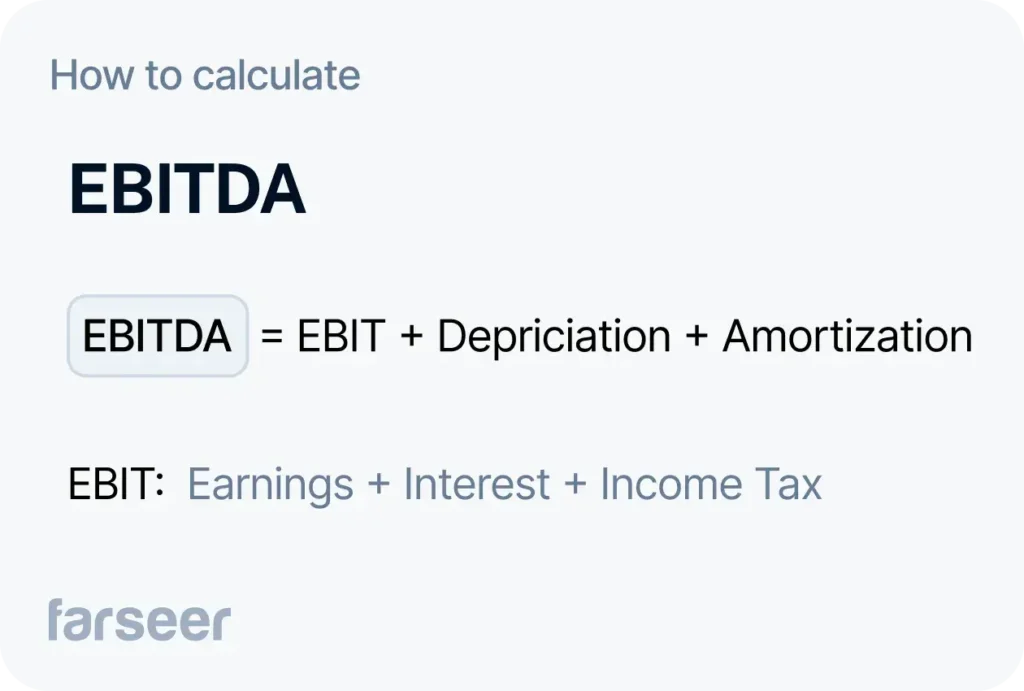
- EBIT (Earnings Before Interest and Taxes) reflects operating profit after accounting for depreciation and amortization. It’s closely tied to your business’s real cost structure.
- EBITDA (Earnings Before Interest, Taxes, Depreciation, and Amortization) adds back those non-cash expenses. It’s often used as a proxy for operating cash flow, especially in external benchmarking or M&A discussions.
While the calculation is simple, the implications in planning are not.
I
n budgeting and forecasting models, EBITDA tends to make performance look cleaner, particularly in capital-intensive industries. But that can be misleading. For example, in a pharmaceutical manufacturing company, EBITDA might show stable margins, while EBIT reveals a decline due to rising amortization from recent R&D investments. That has a direct impact on how product profitability is assessed.
Read Revenue vs EBITDA: Which Metric Should Drive Your Strategic Planning
On the other hand, EBIT forces the cost of long-term assets into the conversation. It creates a tighter link between operational output and the capital required to sustain it, especially relevant for companies running multiple factories, heavy machinery, or proprietary technology.
From a planning standpoint:
- EBIT helps align margin targets with long-term asset strategy.
- EBITDA is useful for short-term scenario modeling, especially when you want to isolate performance from accounting choices.
Most companies track both, but successful teams know which one to prioritize depending on the decision at hand.
EBITDA in Performance Benchmarking: Useful or Misleading?
In investor reports and external benchmarking, EBITDA is often the star metric. It’s clean, comparable across industries, and strips away differences in accounting policy. But internally, especially in planning and performance management, it can mislead.
Take FMCG or F&B manufacturing, two industries where many companies in your peer group operate. These businesses often invest heavily in production facilities, machinery, and logistics infrastructure. EBITDA might suggest strong margins, but once depreciation is factored in, EBIT can reveal operational inefficiencies or overcapacity.
The issue? EBITDA hides the cost of maintaining the business.
In real-life cases, we’ve seen companies celebrate an improving EBITDA margin while EBIT quietly drops. That gap usually comes from rising depreciation tied to recent capital investments. If your CAPEX strategy isn’t delivering ROI, EBITDA won’t tell you, EBIT will.
Key takeaway: For external comparability, EBITDA has value. But for managing internal performance across factories, regions, or product lines, EBIT tells a more accurate story.
Why Depreciation Matters in Planning
Depreciation is often dismissed as a non-cash adjustment, something to strip out of EBITDA and move on. But in capital-intensive businesses, depreciation isn’t just a number in the P&L. It’s a real indicator of how much your business costs to maintain.
When you’re working in Farseer or any modern FP&A tool, depreciation is part of your margin logic. Whether you’re allocating costs to cost centers, building a multi-year investment scenario, or calculating internal product profitability, how you treat depreciation directly impacts planning accuracy.

Take a company in industrial manufacturing using an FP&A tool to simulate factory-level EBIT. Depreciation from new machinery hits margins immediately. EBITDA, on the other hand, stays flat, making performance look stable even as real cost absorption worsens. If your sales team uses EBITDA, they’ll overprice; if your production team uses EBIT, they’ll underinvest.
This misalignment happens often when depreciation isn’t baked into your forecasting logic.
If you’re modeling both EBIT and EBITDA in your planning tool (which you should), you need to make a clear decision: which one drives your internal KPIs, pricing models, and resource allocations?
Pro tip: Most mature teams model EBITDA for cash-focused views, but they use EBIT as the internal margin baseline because it reflects capital intensity, cost of scale, and long-term sustainability.
Read more: Financial Analysis Software in 2026: Top Tools & Key Features
How to Choose Between EBIT and EBITDA
If you’re building forecasts, budgets, or dashboards in tools like Farseer, you’re likely calculating both EBIT and EBITDA. The key question is: which one should lead your internal decision-making?
The answer depends on what you’re planning and the purpose of the analysis.
Use EBIT when:
- You’re managing cost allocation, margin optimization, or CapEx-heavy operations.
- You need to reflect the full cost of running the business, including depreciation.
- The focus is on long-term performance tracking and aligning with strategy.

Use EBITDA when:
- You’re modeling short-term cash flow, covenant compliance, or stress tests.
- You want to isolate operational efficiency from accounting policies.
- You’re reporting to external stakeholders, such as lenders or investors.
A retail group preparing for a refinancing round builds a scenario based on EBITDA to meet bank expectations. Internally, though, EBIT remains the core margin target used in business unit reviews.
Best practice:
- Model both EBIT and EBITDA in your planning tool.
- Decide which metric drives internal KPIs—and make it consistent across reporting.
- Avoid defaulting to EBITDA just because it’s cleaner. If you’re in a capital-intensive business, EBIT will give a more realistic view of profitability.

Choosing the Right Metric for the Right Purpose
When you’re building planning models, the question isn’t “EBIT or EBITDA”, it’s when, where, and why. One simplifies performance, the other reveals the cost of sustaining it.
In modern FP&A workflows, the value doesn’t come from tracking both, it comes from knowing which one drives internal targets and investment decisions.
Farseer helps finance teams model both EBIT and EBITDA with clarity, so you don’t have to choose between accuracy and flexibility.
Đurđica Polimac is a former marketer turned product manager, passionate about building impactful SaaS products and fostering connections through compelling content.