Get Sheet Done: Why We Rebranded Farseer

Most enterprise software brands look like the brief was: make it enterprise, but remove the pulse.
Blue gradients. Serious dashboards. Abstract promises about visibility, agility, and better decisions. Everyone sounds strategic. Everyone looks trustworthy. Everyone says they help finance teams make smarter decisions.
And somehow, most of it says nothing.
That was the problem we had to avoid with Farseer. We are not building a nicer FP&A tool with a cleaner interface and a bigger promise. We’re truly building something big – a finance operating system for enterprise businesses. This means BI, DWH, planning, reporting, forecasting, scenarios, business logic, and governance working from the same foundation.
If that is the ambition, the brand cannot look like another polite vendor in the RFP pile.
The old Farseer identity did its job. But the company changed. The product became deeper. The customers became larger. The conversations became more serious. We now talk to enterprises where finance complexity is real: multiple entities, multiple systems, multiple versions of the truth, and too much time spent asking which number is actually correct.
That is the real enemy. Not Excel. Not spreadsheets. Not finance teams who build models in the tools they know. The enemy is disconnected work. Data in one place, planning in another, reporting somewhere else, logic trapped in files, definitions scattered across teams, and AI thrown on top like glitter on a broken process.
Finance teams deserve better.
So the rebrand had to do two things at once. It had to make us feel more enterprise, because we are. It also had to keep what makes Farseer different: clarity, attitude, speed, and the ability to say what everyone in finance already knows, but vendors are too scared to say.

Finance is serious. But serious work doesn’t require serious faces.
The way software companies talk about it is often painfully fake. Transformation language. Category language. “Unlocking value” language. Meanwhile, someone in finance is still reconciling numbers between five systems and a spreadsheet called final_final_v9.
That is why “Get sheet done” works.
It is funny, but it’s not a gimmick. Rather, it is a signal. It tells the user we understand their world: cells, tabs, formulas, filters, AVG, SUM, hidden sheets, broken logic, late changes, board packs, forecast cycles, and all the small details that never make it into the glossy transformation deck.
We call this “speaking spreadsheet.” We take the language finance teams use and turn it into something memorable: “Break out of the cell,” “Stop settling for AVG,” “Keep tabs with Farseer.” The joke is shared with finance people, never aimed at them. We are not laughing at spreadsheet chaos. We are saying we know why it exists, and we built a better way out.
The visual identity follows the same idea. Bolder. Cleaner. Sharper. Less generic enterprise SaaS. More Farseer. It lets us explain complex architecture without boring people to death. It lets us talk about planning, reporting, data foundations, governance, and AI in a way that feels clear instead of sterile.
And AI is where this gets very real.
Every finance software company now has an AI story. Fine. AI will change how finance teams analyze, explain, simulate, and communicate. But AI will not save a broken finance architecture. If your definitions are inconsistent, AI inherits the inconsistency. If your data is stale, AI explains stale data. If your business logic lives across spreadsheets, AI cannot magically create governance.
That is why our product agenda matters. Farseer connects the foundation first: data, logic, planning, reporting, governance, and business context. Once that foundation works, AI can help finance teams explain variances, test scenarios, draft commentary, identify drivers, and support decisions with confidence.
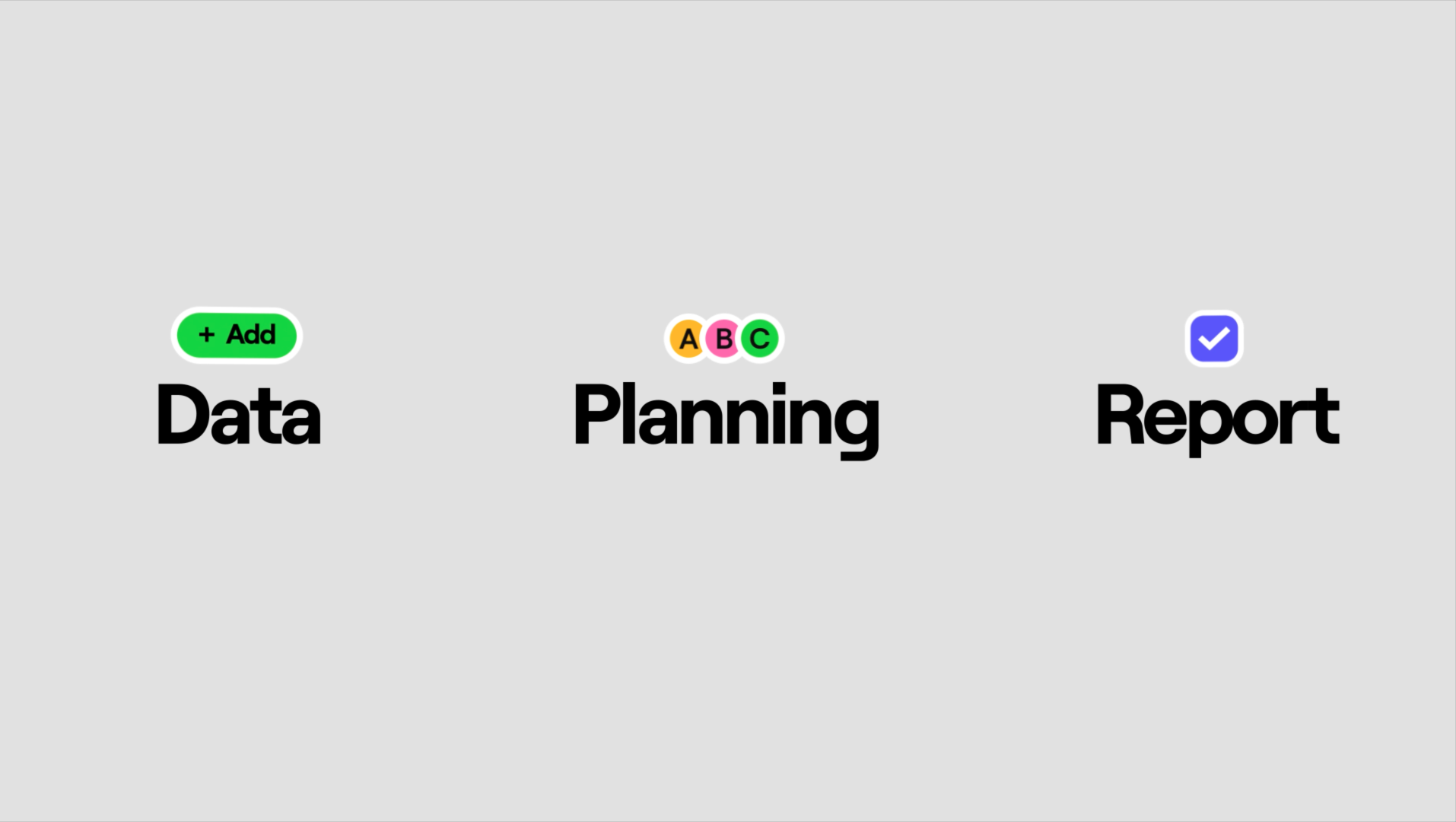
This rebrand gives that story a sharper shape.
Farseer is becoming an enterprise finance platform built for complexity, but obsessed with clarity. A company that can sit in serious rooms and still sound like humans work here. A brand that respects finance teams enough to speak plainly.
Finance has enough disconnected systems, empty transformation language, and dashboards that still leave people asking which number is real.
Farseer is here to connect the work.
And yes, to get sheet done.


Digital Transformation in Finance: How Finance Teams Break Out Of Digital Planning Purgatory With AI
Read more
Farseer raises $7.2M Series A to build the Enterprise Operating System for Finance
Read more