
Cash flow forecasting (CFF) is one of the most practical tools in finance, helping businesses to stay in control of their future finance. At its core, a cash flow forecast answers the most important question of all: Will you have enough cash to cover your obligations and fund operations?
Read more: Strategic Financial Planning: How to Plan for Success
Well-executed cash flow forecasting allows companies to plan better and actively work to reduce risk. EY reports that the companies with disciplined forecasting processes, backed by reliable data and cross-functional alignment, can achieve forecast accuracy of up to 90 % on a quarterly basis.
In this blog post, we’ll look at the basic cash flow formula and why it quickly breaks down in more complex environments. Also, we’ll walk you through a practical, step-by-step approach to building forecasts that actually support better decision-making.
Why the Standard Cash Flow Formula Doesn’t Work on Its Own
The foundation of any cash flow forecast is straightforward:
Beginning cash + Expected cash inflows – Expected cash outflows = Ending cash
In smaller companies, this formula is enough to get a good overview of their liquidity. In complex businesses with multiple entities, cross-border operations, and decentralized finance teams, this formula quickly breaks down.
Here’s why:
- Inflows aren’t predictable. Payment terms may say 30 days, but actual collections often stretch to 45 or more. Delays vary by customer, geography, and sales conditions.
- Outflows are rarely static. Costs shift due to contracts, fuel prices, or the timing of supplier deliveries. Some expenses are fixed, others are highly variable.
- Data lives in silos. Actuals are in the ERP, plans are in Excel, and updates are in email threads. It takes too long to get a consolidated, reliable view.
- FX exposure complicates things. If you operate in EUR and local currencies, fluctuations can distort your short-term cash position unless you forecast in both nominal and functional currency.
- Approvals and decision-making lag. In a multi-layered structure, updates to cash flow plans often come too late to take corrective action in time.

In complex industries such as manufacturing, distribution, and pharma, these challenges typically appear once operations span multiple business units and teams. But that doesn’t mean the formula is broken, it just means it needs better inputs. A reliable cash flow forecast depends on timely input from sales, procurement, and treasury.
Read more: The 6 Best Enterprise Cash Flow Forecasting Software Platforms in 2026
Step-by-Step: How to Do a Cash Flow Forecast (the Modern Way)
In mid-sized and large organizations, taking a different approach is a necessity if you want to build a reliable cash flow forecast. This means going more than just dragging formulas across Excel tabs. The process needs to combine inputs from finance, treasury, sales, procurement, and operations, all in one place.
Here’s a practical, 8-step process that works in complex environments:
1. Define the period and frequency of your CFF
Decide how far ahead you want to see, and how often you’ll update the forecast. Separate everything in three most common time spans:
- Short-term (up to 2 months) forecasts are ideal for liquidity management and working capital planning.
- Mid-term (1 to 3 months) helps with investment and operational planning.
- Long-term (6 to 12 months) forecasts support strategy, budgeting, and board-level reporting.
For most finance teams, choosing one does not provide a complete image, but layering them does. For example, a manufacturing company might track weekly liquidity to manage raw material purchases, while also updating a quarterly cash forecast for CAPEX and debt planning. A rolling forecast keeps everything current as actuals come in.
2. Pull actuals directly from the source
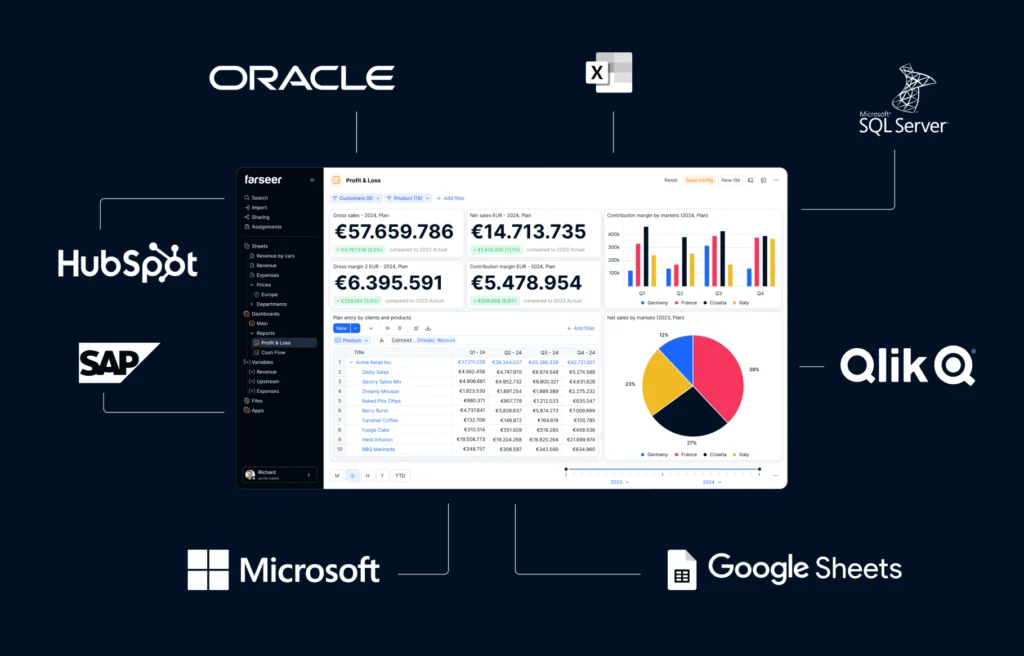
Pulling actuals, cash in and cash out, directly from your ERP, bank feeds, or data warehouse ensures you building forecasts on clean data.
Too many teams still rely on manual consolidation: local controllers emailing Excel files, using different formats, or submitting late. If it takes days to collect data before you even start forecasting, you’re already behind. Automating this step is one of the fastest ways to improve the quality of your forecast.
Read CFO Budget Planning: Is Your Current Process Slowing You Down
3. Estimate inflows
Your biggest source of cash is usually customer payments. But AR rarely behaves the way the payment terms say it should. Forecast inflows based on real collection patterns, not just contract terms. Use AR aging reports and historical behavior by customer segment or region.
Also include other inflows like intercompany transfers, tax refunds, grants, asset sales, or financing. For example, pharma distributors often receive large, irregular payments from institutional clients, if those aren’t timed correctly in your forecast, it throws everything off.
4. Estimate outflows
Don’t underestimate variability! Payroll or rent are fixed, predictable costs, but costs such as supplier payments, logistics, energy, or bonuses, can swing widely based on operational needs.
Map out your typical outflows:
- Operating expenses (payroll, rent, utilities)
- AP (supplier payments, freight, outsourced services)
- Taxes, leases, interest, and CAPEX
Break out fixed and variable costs so you can model changes more easily. For example, if production drops 20%, variable inputs like packaging or temporary labor will shift, your forecast should reflect that.
5. Include CAPEX and financing activity
CAPEX is often tracked outside of the standard cash flow forecast, and that comes with great risk. One postponed investment or early payment can significantly impact cash visibility over several months.
Include all large projects, financing plans, loan repayments, and dividend payouts. A logistics company expanding its warehouse or fleet may have multi-million-euro outflows planned across quarters that should be clearly visible in the forecast.
6. Account for seasonality, one-offs, and FX
Most ICP companies have some form of seasonality, whether its sales spikes, bulk orders from key customers, or procurement cycles. Your forecast should reflect that. If you know Q4 is bonus season or when annual supplier contracts renew, include that into the timing.
One-off events like tax settlements, large prepayments, or restructuring costs must also be included. And if you’re working across currencies, be clear about how FX will be handled, either by forecasting in local currency and converting, or planning in group currency with buffers.
7. Validate the output
This is where you catch errors before they become problems. Use historical comparisons to test if the forecast makes sense. Are your projected inflows in line with prior periods? Does a cash surplus next month match what actually happens year after year?
If something looks off, dig into it. Often, it’s an outdated assumption or a missing cost. Controlling teams should be able to trace forecast drivers and explain any big swings, this builds trust in the numbers across the organization.

8. Share a single, centralized version
A common source of truth is critical. If sales is working from one forecast, procurement from another, and finance from a spreadsheet last updated two weeks ago, the process is already broken.
Use a shared system or central file where everyone works off the same version. This reduces errors, speeds up consolidation, and makes it easier for senior management to get a real-time view of cash flow without waiting for month-end reports.
Cash flow forecasting is not just about numbers, it’s about coordination. Sales, procurement, treasury, and finance all impact the outcome. Building a structured process with clear roles, clean data, and regular updates will do more to improve accuracy than any formula tweak.
Read more: How to Improve Your Cash Flow Forecast in 4 Easy Steps
Where Does Cash Flow Forecast Usually Break
Even with the right structure and accurate data sources, many cash flow forecasts fall apart in execution. Not because the finance team lacks skills, but because the process depends on inputs and assumptions that shift constantly.
According to CFO Selections, nearly 90% of corporate treasury teams say their current forecasting accuracy is unsatisfactory, highlighting just how difficult it is to get right in practice.
Here are the three biggest reasons forecasts fail:
1. Inputs Are Incomplete or Over-Optimistic
Sometimes, Sales or AR teams enthusiasm may base inflows on best-case timings, ignoring late payments or disputes. Procurement may not flag a large prepayment in time, and many teams still confuse profit with cash, building projections off the P&L rather than actual collections. The result: cash that looks good on paper but never lands in the account when expected.
2. The Process Is Disconnected and Lacks Ownership
Forecasting in Excel across email threads might work for a single entity, but not in multi-business environments. Actuals live in the ERP, versions in spreadsheets, and updates come too late. The common issue is that cash flow forecasting is often seen as “finance’s job,” even though inputs come from sales, operations, and procurement. A lack of shared ownership weakens the process and makes the forecast less dependable.
Read more: AI Forecasting in Finance: A Smarter Alternative to Spreadsheets
3. Timing Is Off
Some teams only update their forecast before board meetings, while others build detailed models that take too long to refresh. Both cases fail in providing real-time insights when fast decisions are needed. A forecast that isn’t updated regularly, or takes weeks to finalize, is no longer useful when decisions need to be made quickly..
Each of these issues adds friction and reduces confidence in the forecast. And once trust in the forecast drops, it stops being used as a decision-making tool and becomes just another reporting task.
It’s Not About Precision, It’s About Control
Cash flow forecasts are rarely 100% accurate, and that’s not the point. The goal isn’t to predict the future perfectly. It’s to create enough visibility so your team can take action before it’s too late.
According to Gartner, even short-term cash forecasts help identify upcoming cash shortages or surpluses in time to act, turning cash forecasting into a proactive decision-making tool. Even a 70–90% accurate forecast gives finance leaders the chance to adjust payment timing, prepare for tight months, or plan investment windows with confidence.
If your cash flow forecasting still relies on disconnected spreadsheets and inconsistent assumptions, it limits your ability to make timely financial decisions. Improving the process doesn’t require an overnight full transformation.
Start by aligning on actuals, setting a clear update rhythm, and standardizing inputs across departments. Even small changes in structure and ownership can lead to more reliable forecasts and more confident decisions.
Đurđica Polimac is a former marketer turned product manager, passionate about building impactful SaaS products and fostering connections through compelling content.