EBITDA Calculator
How to Use the EBITDA Calculator
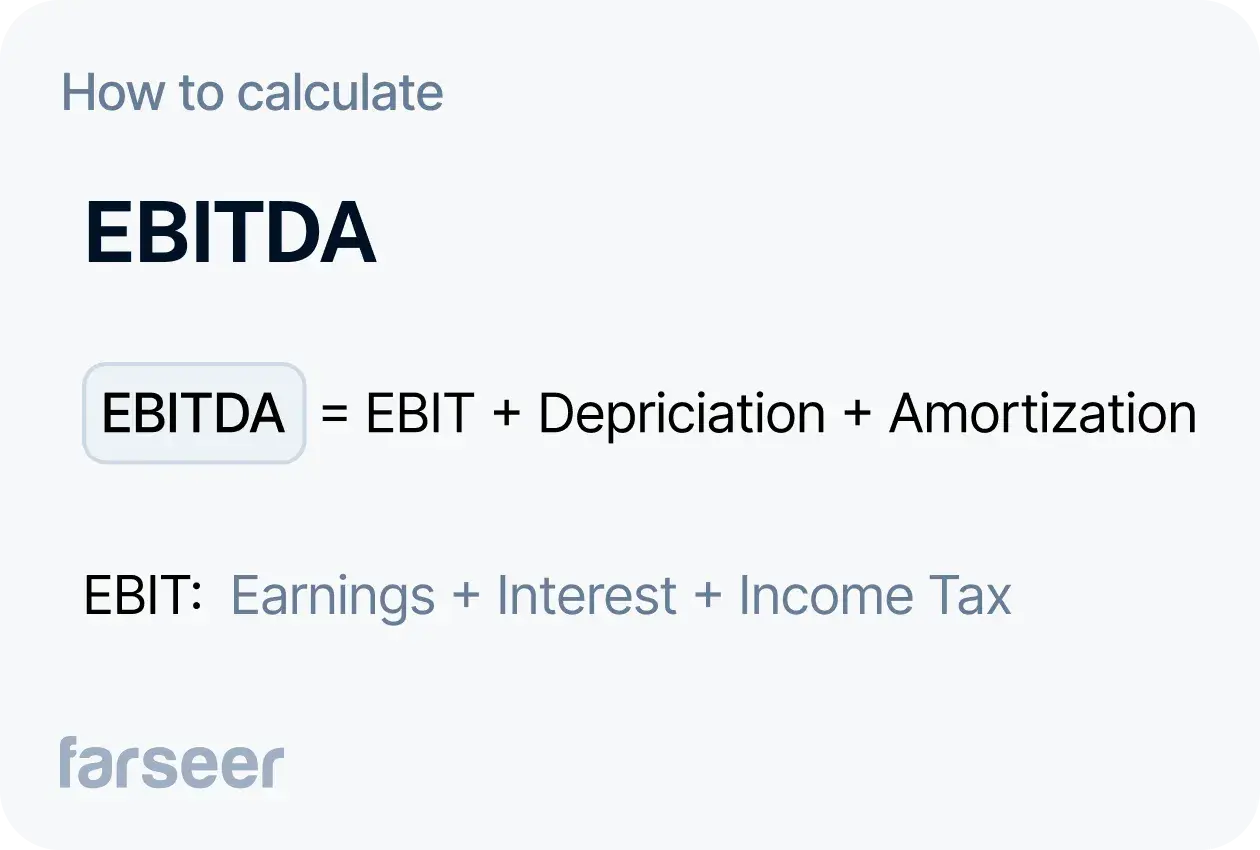
To calculate EBITDA, simply enter your Net Income, Interest, Taxes, Depreciation, and Amortization.
These values capture the adjustments needed to understand how your business performs before financing decisions and non-cash accounting items.
As soon as you fill out the fields, the calculator updates automatically and shows:
- EBITDA (absolute value)
- Revenue (if provided)
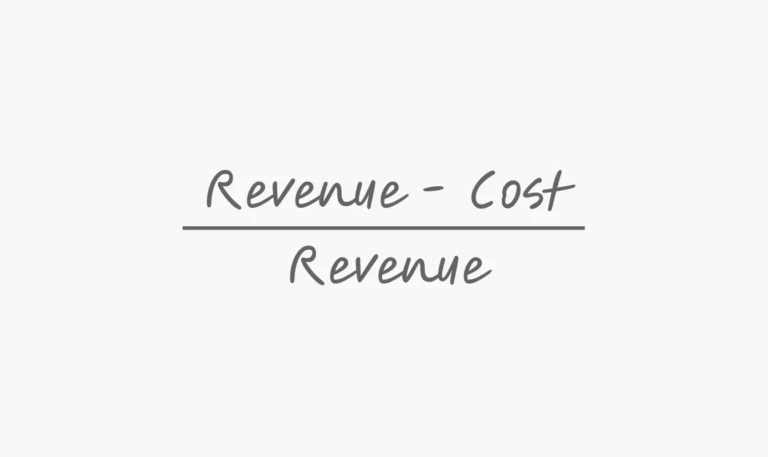
- EBITDA Margin (%)
- Key indicators that summarize your operational performance
It’s designed to let you test scenarios quickly – no formulas, no spreadsheets, no risk of mistakes.
What Is EBITDA?
EBITDA (Earnings Before Interest, Taxes, Depreciation & Amortization) is a measure of your company’s operating profitability.
It answers one simple question:
“How much does the business earn from its core operations, before financing and accounting adjustments?”
This makes EBITDA one of the most widely used metrics in financial analysis, planning, valuation, and performance benchmarking.
Read Profitability Planning Done Right: Common Pitfalls and Solutions
EBITDA vs. Net Income
Although both measure profitability, they highlight different aspects:
- Net Income reflects the full picture, including taxes, interest, and non-cash expenses.
- EBITDA isolates operational efficiency by removing those items.
Because of this, EBITDA is often the preferred metric when comparing companies, evaluating performance across units, or assessing operational health.
Why EBITDA Matters
EBITDA helps finance teams analyze:
- Core Profitability – Is the business generating healthy earnings from its primary activities
- Cost Structure & Asset Intensity – How much do depreciation and amortization affect the bottom line
- Cross-company Comparisons – Different tax systems or capital structures don’t distort EBITDA, making comparisons fair and easy.
- Scenario Testing – Small shifts in pricing, volume, or cost assumptions can meaningfully impact EBITDA — critical in manufacturing, pharma, retail, and similar industries.
It’s also a foundational input for valuation multiples (e.g., EV/EBITDA), leverage ratios, credit assessments, and cash flow projections.
Read The CFO’s Guide to Profitability Analysis Software (+Tool Recommendations)
When to Use an EBITDA Calculator
Use it whenever you want to:
- evaluate business performance without financing noise
- analyze the effect of interest, taxes, or non-cash charges
- benchmark operating profit across products or entities
- prepare internal reports, investor decks, or board materials
- run quick what-if scenarios during planning or forecasting
It’s especially helpful in complex industries where profitability is influenced by asset intensity or heavy investment cycles.
EBITDA in Modern FP&A
In advanced finance teams, EBITDA isn’t a static result; it’s a dynamic driver in broader analysis:
- Scenario planning: What happens to EBITDA if depreciation increases by 5%?
- Pricing strategy: How does a new tender or discount affect EBITDA margin?
- Investment planning: Which markets or SKUs contribute strongest operating earnings?
- Profitability modeling: How does EBITDA flow into cash flow, valuation, and capital allocation?
Instead of calculating it once per quarter, leading teams model and update it continuously.
Farseer for Profitability & Financial Modeling
Farseer brings all EBITDA-related planning into a single connected model.
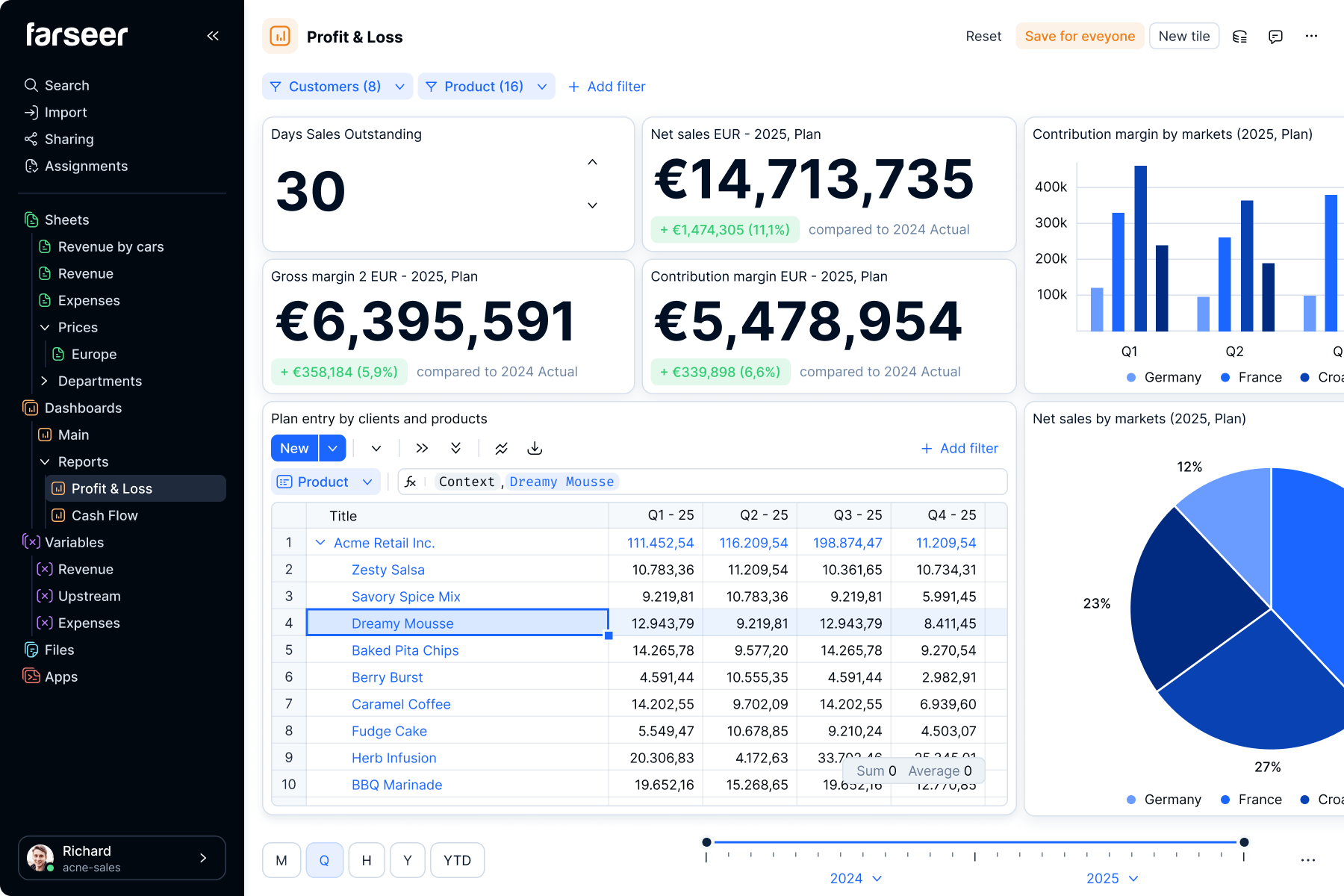
Instead of updating multiple Excel files or reconciling different versions, teams work in one shared environment where:
- operational drivers update EBITDA in real time
- scenarios can be simulated instantly
- margins and profitability metrics sit side-by-side
- consolidation happens automatically across business units
- all logic is traceable, governed, and audit-ready
The same clarity you get from this calculator is built into the entire planning process, just scaled and automated.
Book a demo to see how finance teams use Farseer to plan faster, forecast better, and make decisions with confidence.