
In companies with complex operations, finance goes beyond reporting. There, we are talking about controlling volatility, managing resources efficiently, and supporting strategic growth with hard numbers. But too often, “financial strategy” is treated as a vague concept reserved for slide decks and boardroom discussions.
In practice, financial strategy means setting clear financial goals and designing practical methods to achieve them. This includes everything from aligning budgets with business objectives, optimizing cost structures, and improving forecasting accuracy, to ensuring cash flow supports strategic initiatives like M&A, CAPEX, or market expansion.
Read more: Strategic Financial Planning That Actually Drives Results
The challenge is doing it all while battling fragmented systems, manual reporting, and unrealistic deadlines from other departments.
In this blog, we will break the financial strategy into 6 actionable focus areas, all tested by finance teams in manufacturing, pharma, and FMCG companies. These are practical methods you can apply even if you’re still stuck in Excel hell or juggling cross-departmental chaos.
1. Centralize Financial Planning to Eliminate Fragmentation
In many growing companies, financial planning is stuck in spreadsheets scattered across teams. Sales updates are in one Excel file, cost assumptions in another, and HR sends headcount plans via email. By the time the finance team consolidates everything, the data is already outdated, and leadership is still asking why actuals don’t match the plan.
This fragmented setup wastes time, creates reporting mismatches, and undermines decision-making agility.
Read CFO Budget Planning: Is Your Current Process Slowing You Down

Move to a centralized, integrated planning system
A reliable financial strategy starts with a single source of truth for planning. That means connecting operational inputs, like sales volumes, discounts, headcount, or production plans, directly to the financial output.
A modern FP&A tool like Farseer allows finance teams to centralize all planning data in one place. It replaces scattered spreadsheets and disconnected models with a collaborative, real-time environment. From bottom-up sales planning to OPEX allocations, everything is structured, connected, and version-controlled. You get visibility and alignment, without chasing files across departments.
JGL, a pharma company operating in over 60 markets, used Farseer to replace its Excel-based planning process. The finance team reduced the time needed for preparing reports from three weeks to just a few days, and gained real-time visibility into product-level profitability across regions. This helped leadership make faster decisions around pricing and territory focus.
Bonus tip:
Start with what causes the most friction, headcount planning and sales input collection. These are usually spread across departments and most prone to errors. Centralizing them alone will show measurable improvements in accuracy and time savings.
2. Standardize KPIs Across Departments
When different departments define success differently, alignment breaks down. One team reports gross margin before discounts, another includes logistics costs, and the finance team is left cleaning it up. The result? Endless back-and-forth during budgeting, reports that no one fully trusts, and misaligned KPIs that block strategic execution.
Define and enforce company-wide KPI standards
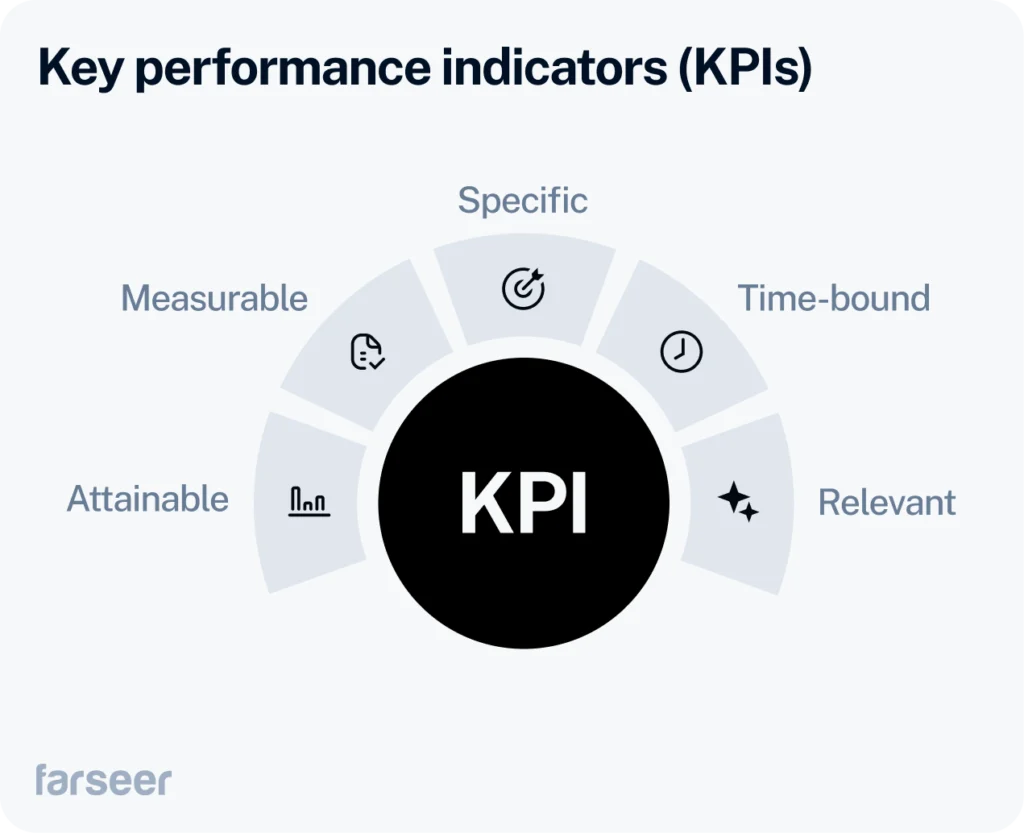
An effective financial strategy requires consistency in how performance is measured. That means agreeing upfront on how to calculate margins, cost allocations, working capital metrics, or sales performance, and making sure those definitions are used across all departments and systems.
When each business unit applies its own KPI logic, you end up with mismatched reports, wasted time reconciling numbers, and confusion during reviews. The solution is to centralize ownership of KPI definitions within the finance team and apply them across the organization, through your planning models, reports, and dashboards.
EOS Matrix aligned key reporting structures across departments and legal entities by standardizing KPI definitions and automating data inputs. This reduced errors in their planning process and improved the reliability of financial reports used in strategic management discussions.
Bonus tip:
Start by building a shared KPI library, owned by finance but aligned with key stakeholders. Focus first on high-conflict metrics like gross margin, OPEX by function, and sales per FTE. Lock definitions into your models and ensure they’re applied consistently across departments and reporting cycles.
3. Build Forecasting into Monthly Routines, Not Just Year-End
Many companies still treat forecasting as a quarterly or annual event, often just before board meetings or budget revisions. But in fast-moving industries like manufacturing, pharma, and FMCG, that approach isn’t enough. Market conditions can shift weekly. If your forecasts don’t adapt, your decisions won’t either.
Make rolling forecasts part of month-end closings
A modern financial strategy includes rolling, driver-based forecasts updated regularly. By aligning forecasting with actuals on a monthly basis, finance teams stay ahead of margin pressure, liquidity issues, and changing demand.
When companies can connect live actuals from their ERP, adjust key assumptions (like raw material costs or headcount), and generate new forecasts with minimal effort, they turn forecasting into a dynamic process.
Altium Packaging, a global manufacturing company, used Farseer to establish a continuous forecasting process across multiple business units. By automating actuals integration and modeling based on operational drivers, they shortened their forecasting cycle by 25% and gained the ability to simulate pricing and cost scenarios in real time.

Bonus tip:
Start with a rolling 3 – 9 month forecast and update it every month during closing. Automate the import of actuals from your ERP and focus on the top 5 – 10 assumptions that have the biggest impact, like pricing, COGS, or sales volumes. Use version tracking to measure forecast accuracy over time.
4. Link Operational Drivers to Financial Plans
A common problem in financial planning: sales forecasts go up, but no one adjusts production, logistics, or headcount plans accordingly, until the costs hit. Or, finance gets blamed for a missed margin target when the real issue started in operations.
If financial planning isn’t tied to real operational inputs, the strategy becomes unreliable guesswork.
Connect operational assumptions directly to financial outcomes
A strong financial strategy translates operational drivers, like units sold, discounts, delivery costs, or staffing levels, directly into financial outputs like revenue, COGS, or EBITDA. This allows teams to see the true impact of commercial or operational decisions before they happen.
Finance needs to build models that reflect real-world inputs. For example, you can link sales volume by region to shipping cost assumptions, or model how overtime hours in production affect your labor cost forecast. These aren’t hardcoded Excel formulas, they’re live, editable assumptions visible to all stakeholders.
Violeta, a leading hygiene and paper products manufacturer, used Farseer to build integrated financial models that mirror their production and sales operations. They connected volume-based production planning to financial outputs, helping the finance team anticipate cost spikes and make faster adjustments in pricing strategy. This improved the accuracy of their margin forecasts and reduced the back-and-forth with sales and operations during planning cycles.
Bonus tip:
Start with one process: e.g., link sales units to COGS using production cost per unit. Then expand by adding transportation costs, discounts, or workforce-related expenses. Use the same logic across P&L and cash flow to uncover gaps between assumptions and actual outcomes.
5. Automate Manual Tasks to Free Up Analyst Capacity
Finance teams in mid-sized and enterprise companies still spend a shocking amount of time on low-value, manual work: consolidating Excel sheets, copying actuals into PowerPoint, or checking formula errors in templates. Strategic planning gets pushed aside because the team is buried in repetitive tasks.
Automate repetitive tasks to focus on high-impact analysis
Automation is a core part of any financial strategy that aims to scale. By automating report consolidation, variance analysis, and actuals imports, teams can shift their focus to insight generation instead of spreadsheet maintenance.
Keep in mind that common processes, like generating budget vs. actual reports, updating rolling forecasts, or preparing board packs, can be fully automated. This not only saves time, but also improves data consistency and confidence across the company.
AKD used Farseer to automate their budget preparation and reporting processes across departments. What previously took multiple teams and long hours in Excel was replaced with a centralized, real-time model. This freed up the finance team to focus on scenario modeling and improving collaboration with operational departments.

Bonus tip:
Identify the top 3 reports your team spends the most time updating manually every month. Automate those first, especially if they rely on ERP exports and manual formatting. Even saving 10 hours per report adds up to weeks regained across the team each quarter.
6. Build Scenario Planning Into Strategic Discussions
When leadership needs to decide fast, on pricing changes, wage increases, or demand drops, they turn to finance. But too often, finance teams are left scrambling, building ad hoc Excel models that no one fully trusts.
Make scenario planning a standard input for decision-making
Scenario planning should be embedded in your monthly process, not dusted off once a year. Modeling financial impact across revenue, cost, and cash flow helps you anticipate problems early, and test trade-offs before committing.
Instead of rebuilding spreadsheets, leading teams rely on planning systems that let them simulate different versions of reality quickly and accurately. This is about shifting finance from reactive modeling to strategic advising.
HT, Croatia’s largest telecom operator, uses Farseer to manage planning across multiple business units. Their finance team built a flexible model that supports scenario simulations at the group and segment level, helping executives understand the impact of shifting pricing strategies, CAPEX priorities, or demand trends without guesswork.
Bonus tip:
Start by identifying your top 2-3 risk levers (e.g., wage growth, volume changes, or currency fluctuations). Build simple, editable assumptions around them, and run them monthly to support faster decisions, especially when the business environment shifts.
Turn Your Financial Strategy into Execution
Financial strategy means helping the business move faster with clear, data-backed decisions. But that only happens when finance stops reacting and starts planning continuously, with the right tools and processes in place.
Analysts agree:
- Gartner reports that disconnected, static planning prevents agile decision-making, while companies that align strategic, operational, and financial plans perform better under pressure.
- KPMG emphasizes that connected data and automation are turning FP&A into a competitive advantage, especially when forecasting and scenario planning are done in real time.
The six strategies above, from centralizing planning to automating reporting and enabling scenario modeling, are how top-performing finance teams are getting ahead.
Đurđica Polimac is a former marketer turned product manager, passionate about building impactful SaaS products and fostering connections through compelling content.